The Cuesta-Hixon House and Two Chapters of Tampa History
On this page
A house on South Willow Avenue links a West Tampa cigar manufacturer to the mayor whose name is on the downtown waterfront.
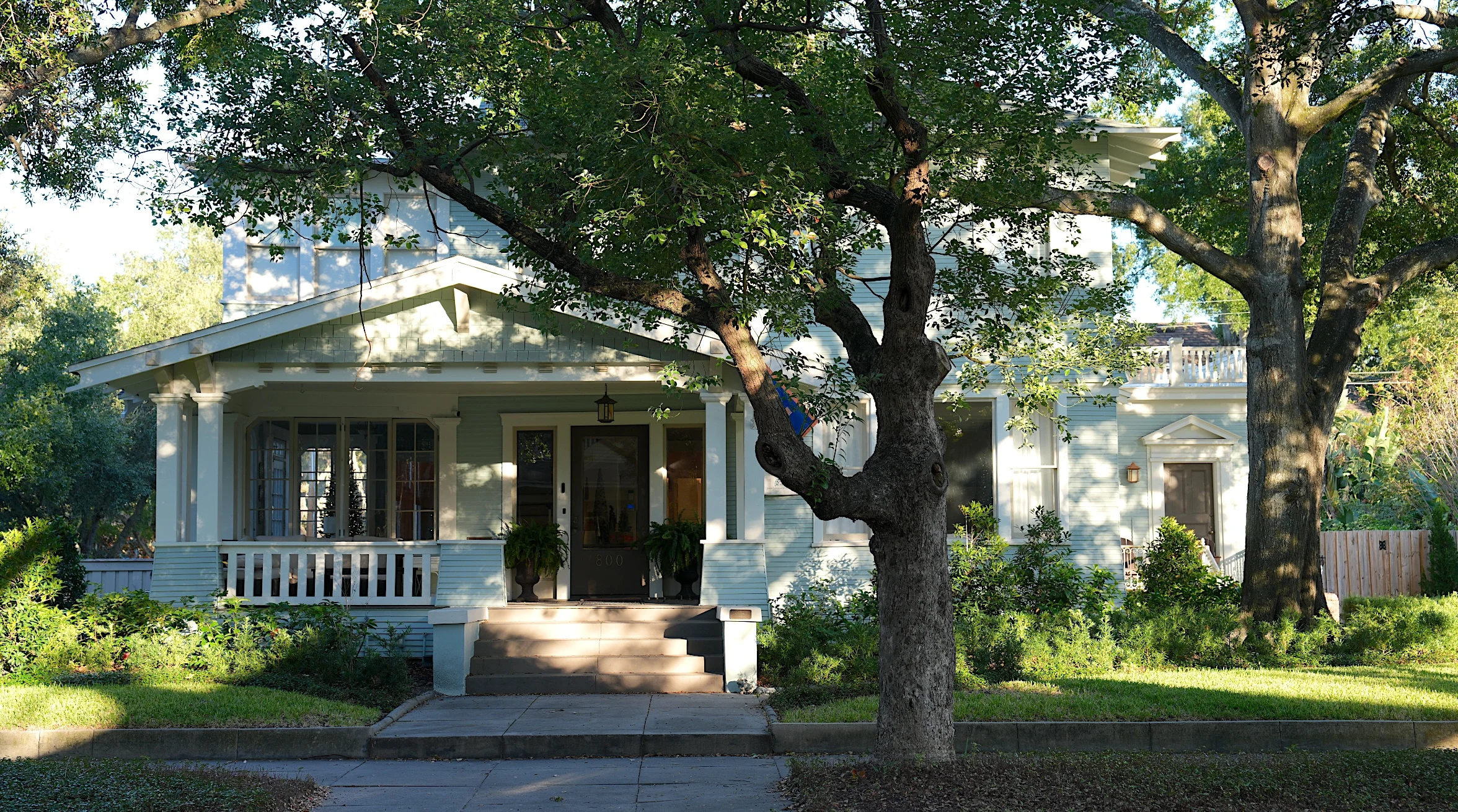
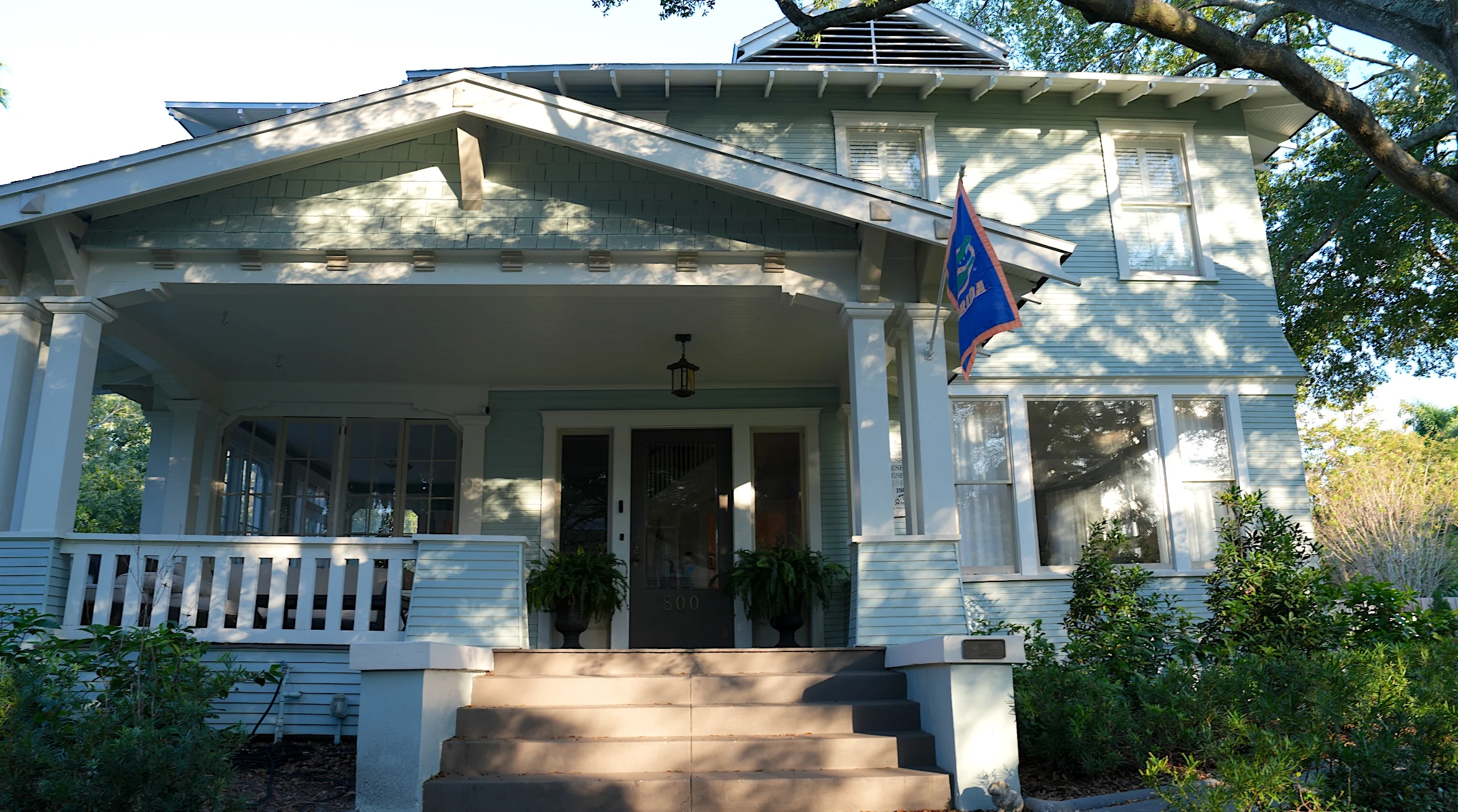
The first thing I wanted in the frame on South Willow Avenue was the porch. From the corner, you can see how far its roof projects, but the closer picture tells you what that roof does. It carries the shade all the way to the front steps. I took a second photograph from across the street, where the trees are as much a part of the view as the house. In that picture, the front walk gives your eye a place to start. Follow it up the steps and you see why the porch, even with a second story rising behind it, holds the whole composition together.
I’ve lived in Tampa Bay since 1984, and by now I’ve heard the name Curtis Hixon more times than I could count. I associate it with downtown and the river. At 800 South Willow Avenue, there’s another name to learn first. Ángel L. Cuesta was running a cigar company when the city directory recorded him and his wife, María, at this address. Curtis Hixon came later. Put those two names together and you can follow a story that starts in West Tampa’s factories and ends on the riverfront, with a front porch in Hyde Park in between.
What the porch tells you
Seen straight on, the porch is wider than it first appears from the corner. Its gable draws your attention to the steps, and the white posts give the front of the house a rhythm you can pick out even in the shade. There’s a little pleasure in comparing the two views. The corner photograph lets the upper story and the side windows come into play. From the street, the porch is the part you remember. The Hyde Park walking tour calls it a bungalow with Craftsman details, which describes the character of that entrance even though there’s more house behind it than the word bungalow might suggest.
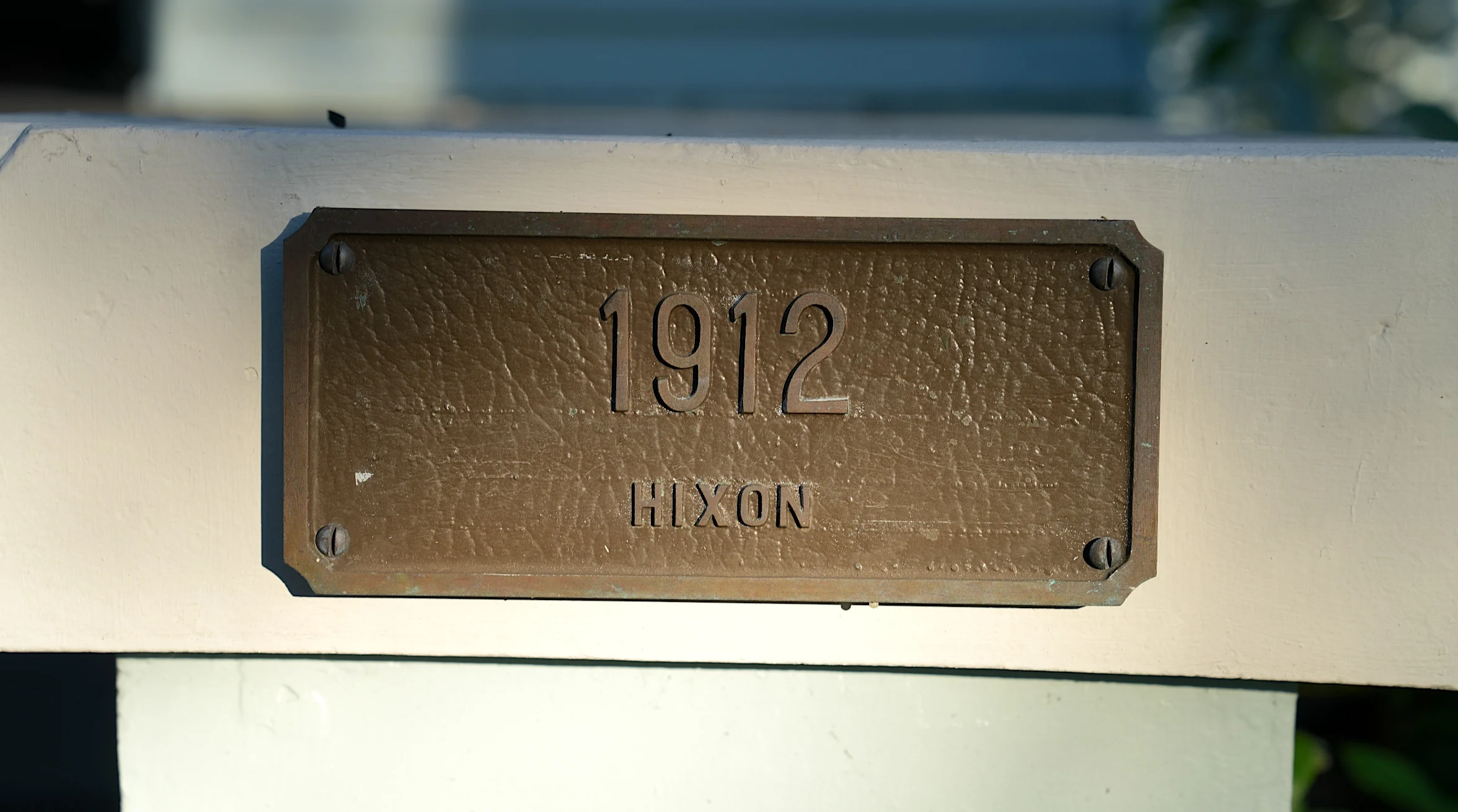
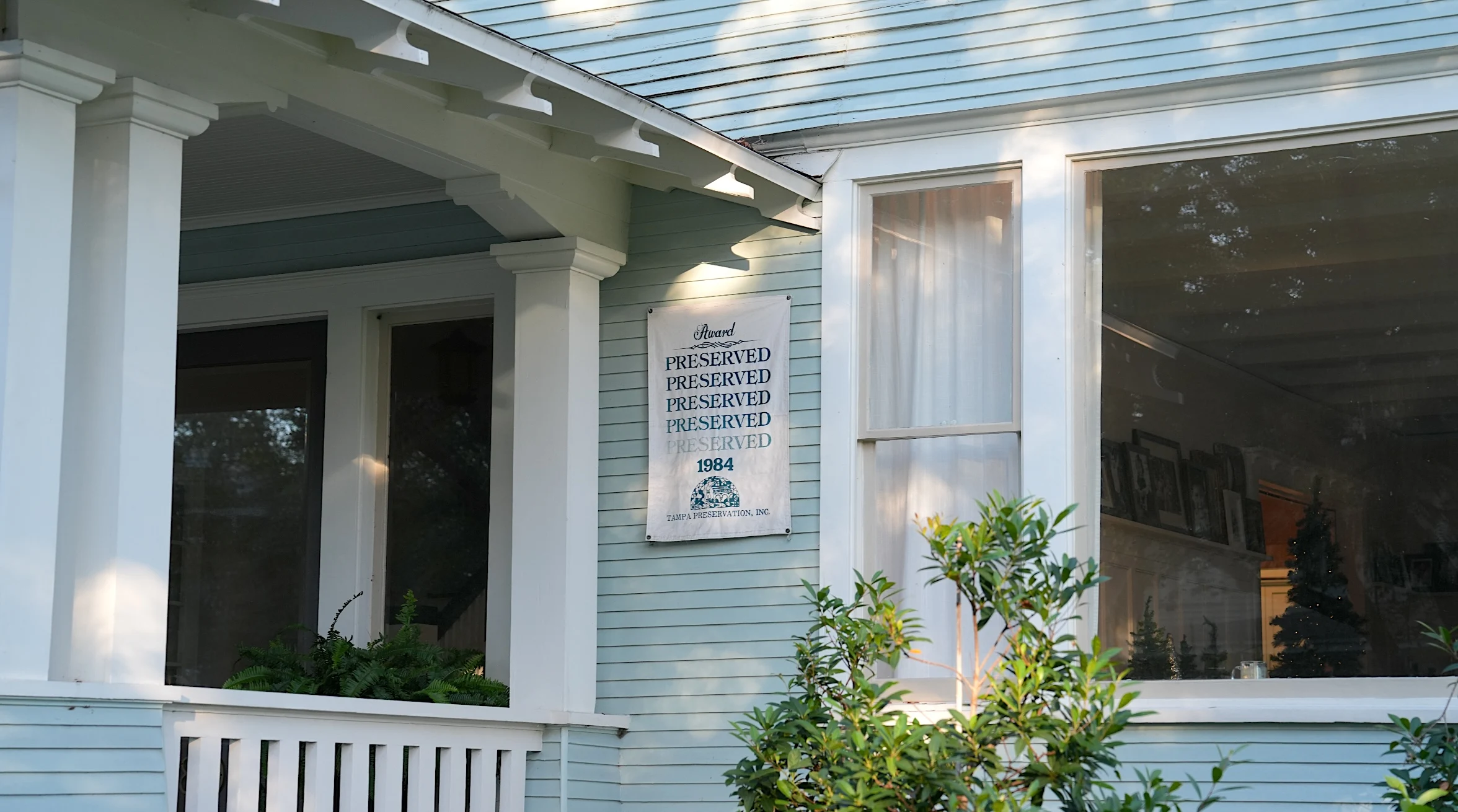
A small plaque carries the date 1912. I like having that detail in the photographs because it’s easy to overlook from across the street. The plaque puts the house in the same period as the Leiman House on South Newport Avenue, which I photographed for the previous installment. At the Leiman House, the long eaves carry your eye from one end of the building to the other. On Willow, the low porch gable brings you back to the front door. You can see both houses on a walk through Hyde Park and come away with two very different ideas of what a front entrance can do.
The household behind Cuesta, Rey & Company
The 1918 Tampa city directory gives Ángel L. Cuesta one line. It lists him as president and general manager of Cuesta, Rey & Company and gives his home as 800 South Willow Avenue. That one line is enough to connect the house to a business on the other side of town. The West Tampa historic district nomination identifies the 1896 Cuesta-Rey factory on Howard Avenue as one of only two brick factories in West Tampa before 1903. The nomination describes how larger brick buildings gradually replaced many of the early wooden cigar factories in the years that followed.
It’s easy to tell Tampa’s cigar history as a story of brand names. The neighborhoods make it easier to see the people and the work behind those names. A factory tells you where people earned their living. A directory takes you from the business to somebody’s home. And Henry Leiman’s company, which made cigar boxes, gives you a third point on the map. I enjoy putting those pieces together because any one of them could be its own story. Seen together, they explain why a house in Hyde Park belongs in the same conversation as a factory on Howard Avenue.
Before Curtis Hixon was a name on the river
The walking tour identifies the house as a later home of Curtis Hixon. The City of Tampa’s biography fills in the part of his life that’s easiest to miss if you only know the park. Hixon was a pharmacist. He served in the Navy as a pharmacist’s mate during World War I and bought King’s Drugstore on Franklin Street after returning to Tampa. He served on the City Council and the Hillsborough County Commission before winning the mayor’s race in 1943. He stayed in office through three reelections and died in 1956.
Think about when he took office. Tampa was managing wartime shortages and growing demands on city services. By the end of the decade, the city was rewriting its charter to give the mayor more responsibility for preparing the budget and negotiating contracts for such things as water, sewers and seawalls. Those are the parts of city history I tend to think about when I’m looking at an old house. We can see the care that went into the porch and the woodwork. The city around it depended on a different kind of work, most of which never made anyone stop and take a photograph.
After Hixon’s death, Tampa named an auditorium and convention center beside the Hillsborough River in his honor. The city still uses the name for Curtis Hixon Waterfront Park. The park is where most people encounter that name today. The house sends you back to the pharmacist on Franklin Street and to the years when he and his family were part of the city he governed.
A reason to look up from the sidewalk
The picture I kept coming back to was the one from across the street. There’s enough distance for the house to settle into its surroundings. You can see how the walk meets the sidewalk and how the branches break up the light on the front of the house. I’d suggest looking from there if you’re walking past. You’ll see the balance between the upper story and the porch more clearly, and you’ll get a sense of how much the trees contribute to what you’re seeing.
That’s part of why I keep photographing these houses. I can live here for decades, know the streets and recognize the names, and still come back with a picture that changes how I think about a place. If you’re following the series, you can go from here to the Leiman House and then down to the Stovall House on Bayshore. I share more of my photography at MarkAMiddleton.com. These stories are a way for me to spend a little more time with the places I’ve been passing for years, and to share what I find when I finally stop.