History of Dunedin, Florida
On this page
- The History of Dunedin, Florida
- Before Dunedin Had a Name
- When Dunedin Was Jonesboro
- Downtown Dunedin Was Once a Cotton Field
- The Orange Belt Railroad Changes Everything
- The Great Freeze Nearly Changed Dunedin’s Future
- The Homes That Connect Us With Early Dunedin
- The 1920s Arrive in Dunedin
- The Fenway Hotel and the Jazz Age
- The Dunedin Isles Dream
- Architecture Tells the Story Without Saying a Word
- Hog Island Becomes Two Islands
- How Honeymoon Island Got Its Name
- Caladesi and the Scharrer Family
- The Dunedin Causeway Changes Access Again
- Baseball Becomes Part of Dunedin
- The Railroad Becomes a Trail
- The Small Downtown That Managed to Stay Small
- A Town With a Brewery Before Craft Beer Was Everywhere
- Preservation Is More Than Keeping the Oldest House
- Buying a Historic Home in Dunedin
- Selling a Historic or Distinctive Home in Dunedin
- Why I Care About Dunedin Personally
- Want to Explore Dunedin’s History Yourself?
- Dunedin Is Still Becoming Dunedin
- Buying or Selling a Home in Dunedin, Florida?
- The History of Dunedin, Florida: A Love Letter to One of America's Most Remarkable Small Cities
- Before the Name: The Land Before Dunedin
- Two Scotsmen and a Post Office: The Naming of Dunedin
- A Seaport on the Gulf: Dunedin’s Maritime Golden Age
- The Marina and the Water: A Relationship That Never Ended
- Edgewater Drive: Dunedin’s Most Beautiful Street
- Historic Homes: Dunedin’s Built History
- The First Chamber of Commerce: Civic Infrastructure and the Shape of Community
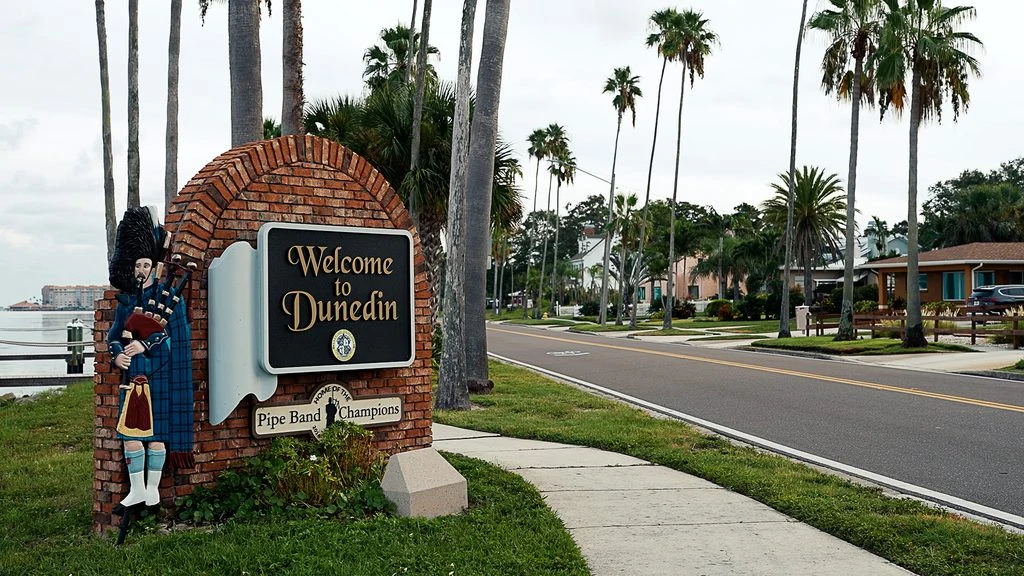
- The Scottish Arts: Why Pipe Band Music Still Echoes Down Main Street
- The Dunedin Highland Games: One of America’s Greatest Celtic Gatherings
- Honeymoon Island: The Story of a Place That Almost Wasn’t
- Clark Mills and the Optimist Pram: The Little Boat That Changed the World
- Dunedin’s Remarkable Record of Firsts
- World War II and the Hotel Dunedin: History in Unlikely Places
- Downtown Dunedin: The Street That Held On
- Sister Cities and the International Dimension of a Small Town
- The Pinellas Trail: Threading It All Together
- Golf Carts, Breweries, and the Modern City: How Dunedin Stayed Dunedin
- Why Preserving Dunedin’s Character Matters
- Explore More: Related Reading
- About the Author: Mark Middleton | Middleton Tampa Bay | Compass
The History of Dunedin, Florida
From Cotton Fields and Citrus Groves to One of Tampa Bay’s Most Distinctive Communities
There are places that reveal themselves quickly.
Dunedin is not really one of them.
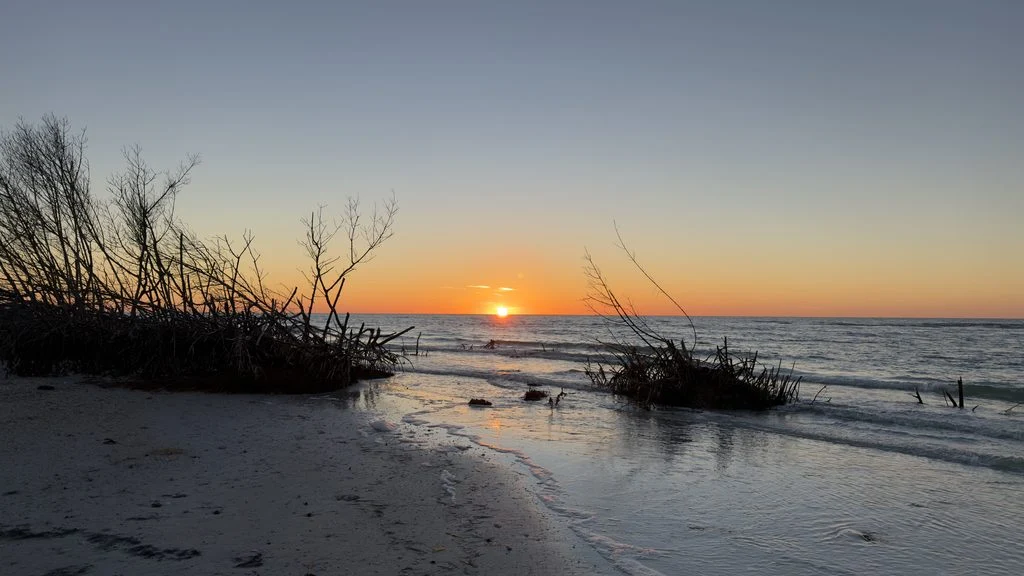
You can spend an afternoon downtown, walk the Pinellas Trail, have dinner near Main Street, watch the sunset over St. Joseph Sound, and leave thinking you understand the place.
Then you begin looking a little closer.
An old railroad depot sits beside the trail. A house on Scotland Street has been standing since the nineteenth century. The road to Honeymoon Island leads toward land that did not always look the way it does now. The Fenway Hotel rises above Edgewater Drive like something left behind by another era.
Even the name tells a story.
I have spent much of my life in the Tampa Bay area, and Dunedin is home for me today. I have also spent years photographing it, selling homes here, learning its neighborhoods, and trying to understand why people become so attached to this relatively small city.
The answer is not one thing.
It is the waterfront. It is the scale of downtown. It is the old houses and the streets beneath mature trees. It is the Scottish heritage that still appears in public life. It is baseball in the spring, the islands just offshore, the trail running through the middle of town, and the fact that Dunedin has managed to remain recognizable even as the rest of Tampa Bay has changed around it.
To understand why, it helps to go back to a time when much of downtown was not downtown at all.
Before Dunedin Had a Name
The first recorded land deed in what became Dunedin dates to 1852, when Richard L. Garrison acquired property in the area. Florida itself had become a state only seven years earlier. (dunedingov.com)
The landscape would have looked very different from what we know now.
The City of Dunedin’s own historical planning documents describe Native American activity, Cuban fishing outposts, and Spanish expeditions in the broader area before permanent settlement expanded during the nineteenth century. Early settlers included people arriving after the Civil War as well as immigrants from England and Scotland. (dunedingov.com)
Water mattered from the beginning.
A deep-water dock helped the small settlement develop into an active trading point. According to city records, Dunedin at one time had the largest fleet of sailing vessels in Florida. Schooners and sloops moved goods between the community and other Gulf Coast ports, helping connect a place that was still difficult to reach over land. (dunedingov.com)
That relationship with the water has never really gone away.
Today, we may think of the waterfront in terms of sunsets, walking, boating, and views from Edgewater Drive. In early Dunedin, the water was also transportation, commerce, and survival.
When Dunedin Was Jonesboro
In 1870, George L. Jones operated a general store in the settlement and reportedly placed the name Jonesboro above it.
The name did not last.
A few years later, Scottish merchants John O. Douglas and James Somerville became important figures in the young community. The city’s planning history says the two men established a post office and selected the name Dunedin, derived from the Gaelic name for Edinburgh, Scotland. By 1882, the name had become established for the town itself. (dunedingov.com)
That Scottish connection was not something added generations later for tourism.
It was part of the city’s identity near the beginning.
The influence is still visible today through the city seal, Highland games, pipe bands, street names, and Dunedin’s longstanding relationship with Stirling, Scotland. The cities have maintained a sister-city connection since the 1960s. (dunedingov.com)
For someone walking through Dunedin today, it can be easy to view those Scottish references as charming details.
They make more sense when you know where the name came from.
Downtown Dunedin Was Once a Cotton Field
This is one of my favorite pieces of Dunedin history because it is difficult to picture.
Much of what we now recognize as downtown was once agricultural land.
Cotton was an important early crop, particularly in the years following the Civil War. City historical records describe what is now downtown Dunedin as essentially a large cotton field before the arrival of the railroad. (dunedingov.com)
Eventually, citrus became more important.
By around 1880, orange groves were dominating the agricultural landscape. Citrus could be sold at greater profit, and improvements in transportation made it increasingly practical to ship fruit to buyers elsewhere.
One of the most important names in that story is L.B. Skinner.
Skinner arrived in Florida in the 1880s and purchased land for citrus production. His family became closely connected with Dunedin’s citrus industry and eventually with innovations in the machinery used to wash, grade, and package fruit.
The Skinner Machinery Company, incorporated in 1913, grew into a major manufacturer of citrus packing equipment. (dunedingov.com)
That industrial history matters because Dunedin was not simply a resort town waiting to be discovered by tourists.
People worked here.
They farmed, packed fruit, built boats, ran stores, shipped goods, and created businesses around the resources available to them.
The houses that remain from these periods are part of that working history.
The Orange Belt Railroad Changes Everything
In 1888, the railroad arrived.
The Orange Belt Railway connected Dunedin with a much larger transportation network running through Florida. Suddenly, the town had another way to move citrus, supplies, visitors, and residents.
The railroad helped create something we would recognize today as a proper downtown.
According to Dunedin’s Comprehensive Plan, the arrival of the depot along Main Street encouraged retail businesses, services, and housing to cluster around the station. (dunedingov.com)
The population was still tiny.
In 1898, Dunedin had an estimated population of only about 100 people. (dunedingov.com)
The town officially incorporated in 1899. (dunedingov.com)
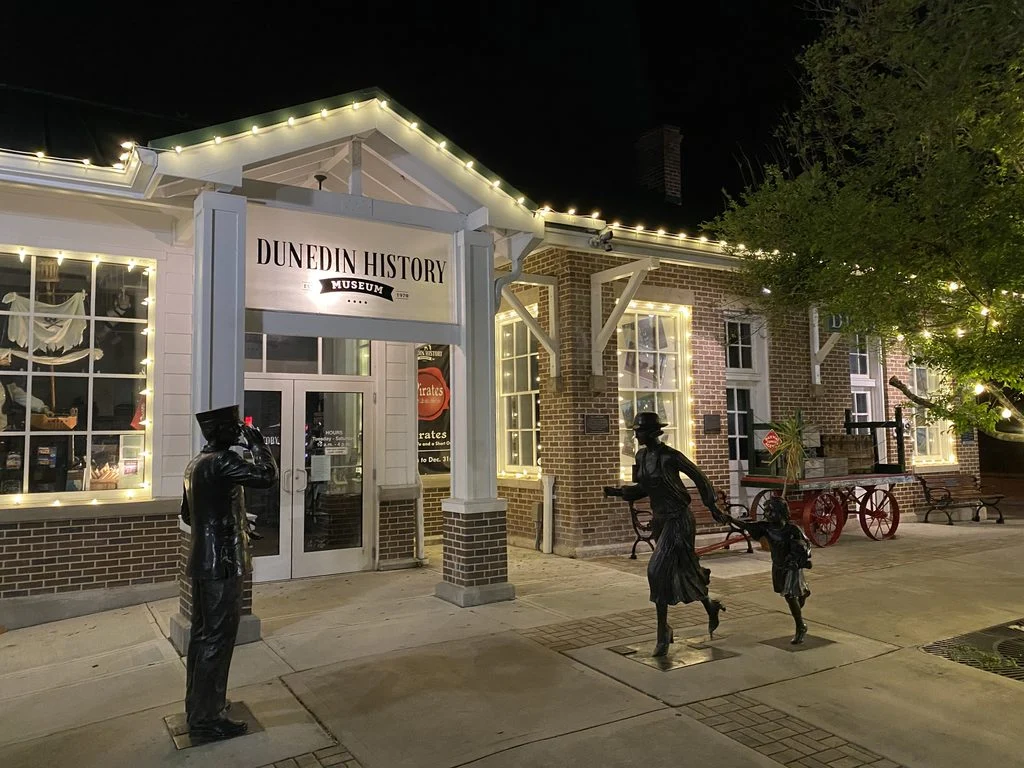
The old railroad depot still stands on Main Street and today houses the Dunedin History Museum.
I think that is one of the best pieces of preservation in town because the building did not have to disappear for the city to move forward.
The railroad itself is gone, but its route continues to influence daily life.
Much of the former rail corridor is now part of the Pinellas Trail.
People who once waited there for trains have been replaced by runners, cyclists, and people walking downtown for coffee or lunch.
The transportation function changed.
The line through the city did not.
The Great Freeze Nearly Changed Dunedin’s Future
Agricultural communities can look permanent until the weather reminds everyone otherwise.
The Great Freeze of 1894 and 1895 devastated citrus across Florida, and Dunedin was no exception. City records describe temperatures falling into the teens and destroying most of the local orange trees. Many grove owners lost everything and left. (dunedingov.com)
Others stayed.
Skinner and some fellow growers replanted.
Within several years, citrus production returned.
That pattern of destruction followed by rebuilding appears repeatedly throughout Florida history. Hurricanes, freezes, fires, economic crashes, and development cycles all leave their marks.
When we look at an old house today, we are often looking at a survivor of more change than its exterior suggests.
The Homes That Connect Us With Early Dunedin
Dunedin does not have one enormous historic district filled entirely with nineteenth-century houses.
Its older buildings are scattered through different parts of the community, which makes finding them more interesting.
One of the most important is the J.O. Douglas House at 209 Scotland Street.
The property is listed on the National Register of Historic Places and dates to around 1880. Douglas, one of the Scottish merchants associated with naming Dunedin, lived there. (pinellas.gov)
Think about that for a moment.
This is not simply a house designed to look historic.
It is connected directly to someone involved in giving the city its name.
That distinction matters.
Another significant historic property is Andrews Memorial Chapel, also listed on the National Register.
The building originally served as a church and was later relocated. Its survival is a good example of how preservation sometimes requires a building to change location in order to remain part of the community.
Dunedin adopted a historic preservation ordinance in 2003, creating tools for voluntary local designation and preservation review. (pinellas.gov)
For people considering the purchase of an older property, it is important not to assume that every old house has the same preservation status.
A century-old home can be historically interesting without being individually listed on the National Register or locally designated.
Those are separate questions.
The 1920s Arrive in Dunedin
Then came Florida’s great real estate boom.
The 1920s transformed communities across the state as developers sold an increasingly romantic vision of Florida to buyers from the North and Midwest.
Dunedin was part of that excitement.
Prior to 1924, city planning records identify Fenway on the Bay as Dunedin’s only subdivision. Then new developments began appearing quickly. By 1925, announcements for new subdivisions were arriving almost every month. (dunedingov.com)
It was an extraordinary period of optimism.
Not all of it lasted.
But many physical traces remain.
The Fenway Hotel and the Jazz Age
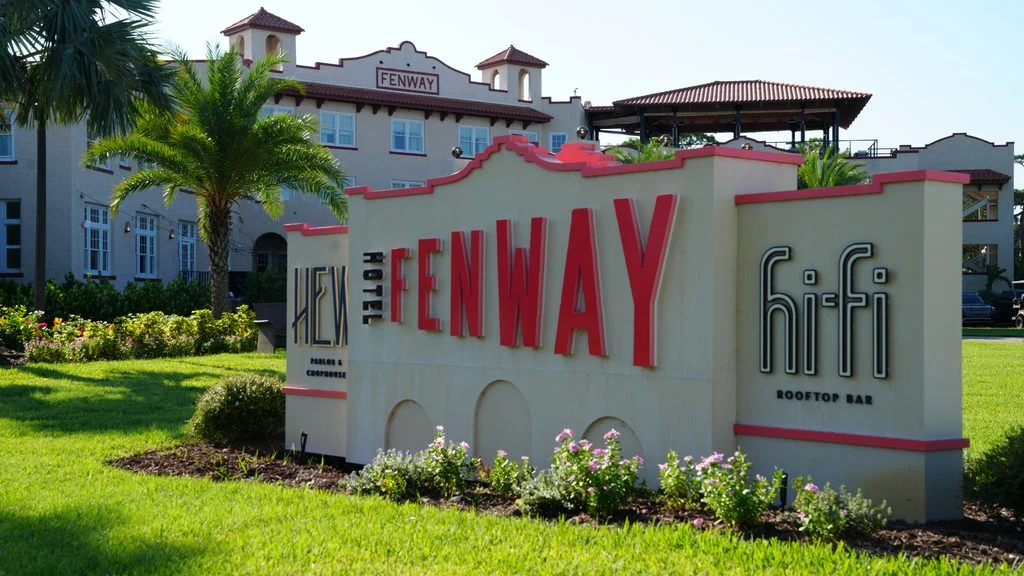
The Fenway Hotel opened in 1924.
If you stand on Edgewater Drive today and look at it, the building still feels substantial enough to suggest how ambitious Dunedin was becoming during the Florida boom.
The hotel welcomed travelers, entertainers, politicians, and other guests. It also became connected to broadcasting history through an early radio station. (visitstpeteclearwater.com)
The hotel’s survival was not guaranteed.
Like many older buildings, it passed through different uses and periods of uncertainty before being restored and reopened.
Today the Fenway Hotel is once again operating as a hotel.
I think that is a particularly successful example of adaptive reuse.
The goal was not to freeze the building in 1924.
It was to preserve enough of its identity that the past remains legible while allowing the property to function in the present.
That is often the most realistic future for an important old building.
The Dunedin Isles Dream
One of the most fascinating development stories came in 1925.
Michigan builder Edward Frischkorn proposed an enormous project known as Dunedin Isles.
The original plan was far more ambitious than what eventually appeared.
City planning documents describe a proposed development covering approximately 3,000 acres, containing thousands of building lots and several man-made islands. One planned island was even supposed to contain a golf course. (dunedingov.com)
The plan projected a massive increase in population.
Then the Florida land boom collapsed.
The Great Depression followed.
The original vision was never completed.
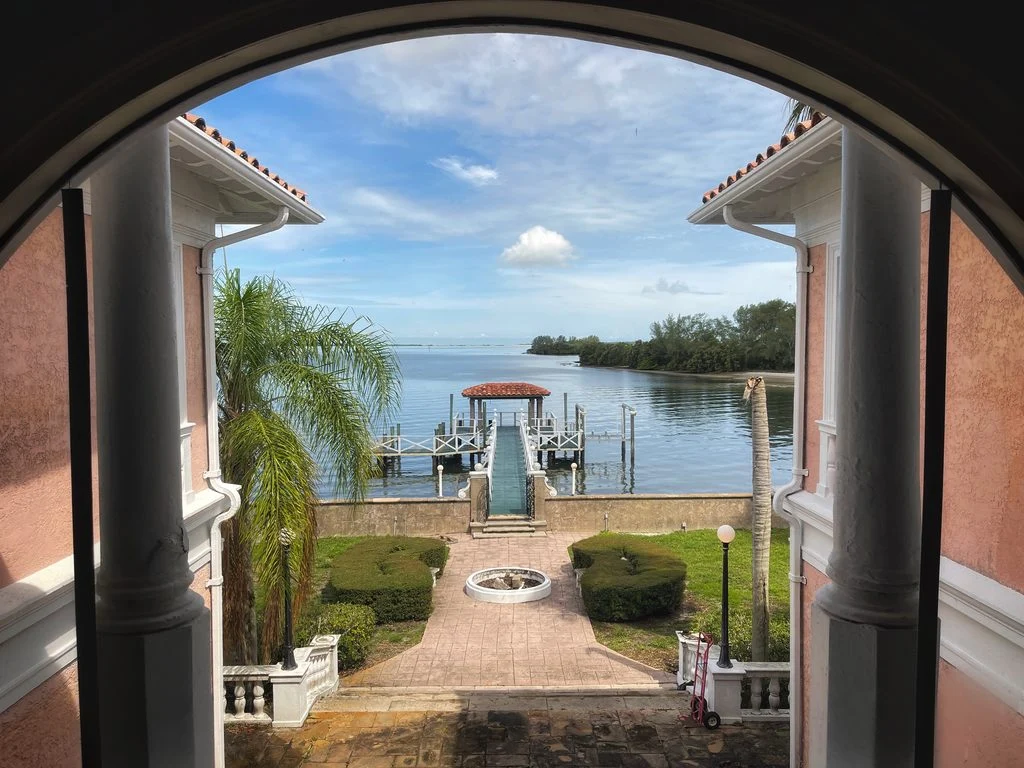
What survived included portions of the development, a golf course, and some notable Mediterranean Revival residences.
That history explains why certain parts of northern Dunedin feel architecturally different from the smaller cottages and bungalows closer to the older core.
Neighborhood design rarely happens by accident.
It usually reflects the aspirations and economics of the period in which the land was developed.
Architecture Tells the Story Without Saying a Word
Dunedin’s architecture is not uniform.
That is part of what makes it interesting.
You can find simple vernacular houses, Craftsman-influenced bungalows, Mediterranean Revival buildings, mid-century homes, ranch houses, cottages, and more contemporary construction.
The city’s architectural guidelines specifically recognize these different traditions and note the influence of Old Florida forms as well as Mediterranean Revival design in areas such as Dunedin Isles. (dunedingov.com)
When I am looking at an older home, I try not to begin with the question, “Is this historic?”
That question is too broad.
I would rather ask:
What period does the house belong to?
What parts appear to be original?
What was changed?
How does the house sit on the lot?
What does the porch tell us?
Was an addition made sympathetically?
What type of foundation is underneath it?
How has the property adapted to Florida weather?
Those questions reveal more than an architectural label alone.
For anyone considering one of these properties, I have written more about that process in my guide to buying and selling historic and older homes throughout Tampa Bay.
Hog Island Becomes Two Islands
The history west of downtown is equally interesting.
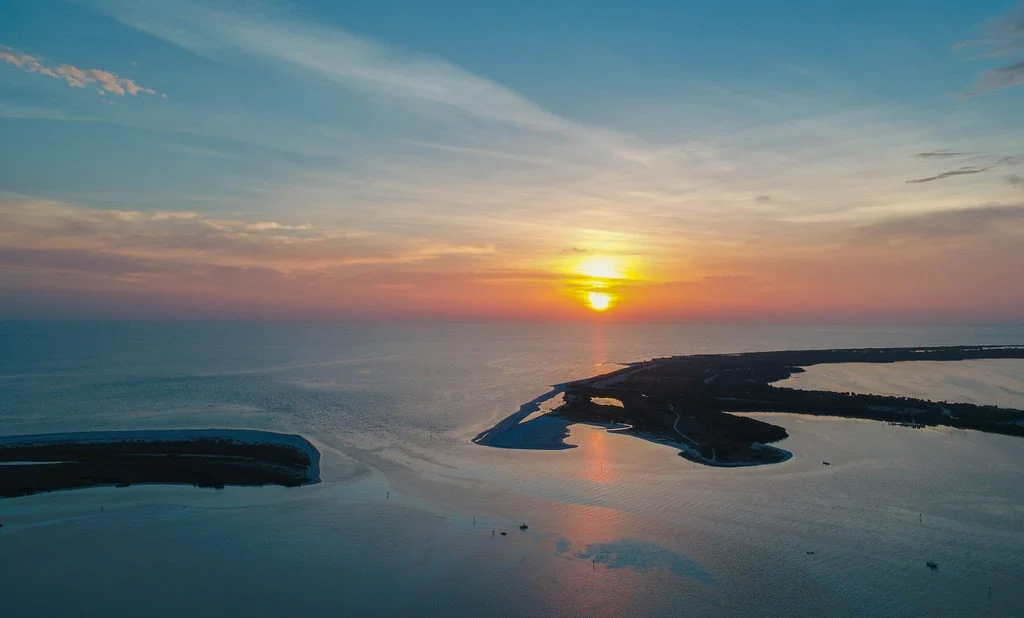
Honeymoon Island and Caladesi Island were once part of a single barrier island known as Hog Island.
Then came the hurricane of 1921.
The storm opened a channel through the island, creating what became known as Hurricane Pass and separating what we now know as Honeymoon and Caladesi. (floridastateparks.org)
This is one of those pieces of local history that changes the way you look at a map.
The geography we treat as permanent can be surprisingly temporary.
Barrier islands move.
Passes open and close.
Storms reshape coastlines.
The Gulf has always been part of Dunedin’s story, and not merely because people enjoy watching the sunset.
How Honeymoon Island Got Its Name
Hog Island did not become Honeymoon Island because of some ancient romantic legend.
The name came from a twentieth-century promotion.
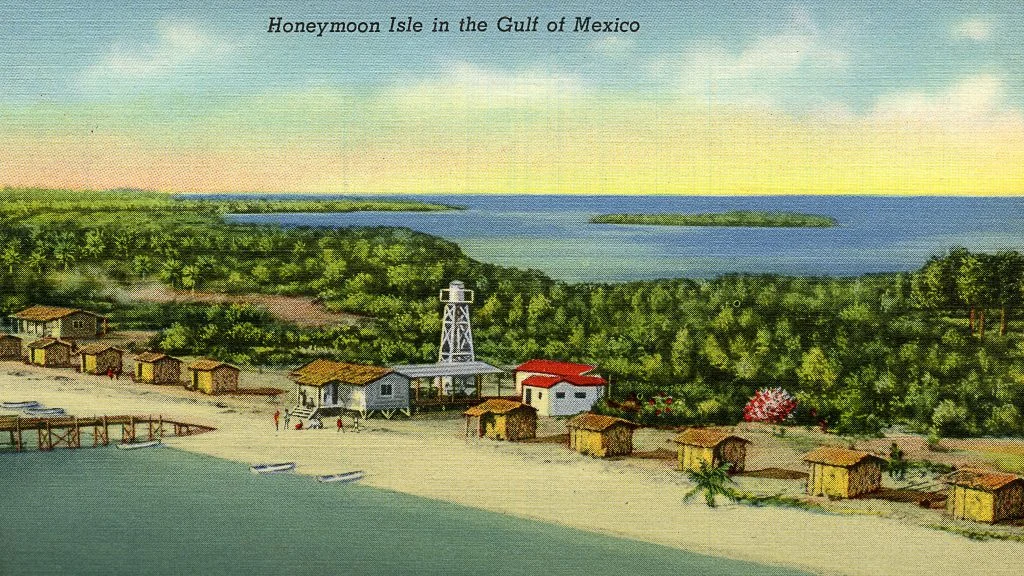
In 1939, developer Clinton Washburn acquired the island and worked with LIFE magazine on a contest that brought newlywed couples to stay in thatched honeymoon cottages on the island.
The marketing idea worked.
The name remained. (floridastateparks.org)
Today, Honeymoon Island State Park includes miles of shoreline, trails, wildlife habitat, and access to the ferry serving Caladesi Island.
For many people moving to Dunedin, access to Honeymoon Island is one of the things that first puts the city on their radar.
But it becomes even more interesting once you know that the name itself began as a carefully crafted tourism campaign.
Florida has been selling the dream of Florida for a very long time.
Caladesi and the Scharrer Family
Caladesi offers a different story.
The island is closely associated with the Scharrer family, whose homestead represents another chapter in Pinellas County’s settlement history. The Scharrer Homestead is recognized in regional cultural-resource surveys as an important early settlement site. (pinellas.gov)
Caladesi feels removed from urban Tampa Bay today, but families actually lived and worked in this environment.
That is easy to forget when we see the island primarily as a destination.
Land that becomes recreational space often has an earlier human history beneath it.
The Dunedin Causeway Changes Access Again
For much of Dunedin’s history, the islands were accessible primarily by boat.
The construction of the causeway fundamentally changed that relationship.
Suddenly, reaching the Gulf became part of an everyday automobile trip.
The causeway helped make Honeymoon Island part of ordinary life in Dunedin rather than something geographically separate from it.
Today, someone can leave downtown, cross the causeway, and be standing beside the Gulf within minutes.
That proximity is one reason Dunedin real estate feels different from many inland Tampa Bay communities.
The town does not simply claim a coastal identity.
The water is physically present in daily life.
Baseball Becomes Part of Dunedin
A completely different kind of tradition began in 1977.
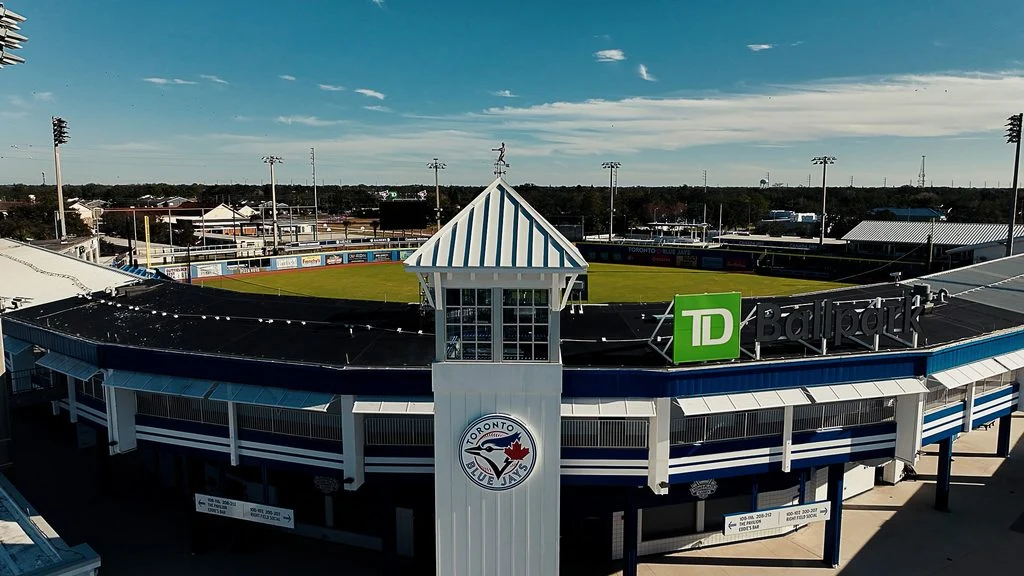
That was the inaugural season of the Toronto Blue Jays.
Their very first spring training game was played in Dunedin on March 11, 1977. Toronto defeated the New York Mets 3-1. (mlb.com)
The relationship continued.
Dunedin has remained the Blue Jays’ spring training home throughout the history of the franchise.
TD Ballpark now serves as the spring home of the Major League team and the regular-season home of the Dunedin Blue Jays. (mlb.com)
Spring training changes the rhythm of the city.
You notice Canadian license plates.
Restaurants get busier.
People walk downtown in Blue Jays shirts.
The relationship has lasted long enough that baseball is no longer simply an event that happens here each spring.
It has become part of Dunedin’s identity.
The Railroad Becomes a Trail
Perhaps no transformation better explains modern Dunedin than what happened to the railroad corridor.
The same transportation line that once helped ship citrus and bring passengers into town eventually became part of the Pinellas Trail.
Instead of trains moving through downtown, cyclists and pedestrians now follow the corridor.
That sounds like a small change until you consider how much it affects the city.
The trail runs directly through downtown rather than bypassing it.
A person riding a bicycle can stop for lunch, shop, meet friends, or continue north toward Tarpon Springs or south toward Clearwater and St. Petersburg.
The old transportation corridor still creates economic activity.
It simply does it at a different speed.
The Dunedin History Museum even maintains a “Rails to Trails” exhibit that explores this transition.
This is exactly the kind of history I enjoy.
The past was not erased.
Its route was reused.
The Small Downtown That Managed to Stay Small
One of the things people consistently respond to in Dunedin is the scale of downtown.
It is walkable.
Buildings generally meet the street in a way that encourages movement between them. Independent shops, restaurants, breweries, public spaces, and the Pinellas Trail create activity without requiring the entire area to feel like a large entertainment district.
That did not happen automatically.
Cities make decisions about density, redevelopment, streets, parking, preservation, and public space.
Those choices accumulate.
Visitors sometimes describe Dunedin as though it were simply lucky enough to remain charming.
I think that description undersells the effort required to protect the character of a place while still allowing it to evolve.
A Town With a Brewery Before Craft Beer Was Everywhere
Another piece of modern Dunedin identity came from beer.
Dunedin Brewery opened in the 1990s and is widely recognized as Florida’s oldest microbrewery still operating.
Today the brewing scene is much larger.
What began as something unusual became part of downtown culture and contributed to the reputation Dunedin has now as a food, beer, and entertainment destination.
The lesson is similar to the railroad story.
A community’s identity is not created entirely in one historical period.
Some traditions are old.
Others become traditions because they last.
Preservation Is More Than Keeping the Oldest House
One of the misunderstandings around historic preservation is that the goal is to prevent change.
That is rarely realistic.
A house built in 1915 probably did not begin life with modern air conditioning, current electrical service, hurricane-rated openings, contemporary kitchens, or the kind of bathrooms buyers expect today.
Older houses survive because people adapt them.
The question is how.
When alterations respect scale, proportion, materials, and the qualities that made a house interesting in the first place, modernization can extend its useful life.
Poor alterations can erase those qualities.
This is why I think buyers and sellers should know the difference between old, historic, original, and restored.
Those words are not interchangeable.
A 100-year-old house can have very few original features.
A substantially renovated property may still retain meaningful architectural character.
A building does not need formal designation to be historically interesting.
And formal designation does not mean nothing can ever be changed.
Property-specific research matters.
Buying a Historic Home in Dunedin
This is where history becomes practical.
If you are considering buying an older home in Dunedin, I would begin by separating romance from due diligence.
You are allowed to fall in love with the porch.
You should still understand what is holding it up.
I would want to examine the age and apparent condition of major systems, including the roof, electrical system, plumbing, HVAC, foundation, windows, and any additions.
Older Florida homes can also raise questions involving:
- crawlspaces and moisture
- termites and wood-destroying organisms
- prior additions
- flood exposure
- wind mitigation
- insurance
- cast-iron or older plumbing
- electrical panels and wiring
- roofing
- historic designation
- permitting
- property setbacks
- renovation plans
Not every older property will have every one of these concerns.
That is precisely why the analysis should be property-specific.
The goal is not to talk someone out of an old house.
It is to understand what they are buying.
My broader historic and older homes guide explains some of the questions I encourage buyers and sellers to consider before making decisions.
Selling a Historic or Distinctive Home in Dunedin
Selling an older Dunedin home creates a different challenge.
The house may be competing against newer construction with larger closets, modern floor plans, newer systems, and fewer maintenance concerns.
Trying to imitate those houses is usually the wrong approach.
The better strategy is to understand what makes the older property compelling and communicate that accurately.
That might include:
- the architecture
- a particularly good porch
- original woodwork
- historic photographs
- walkability
- proximity to downtown
- mature landscaping
- a connection to the Pinellas Trail
- waterfront or sunset views
- a documented property history
- thoughtful renovations
- a rare lot or setting
But none of those things replaces good pricing.
History does not automatically create value.
Marketing can help buyers understand why a property matters, but the final price still exists within a market.
That combination of storytelling and market analysis is especially important with unusual homes.
You can read more about how I approach representation at Middleton Tampa Bay.
Why I Care About Dunedin Personally
Dunedin is more than one of the places where I work.
It is home.
That changes the way I experience it.
I have photographed the city, walked its streets, watched it change, spent time on the islands, and told some of its stories through my documentary work and through Discover Delightful Dunedin.
The more I learn, the more I realize how much is easy to overlook.
A bicycle ride on the Pinellas Trail follows the path of a railroad that helped create downtown.
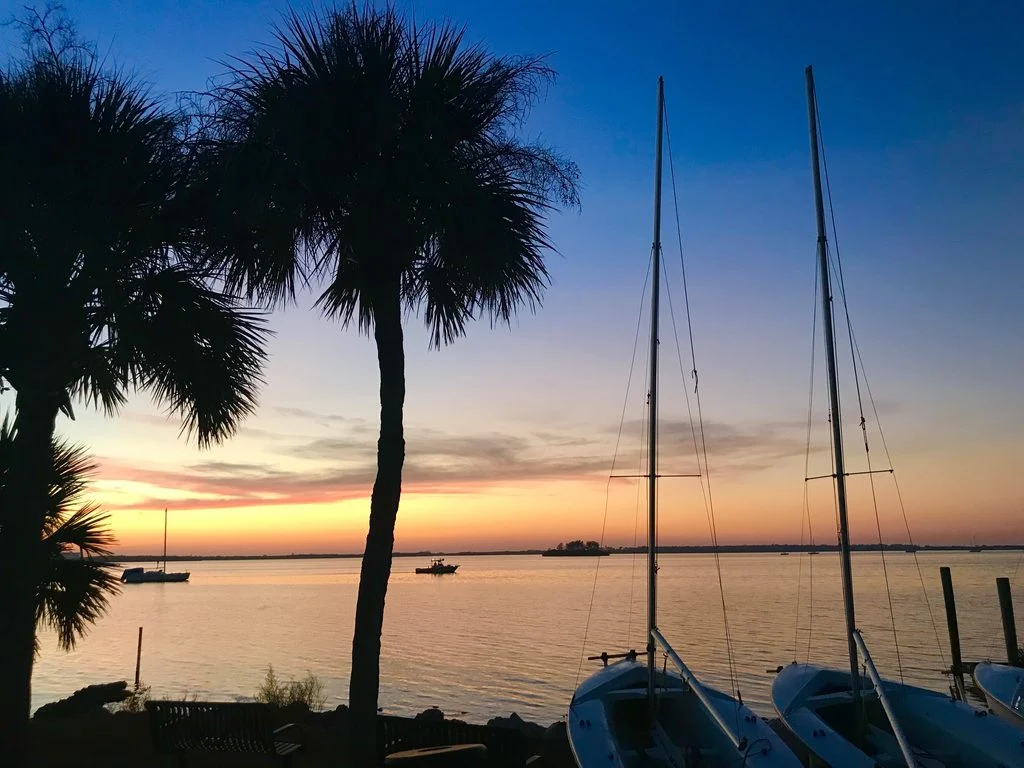
A sunset from the Fenway looks across water that once carried commercial sailing vessels.
A trip to Honeymoon Island crosses toward land reshaped by a hurricane.
A house on Scotland Street can lead directly back to the people who gave the town its name.
That is what makes local history worthwhile to me.
It puts depth behind familiar scenery.
Want to Explore Dunedin’s History Yourself?
The Dunedin History Museum is an excellent place to begin.
The museum occupies the historic railroad depot and includes exhibits on early Dunedin, citrus, maritime history, the islands, and the railroad. Its archival collection also includes the Dunedin Times, which began publication in 1924. (dunedinmuseum.org)
The museum also offers walking tours that move through downtown, Edgewater Drive, Scotland Street, and Highland Avenue. (dunedinmuseum.org)
For someone researching an individual property, old newspapers, photographs, property records, maps, permits, and family documents can all help.
One of the most valuable things an owner can do is preserve what they discover.
A photograph sitting in a drawer today may become the best surviving record of a house fifty years from now.
Dunedin Is Still Becoming Dunedin
It is tempting to finish a history article by describing the present as though the story has reached its conclusion.
It has not.
Dunedin will continue changing.
Houses will be renovated.
Some buildings will disappear.
Others will be saved.
The shoreline will continue to move.
Downtown will evolve.
New residents will arrive and begin traditions that people decades from now may think have always existed.
That is how cities work.
The question is not whether Dunedin changes.
The more interesting question is whether it can change without losing the qualities that make it identifiable.
So far, those qualities are still easy to find.
Walk Main Street early in the morning.
Ride the trail past the old depot.
Drive Edgewater as the sun begins to drop.
Look at the houses instead of just the landscaping.
Stand beside the water and imagine arriving here by sailboat instead of automobile.
Then remember that much of downtown was once a cotton field.
It becomes difficult to see Dunedin in quite the same way again.
Buying or Selling a Home in Dunedin, Florida?
I’m Mark Middleton, a Tampa Bay REALTOR® with Middleton Tampa Bay at Compass, and Dunedin is both a community I represent professionally and the place I call home.
My work includes helping buyers and sellers with historic homes, distinctive properties, waterfront homes, and residences throughout Dunedin and the Tampa Bay area.
If you are considering buying a historic home in Dunedin, I can help you understand not only the market, but also the questions that come with an older property. If you are preparing to sell one, my approach combines pricing, photography, property research, storytelling, and marketing designed to help buyers understand what makes the home different.
You can also explore more of the community through Discover Delightful Dunedin and see more of my photography at Mark A. Middleton.
Thinking about buying or selling a home in Dunedin? Call or text me at 727-871-7653 · Compass, email markmiddleton@compass.com · Compass, or contact me through Historic Homes Tampa Bay.
I would be happy to talk about the house, the neighborhood, and what you are hoping to do next.
The History of Dunedin, Florida: A Love Letter to One of America's Most Remarkable Small Cities
There is a moment, if you have spent enough time in Dunedin, when the city stops being a place you are visiting and starts being a place that has always existed — as if it materialized from the Gulf itself, salt-seasoned and unhurried, with its palm-lined streets and its harbor light and its particular way of slowing the day down to something manageable.
That feeling is not accidental. It is the residue of a specific and deliberate history — a history involving Scottish merchants and a post office petition, citrus groves and sailing vessels, pipe band music echoing down Main Street, a red-painted sailboat that launched a revolution in youth sailing across the world, and a community of people who have consistently chosen to protect what they love about this city rather than surrender it to growth, expediency, or the lowest common denominator.
This is the story of how Dunedin, Florida, became what it is. It is not a complete encyclopedia. It is something more like what happens when a passionate local historian and photographer sits down across from you at a table by the water and says: let me tell you about this place.
Before the Name: The Land Before Dunedin
Long before two Scottish merchants argued over what to call their post office, this stretch of Gulf Coast belonged to people who had known it for thousands of years.
The Tocobaga — a chiefdom of Indigenous people who populated the Tampa Bay area and its coastal margins for millennia before European contact — fished these waters, harvested shellfish from the mangrove shores, and built the ceremonial mounds that still punctuate the landscape of Pinellas County if you know where to look. They lived in a relationship with this coast that was intimate and sustainable in ways that subsequent civilizations would struggle to replicate or understand.
Spanish explorers arrived in the mid-1500s. By the 17th century, European contact, disease, and displacement had decimated the Tocobaga. The land passed through Spanish, British, and finally American hands as Florida’s territorial history unfolded — a sequence of flags and treaties and surveys that reduced a living culture to a colonial footnote.
The first land deed on record for what would become Dunedin was issued to Richard L. Garrison in 1852, only seven years after Florida achieved statehood. The area was raw frontier — subtropical scrub and pine flatwoods sloping toward a coastline of shallow sound and barrier island, the Gulf beyond it wide and still and endlessly blue.
By the 1860s, settlers had arrived from Georgia, from the Carolinas, from elsewhere in the American South, drawn by cheap land and the possibility of citrus farming. A man named George L. Jones opened a general store and did what men with general stores and civic ambitions often did: he tried to name the settlement after himself. For a time, the community was known as Jonesboro.
It would not remain Jonesboro for long.
Two Scotsmen and a Post Office: The Naming of Dunedin
In the mid-1870s, two Scotsmen from Edinburgh arrived on the waterfront of what was still being called Jonesboro and opened a general store. Their names were John Ogilvie Douglas and James Somerville, and they brought with them the particular kind of quiet confidence common to people who know where they come from and have no intention of pretending otherwise.
Douglas and Somerville did well. They understood trade. The community was growing, and it needed a proper post office — the essential civic infrastructure that would connect it to the wider world and give it, formally, a name.
In 1882, Douglas and Somerville filed their petition. The post office would be named Dunedin. The name came from Dùn Èideann — the Scottish Gaelic name for Edinburgh, meaning “castle on the rock.” It was their way of carrying Scotland with them to Florida’s Gulf Coast, of planting a small flag of identity in a landscape that had not yet decided what it wanted to be.
George Jones objected. It is recorded that he tried, in 1870, to formally name the community Jonesboro. He did not succeed. The Scots were more persistent, more organized, and more poetic. The name Dunedin prevailed and has persisted through every subsequent chapter of the city’s life.
It is worth pausing on this moment. Two immigrants from Scotland, thousands of miles from the city they named their new home after, insisted on calling their corner of the Florida Gulf Coast by the Gaelic name for Edinburgh. Not for the benefit of tourism or branding or economic development, but because that is where they came from and because a place deserves a name that means something to the people who live in it.
That instinct — to honor origins, to preserve identity, to insist on meaning over convenience — would define Dunedin’s character for the next century and a half.
The Douglas family’s influence ran deep. J.O. Douglas built his home on Scotland Street in the 1880s. That home still stands today as a private residence — a physical continuity between the city’s founding moment and its present life. Streets named Scotland, Highland, Aberdeen, Louden, Locklie, Beltrees, and Stirling carry the map of Scotland into the geography of Pinellas County. You can drive through Dunedin today and feel the grid of another city underneath it, ghost-written in Gaelic place names.
A Seaport on the Gulf: Dunedin’s Maritime Golden Age
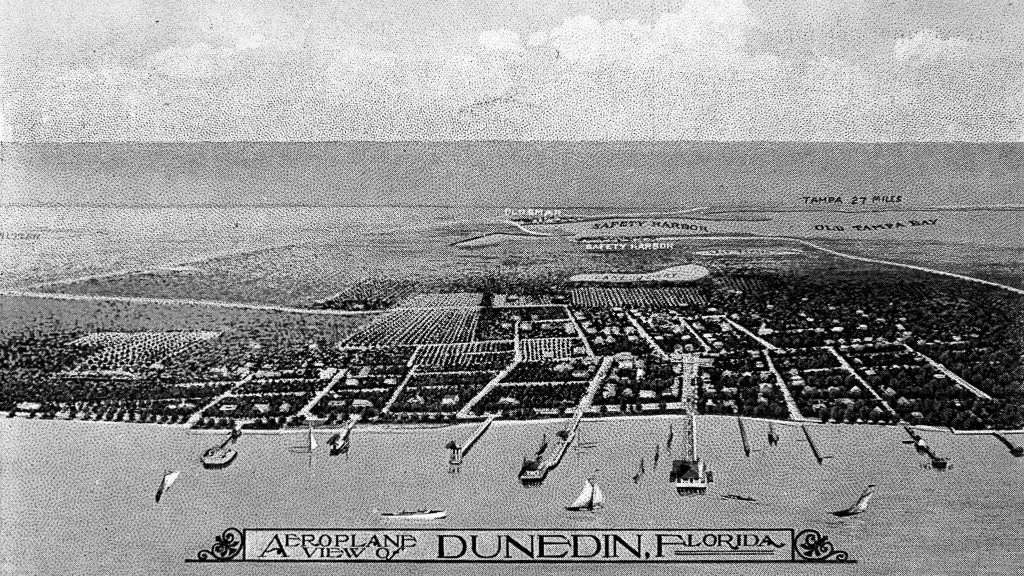
Before the railroad, before the automobile, before the causeway to the islands, Dunedin was a port.
The city’s founders understood something fundamental about its geography: the natural harbor here could accommodate larger sailing vessels than the harbors of many competing settlements along Florida’s Gulf Coast. A dock was built early, and Dunedin became an important trading center. At its peak, it boasted the largest fleet of sailing vessels in the state of Florida — a distinction that is easily forgotten in a place better known today for craft beer and beach parks, but that shaped the city’s character in ways that persist.
The waterfront was the center of commerce. Citrus was the primary export — the warm, fertile soil of Pinellas County proved ideal for growing oranges and grapefruits, and by the late 1880s the citrus industry dominated the local economy. Sailing vessels loaded with fruit departed from Dunedin’s dock for markets along the Gulf and the East Coast. The town was connected to the rhythms of the sea in the most literal sense: the rise and fall of fortune tracked the departure and arrival of ships.
Dunedin was incorporated as a town in 1899 — and the precipitating cause, recorded with a kind of civic dry humor, was the problem of pigs running rampant through the settlement. The incorporation allowed the new town government to regulate livestock. To this day, a ban on livestock within city limits remains on the books, a ghost ordinance from the era when Dunedin’s most pressing municipal challenge was four-legged and resentful of fences.
By 1913, the town had a population of only 350. It was small, rooted, and maritime. The Dunedin Boat Club — one of Florida’s oldest sailing clubs, still operating today — was already part of the community’s social fabric. The relationship between Dunedin and the water was not recreational in those years. It was existential.
The Orange Belt Railway changed the equation. When the railroad arrived, connecting Dunedin to St. Petersburg and to broader markets, the town’s economic center began to shift from the dock to the depot. Citrus could move by rail. The sailing fleet’s central importance diminished. But the waterfront’s identity — as a place of gathering, of commerce, of beauty and aspiration — remained.
The Hurricane of 1921 reshaped the coastline itself. The storm that split Hog Island into what we now call Honeymoon Island and Caladesi Island also devastated much of the area’s citrus industry and altered the physical harbor. The inlet that had allowed sailing vessels to dock was changed forever. Dunedin adapted, as it always has.
The Marina and the Water: A Relationship That Never Ended
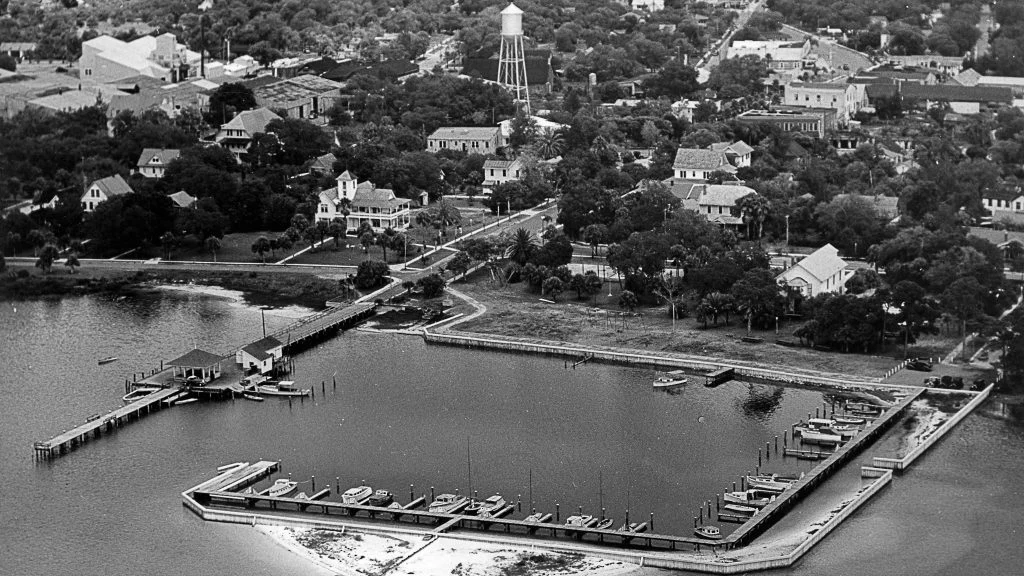
The Dunedin Marina, located at 51 Main Street on the Intracoastal Waterway between the Dunedin and Clearwater Causeways, is not merely infrastructure. It is the physical expression of a relationship between this city and its water that has never really changed, even as everything around it has.
With 194 boat slips, the marina is one of the finest municipal marinas on Florida’s west coast. It is home to the Dunedin Boat Club — a sailing club that traces its origins to the early decades of the 20th century and that has shaped generations of Dunedin residents’ relationship to the Gulf, the sound, and the skill of sailing.
On any given morning at the marina, you will find the same scene that has played out here for well over a century: boats returning from overnight passages, fishermen sorting gear on their docks, sailors checking rigging before heading out into St. Joseph Sound. The smell is salt and diesel and something organic beneath both — the smell of an active working waterfront, of a city that still knows how to use its harbor.
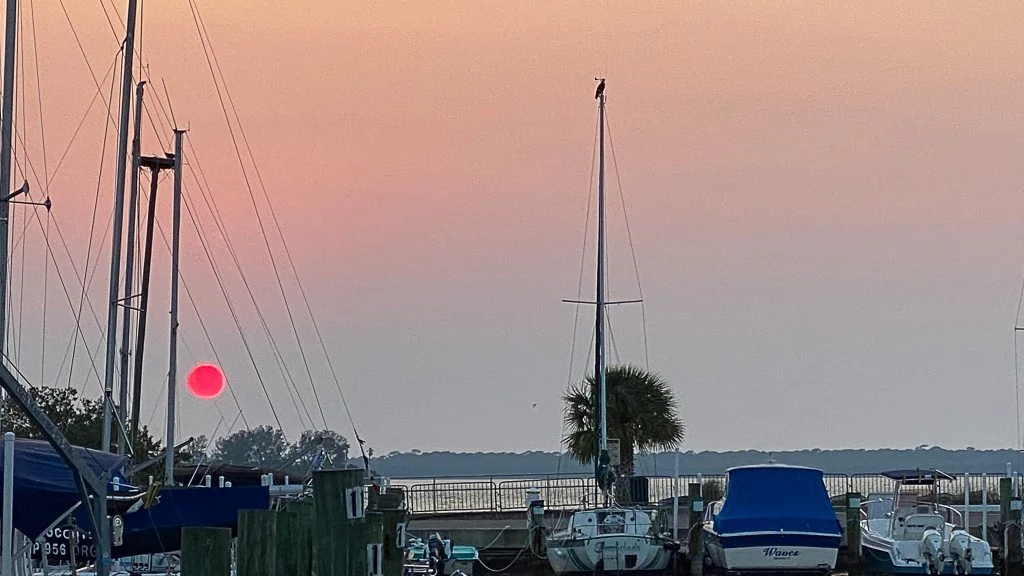
The marina is visible from Edgewater Drive — that mile-long stretch of Alternate US 19 south of downtown that remains one of the few places along Florida’s Gulf Coast where buildings have not yet obscured the view of the Intracoastal Waterway and the islands beyond it. Standing at Edgewater Park and looking west, you can see the marina to the north, the causeway to Honeymoon Island stretching toward the horizon, and Caladesi Island shimmering beyond St. Joseph Sound. It is one of those views that validate every decision anyone ever made to live here.
The waterfront remains central to Dunedin’s identity because the city has consistently chosen to keep it that way. Where other Gulf Coast communities allowed commercial and residential development to privatize their shorelines, Dunedin maintained public waterfront — the marina, Edgewater Park, Weaver Park, and the causeway corridor — as common ground. The result is a community that still feels like it belongs to everyone.
Edgewater Drive: Dunedin’s Most Beautiful Street
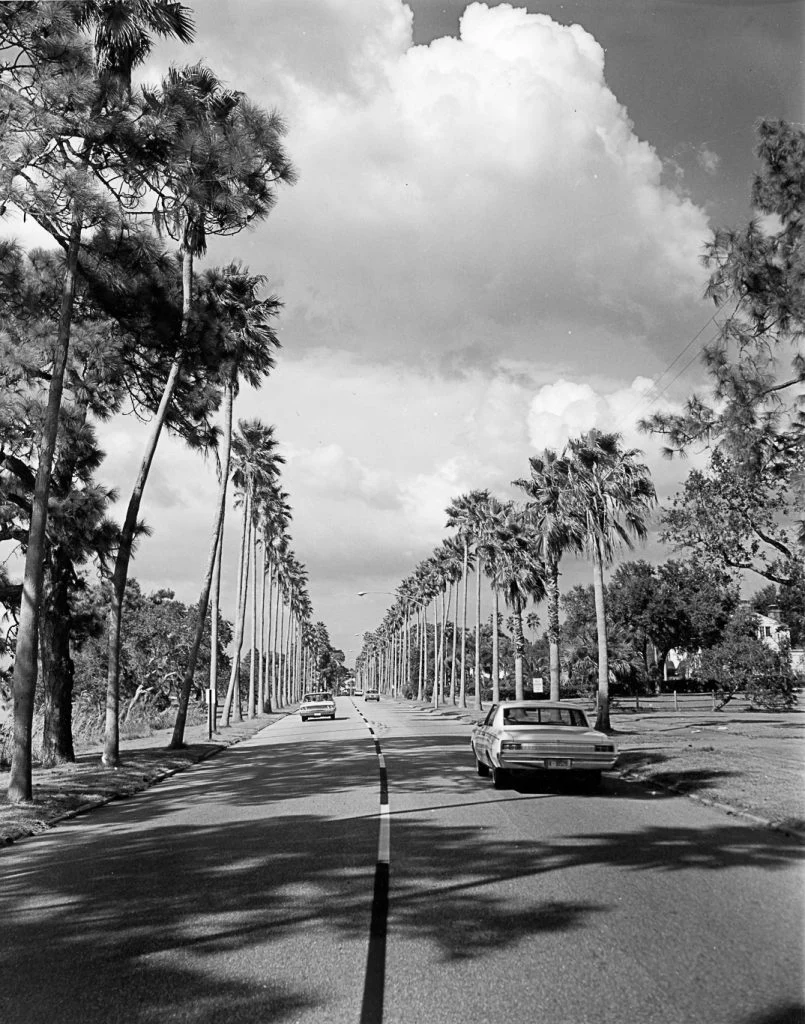
There is a particular pleasure in looking at photographs of Edgewater Drive from the 1960s. The royal palms stand at attention along the roadway, their fronds catching the Gulf breeze, the sound glittering through them toward the barrier islands beyond. Cars from that era — wide, chrome-laden, effortlessly mid-century — move slowly along the boulevard in the way that people drive when they are not entirely sure they want the road to end.
The scene today is remarkably similar. That is itself a remarkable fact. In sixty years of Florida development, in a state that has systematically consumed its own coastline in the name of progress, Edgewater Drive has remained essentially what it was — a palm-lined waterfront boulevard that gives residents and visitors access to one of the finest unobstructed water views on the Gulf Coast.
This did not happen by accident. It happened because the city’s residents, its elected officials, and its civic culture valued the view enough to protect it. The mile-long stretch of Alternate US 19 south of downtown remains — as Wikipedia notes with appropriate civic pride — “one of the few open waterfront communities from Sarasota to Cedar Key where buildings do not completely obscure the view of the Intracoastal Waterway and the Gulf of Mexico beyond.”
Edgewater Drive is also where some of Dunedin’s most significant residential architecture concentrates — historic homes set back from the waterfront beneath old oak trees, bungalows and craftsman structures that were built in the city’s early decades and that have been maintained with the care that comes from understanding what you have. The houses along Edgewater represent a continuity of habitation — families who have lived here for generations, who have watched the same sunsets from their front porches, who have known this particular quality of light for decades.
If you want to understand Dunedin, drive Edgewater Drive slowly, early in the morning, with the windows down. The Gulf breeze will come through from the west and the palms will move against a pale sky and you will understand, in a way that no description fully captures, why people stay here.
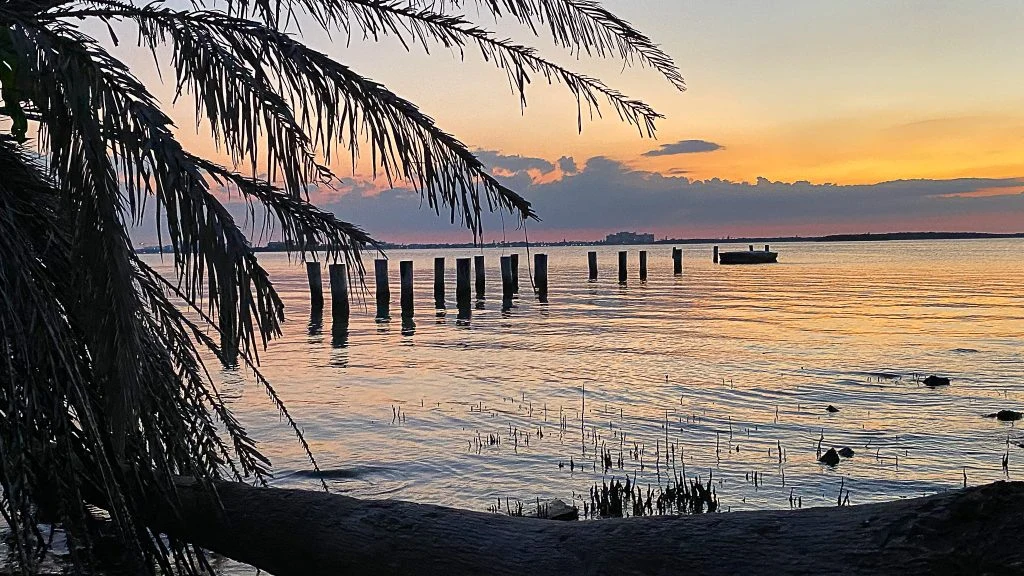
Historic Homes: Dunedin’s Built History
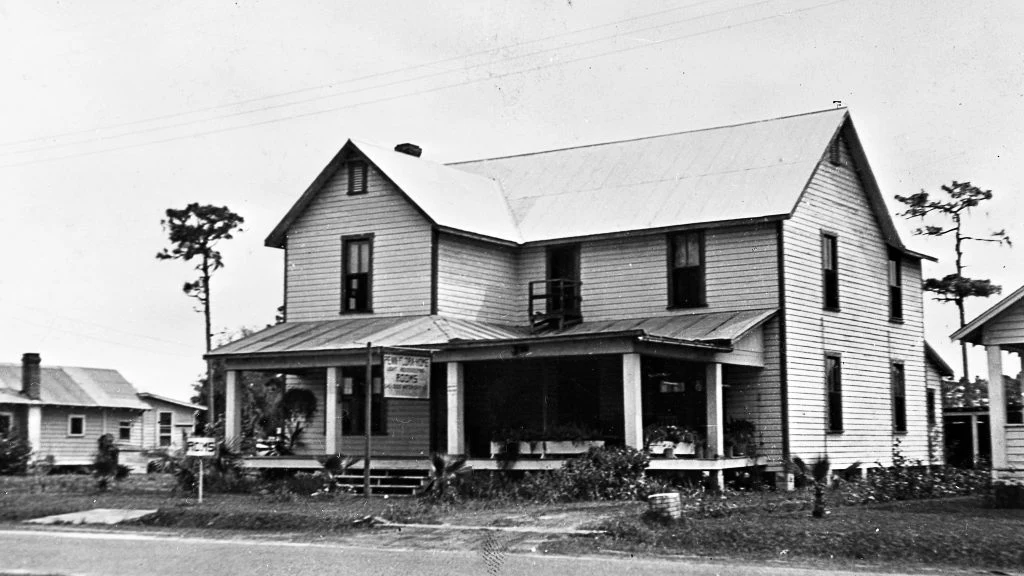
Dunedin’s historic homes are the physical archive of its history — each one a chapter in the story of a city that grew slowly, deliberately, and with aesthetic ambition.
Scotland Street, where J.O. Douglas built his own home in the 1880s, remains one of the most historically evocative addresses in the city. The naming is no accident — this was where the Scottish founders set down roots in the most literal sense, building homes on a street they named after the country they carried with them across the Atlantic. Walking Scotland Street today, you move through a layering of time: Victorian-era construction beneath Craftsman additions beneath mid-century modifications, all of it sitting under the same long-canopied oaks that watched the city’s founders move through their daily lives.
Victoria Drive offers a similar experience — one of Dunedin’s most architecturally distinguished residential streets, lined with homes that reflect the styles and aspirations of successive generations of Florida Gulf Coast prosperity. These are not grand plantation houses or Mediterranean Revival estates. They are the homes of merchants, boat captains, citrus growers, and civic leaders — scaled to human life, designed for the climate, and built to last.
The Craftsman bungalow is perhaps the most representative architectural form in Dunedin’s historic residential fabric. Built primarily between 1910 and 1940, these homes — with their deep front porches, exposed rafter tails, tapered columns on brick piers, and integration of interior and exterior living — were ideally suited to Florida’s climate in the era before central air conditioning. The porch was not decorative; it was functional, the room where life happened in the long warm evenings, where neighbors spoke across the yard, where children watched the summer storms roll in from the Gulf.
The vernacular Florida home — simpler, more direct, often wood-framed and raised on piers for ventilation and flood protection — appears throughout Dunedin’s older neighborhoods in various states of preservation. These are the homes of ordinary people who built shelter against the heat and the storms and found, in the process, a form of architecture that is as much a product of the climate as the citrus groves were. They are as historically significant as any formal architectural style, and Dunedin’s commitment to historic preservation has kept many of them standing.
The Dunedin History Museum — housed in a restored 1920s railroad depot on Douglas Avenue, a building that is itself a piece of the city’s commercial history — curates the documentary record of this built environment. The museum’s collections and exhibits provide context for what the streets themselves tell you: that this is a city with a layered, nuanced, and genuinely interesting architectural history.
For a deeper look at Dunedin’s historic homes and what it means to own one, read the Complete Guide to Historic Homes in Dunedin Florida and explore the broader architectural context at historichomestampabay.com.
The First Chamber of Commerce: Civic Infrastructure and the Shape of Community
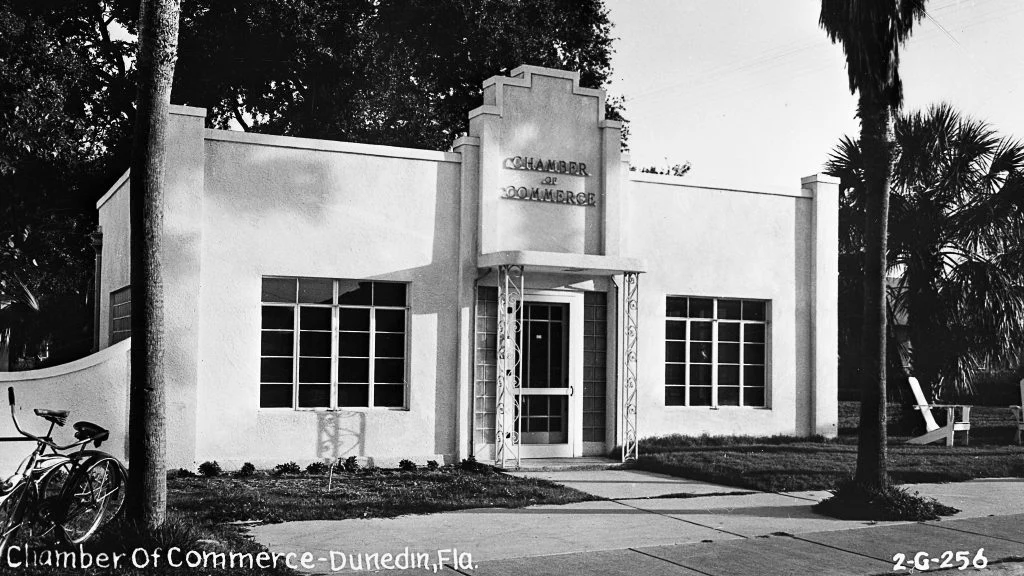
A city becomes itself not only through its geography and its residents but through the institutions it builds to govern, to promote, and to sustain its collective life. Dunedin’s early civic infrastructure — the Dunedin Boat Club, the original Chamber of Commerce, the library (established as a community reading room in the late 19th century and taken over by the city in 1935 when the collection grew to 7,000 titles), the Optimist Club, the various civic organizations that have operated for generations — reflects the same instinct that drove two Scottish merchants to insist on naming their post office after Edinburgh.
These were people who understood that a community is not a collection of individuals sharing a zip code. It is a set of shared commitments, maintained over time, by people who believe the place they live in is worth investing in.
The Chamber of Commerce photograph is a document of a moment when Dunedin’s commercial class looked at their city and decided to organize its future. The faces in the photograph — formal, purposeful, aware of being recorded — represent the same civic impulse that built the dock, petitioned for the post office, incorporated the town, and fought to keep the waterfront public.
That impulse is still alive in Dunedin. It shows up in the community movements that have protected Hammock Park, the Gladys Douglas Preserve, and the open waterfront of Edgewater Drive. It shows up in the Scottish Arts Foundation that runs the Highland Games year after year, and in the volunteers who maintain the City of Dunedin Pipe Band’s international standing. It shows up in the Dunedin History Museum, in the preservation of Andrews Memorial Chapel in Hammock Park, in the careful maintenance of the historic streetscapes that make downtown Dunedin feel like a place rather than a commercial corridor.
The Scottish Arts: Why Pipe Band Music Still Echoes Down Main Street
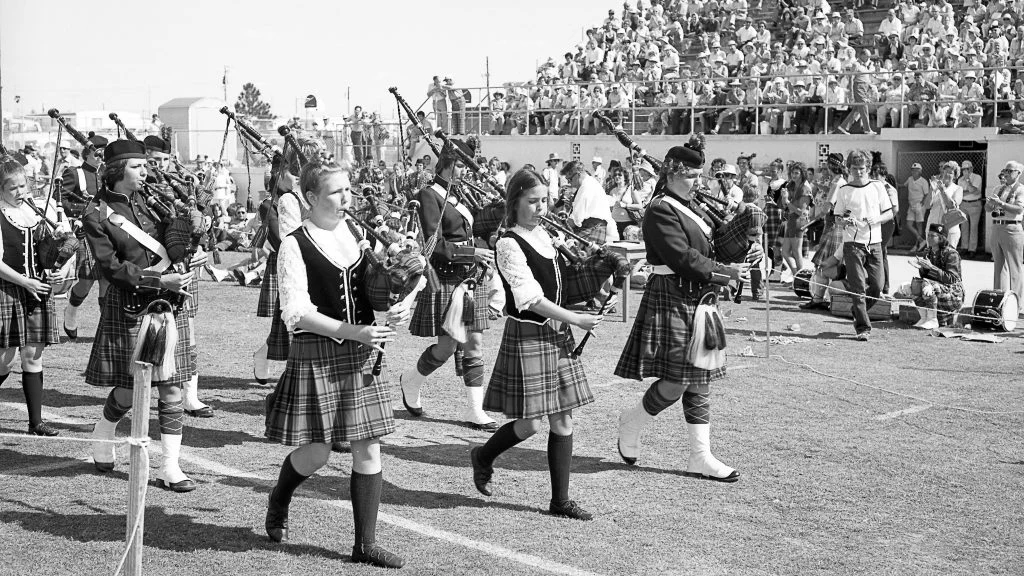
On certain mornings during the school year, if you are in the right part of downtown Dunedin, you will hear them before you see them.
The skirl of bagpipes — that distinctive, carrying sound that sits somewhere between music and weather, that cuts through traffic and conversation and finds you wherever you are — announces the Dunedin High School Pipers. They march in Highland dress, kilts swinging in the Gulf breeze, and the effect is surreal in the best possible way: Scotland, in Florida, on a Tuesday morning in November.
This is not a performance for tourists. It is a living expression of a tradition that has been maintained in this city for decades, rooted in the founding moment when Douglas and Somerville named their home after Edinburgh.
The City of Dunedin Pipe Band
The City of Dunedin Pipe Band was formally established in 1964, emerging from an outlet for young people who had learned piping and drumming through the Dunedin school system. In sixty years, it has grown from a local youth program into one of the most accomplished competitive pipe bands in the world.
The band wears the Edgewater tartan — a custom tartan designed specifically for Dunedin, its colors drawing from the Gulf and its shores, its pattern carrying the city’s waterfront identity into the oldest Scottish textile tradition. When the band marches, they carry Dunedin with them in the most literal possible sense.
The band currently fields four competitive units: Grade 1, Grade 3, Grade 4, and Grade 5. Their competitive record is extraordinary for a band from a city of 37,000 people. They have won the Grade 2 World Championships (before advancing to Grade 1), the North American Championships at Maxville, Ontario, in 2016, 2018, and 2019, and the 2024 Grade 4A European Championships in Perth, Scotland. When they compete, they compete against the best bands in the world, and they regularly win.
This achievement begins in middle school. The Scottish arts program at Dunedin Highland Middle School — named, of course, for the Scottish heritage it was built to celebrate — introduces students to piping and drumming at the age when they are most receptive to difficult, technical skills. The program is led by Pipe Major Iain Donaldson, who trained with some of the finest bands in Scotland (including the House of Edgar Shotts and Dykehead Pipe Band, World Champions) and Drumming Director Eric MacNeill, described as one of the most accomplished American pipe band drummers in history. Students who excel carry their skills to Dunedin High School and ultimately into the City of Dunedin Pipe Band as adults.
This pipeline — from middle school to high school to adult competitive band — is rare in American pipe band culture and is what gives the City of Dunedin Pipe Band its sustained excellence. It is not a band that recruits talent from elsewhere. It grows its own, year after year, in the same schools and on the same streets where the tradition began.
The Dunedin Highland Games: One of America’s Greatest Celtic Gatherings
On the weekend of the Highland Games, Dunedin becomes a different version of itself — louder, more kilted, more likely to smell of haggis and draft Guinness — and also, paradoxically, the most fully itself it ever is.
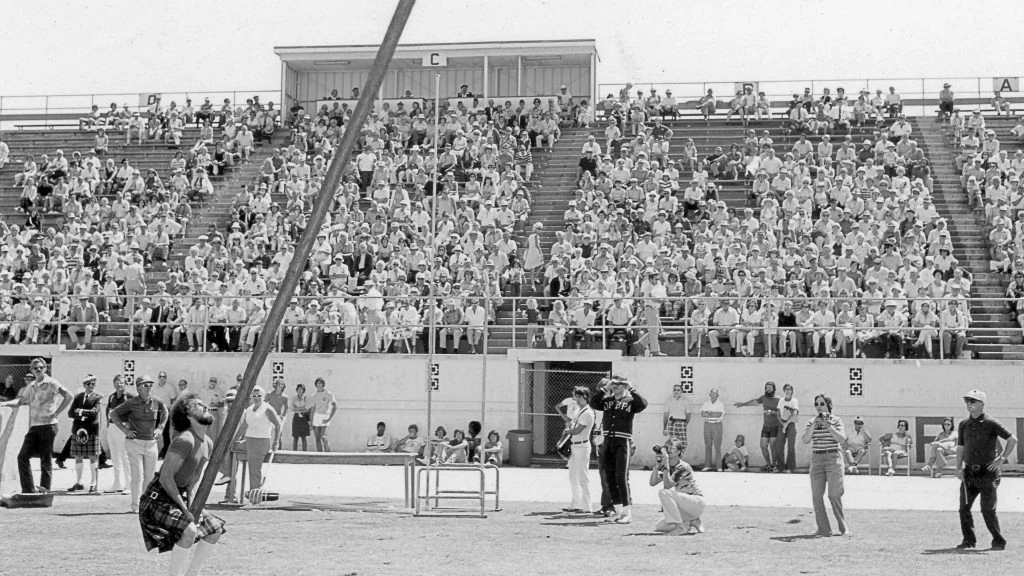
The Dunedin Highland Games and Festival is one of the largest Scottish cultural gatherings in North America. It has been held annually since 1967 — more than 58 years as of 2026, making it one of the oldest continuously running Highland Games events in the United States. The organizing body, originally formed as the Dunedin Highland Games and Festival Committee and incorporated under Florida law on October 29, 1975, became the Dunedin Scottish Arts Foundation in 2015.
The 58th Games in April 2026 drew an expected crowd of 10,000 to Highlander Park, with 46 Scottish clans and societies represented in the Clan Village, 15 or more pipe bands competing, over 250 Highland dancers competing in the Florida Open Highland Dancing Championships, and heavy athletics competitors from across North America vying in stone put, hammer throw, caber toss, and the other ancient tests of strength that trace their origins to clan gatherings in the Scottish Highlands centuries ago.
The heavy athletics events deserve particular mention for those unfamiliar with them. The stone put — often confused with the shot put — uses a heavy, irregularly shaped stone that cannot simply be heaved. Technique, balance, and explosive power all contribute in ways that pure strength alone cannot compensate for. The caber toss requires lifting a full-size log — sometimes twenty feet in length and weighing over a hundred pounds — carrying it at a run, and flipping it so that it falls away from the thrower with the small end pointing toward twelve o’clock. It is a genuinely spectacular athletic feat, and watching it done well produces the particular pleasure of watching any difficult thing done with mastery.
The games begin Friday evening with a parade down Main Street — pipe bands, clans in tartan, the fire department honor guard, a senior drum major from New York who has led Manhattan’s St. Patrick’s Day parade. The Friday night celebration in Pioneer Park features Celtic music, vendors, and the gathering of people who travel from across Florida and beyond to participate in a tradition that their Scottish predecessors set in motion 150 years ago in this small Gulf Coast city.
The Highland Games are also where the generational nature of Dunedin’s Scottish heritage becomes most visible. Students who learned to pipe at Dunedin Highland Middle School compete alongside their teachers. Adults who marched in Highland Games as teenagers bring their own children to compete in the same events. Families who have attended for twenty or thirty years return to find the same clans at the same tables, the same competitive traditions, the same skirl of pipes rising over Highlander Park in the April morning.
“The Celtic music and Highland Games are more than a cultural and tourism attraction,” says Eric MacNeill, president of the Dunedin Scottish Arts Foundation and drumming director of the City of Dunedin Pipe Band. “They are a celebration of the town’s heritage.”
That sentence is exact. The Highland Games are not a performance of Scottish identity for the benefit of outsiders. They are the practice of it — the ongoing, year-by-year renewal of a commitment that began when two merchants from Edinburgh named their Florida post office after home.
Honeymoon Island: The Story of a Place That Almost Wasn’t
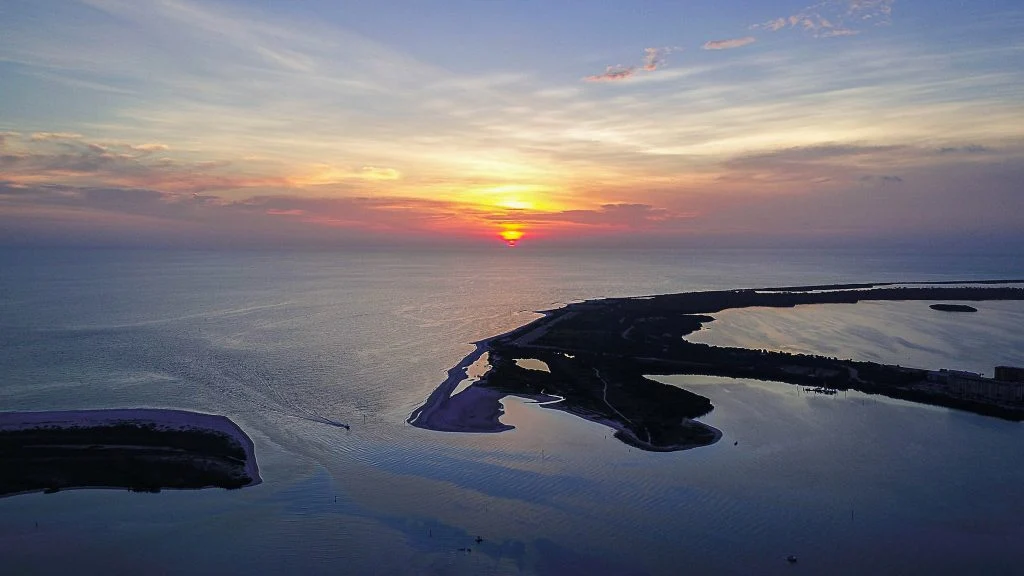
No account of Dunedin’s history is complete without Honeymoon Island, and no account of Honeymoon Island is complete without the story of how it was almost lost.
Before any of it — before the honeymooners, before the causeway, before the state park — there was Hog Island: a wild barrier island inhabited by the Tocobaga for thousands of years, used for logging and farming in the 19th century, unnamed in any romantic sense. The 1921 hurricane split what had been a single large island into two. The northern half became what we know as Honeymoon Island. The southern half became Caladesi Island.
In the late 1930s, a New York businessman named Clinton M. Washburn purchased the northern island. While lunching with a friend who happened to edit Life magazine, Washburn made the observation that the island would make a wonderful setting for a honeymoon. The editor ran it. Life published the story, newlyweds applied by the thousands, and fifty thatched-roof honeymoon cottages were built on the beach — each one with a rowboat, a gas stove, no electricity, and no plumbing. On May 8, 1940, the first honeymooners arrived. In all, 164 couples spent time on the island in its romantic brief golden age, in cottages named Love Nest and Love Birds. Ronald Reagan and Jane Wyman applied and were turned down — too recently married.
World War II ended the honeymoon. The island was leased to a defense contractor, the cottages fell to weather, and Hog Island returned to a kind of vacancy. Then the 1960s brought a developer with ambitions to expand the island to 3,000 acres and build a large residential development. A causeway was constructed in 1964 to access the island. Local environmentalists and community members organized to stop the development. They succeeded. The developer’s permit expired in 1969, and the state prevented renewal. The state of Florida purchased most of the island in 1974, completing the acquisition by 1981. On December 7, 1981, Honeymoon Island State Park was officially created.
Today it is the most visited state park in Florida, drawing well over a million visitors per year. Its four miles of Gulf-facing beach, its virgin slash pine forest — where some trees are nearly 200 years old — its nesting osprey and bald eagles, its dog beach, its ferry connection to Caladesi Island across Hurricane Pass: all of it exists because the people who loved this place refused to let it be taken from them.
That refusal is the essential story of Dunedin’s relationship with its natural environment. Again and again, in the case of Honeymoon Island, of Hammock Park, of the Gladys Douglas Preserve, of Edgewater Drive’s protected view corridor, Dunedin’s residents have made the same choice: to protect what they love, even when protection requires fighting for it.
The full history of Honeymoon Island — including the architectural and civic dimensions of the preservation story — is told in depth at historichomestampabay.com and the practical guide for residents and visitors lives at middletontampabay.com. The complete guide to every park in Dunedin tells the full story of the city’s 35+ parks, including the deep dive on Honeymoon Island, Hammock Park, and Weaver Park.
Clark Mills and the Optimist Pram: The Little Boat That Changed the World
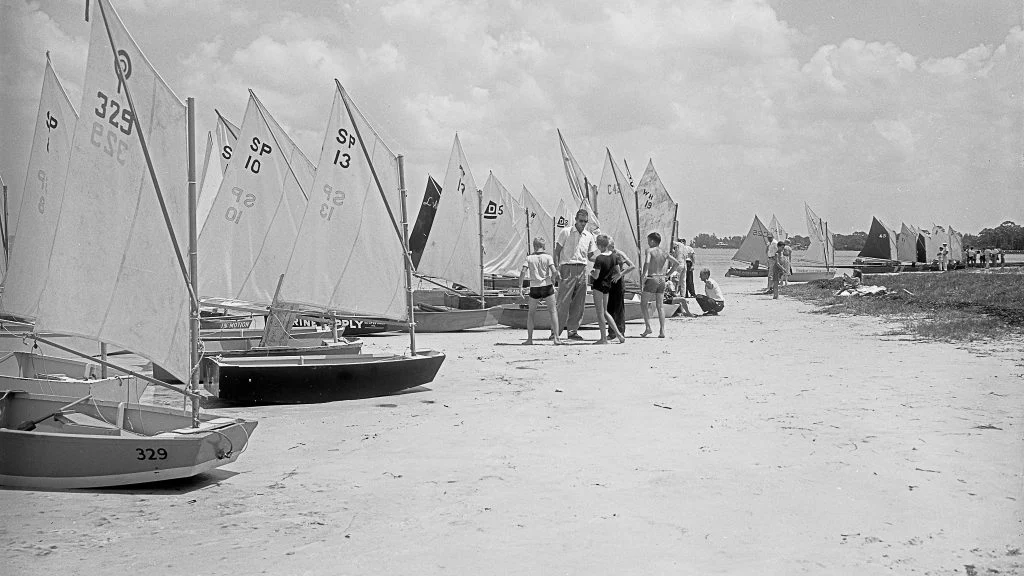
If you had asked Clark Mills in the summer of 1947 whether he was about to create the most influential small sailboat in the history of the world, he would almost certainly have laughed.
Clarkie, as everyone called him, was a boatbuilder who worked out of a tin-roofed shop in Dunedin — a modest man with extraordinary skill and a particular genius for understanding what boats could do. He had built other designs: Snipes, Windmills, Com-Pacs. He was known throughout Pinellas County as one of the finest boatbuilders around. But nothing he had done prepared the world — or him — for what happened when a radio station manager named Major Clifford McKay walked into his shop with a proposal.
McKay had just spoken at the Clearwater Optimist Club. He had an idea: a sailboat for children, simple enough to be built from two sheets of plywood in a garage, cheap enough to cost under $50, seaworthy enough to teach children to sail in the waters off Clearwater and Dunedin. The Optimist Club ran a Soap Box Derby; McKay wanted the water equivalent. Florida, he reasoned, is short on hills but long on water.
Clark Mills had a day and a half to build the prototype after spending a week on the design.
He built a simple pram — flat-bowed, boxy, stable, with a single sprit-rigged sail. He painted it red. He took it to the dock at the end of Haven Street in Dunedin, sailed it briefly, declared himself satisfied with its performance, and handed the tiller to McKay’s twelve-year-old son.
“There was a little breeze blowing,” the younger McKay recalled later. “It was delightful.”
On September 3, 1947, the first Optimist Pram made its maiden voyage in the bay in front of the Dunedin Boat Club. The Dunedin Boat Club offered the first training courses in sailing with the new pram almost immediately. By spring 1949, there were 29 prams stored in a fishing hut next to the Dunedin Boat Club — before the hut burned down and the community, rallied by radio and newspaper coverage, rebuilt the fleet from scratch.
Clark Mills gave the design away. He donated the plans and patent rights to the Optimist Club and never collected a royalty. “I didn’t make out very well on the money end,” he said late in his life, “but I certainly enjoyed myself.” He added, with characteristic Dunedin understatement: “The boatbuilding business is just great. Just because the boats look stupid don’t mean nothing.”
Today there are an estimated 400,000 to 500,000 Optimist Prams actively sailed in more than 120 countries. At least 75% of the Olympic sailing medalists at the 2020 Games were former Optimist world or continental championship sailors. It is, by any measure, the most consequential small boat design in the history of sailing — and it was born in a tin-roofed shop in Dunedin, Florida, in a day and a half.
Clark Mills was inducted into the US Sailing Hall of Fame in 2017. He died in 2001, still proud of the little boats — not because he thought the design was particularly elegant, but because it had given so many children joy.
The building where he worked still stands. The Woodwright Brewing Company — one of Dunedin’s distinctive craft breweries — now occupies the space, paying tribute to its history with an Opti hanging from the ceiling and Clark Mills’ original plans and patents on the walls. It is one of those beautiful coincidences that Dunedin produces with some regularity: a building that once launched a revolution in youth sailing worldwide now launches craft beer, and the history is present in both.
The Dunedin Youth Sailing Association carries the tradition forward, offering pram sailing programs for children at the marina and connecting the next generation of Dunedin residents to the same waters where the first Opti made its maiden voyage seventy-five years ago.
Dunedin’s Remarkable Record of Firsts
History is full of surprises, and Dunedin’s history is full of moments where a small Gulf Coast city turned out to be at the center of something much larger than itself.
Frozen orange juice — the product that fundamentally changed how Americans consumed citrus and reshaped the agricultural economics of Florida — was developed here in the 1940s. The Amphibious Alligator, the assault vehicle used by US forces in the Pacific theater of World War II, was invented and tested in Dunedin before being deployed in some of the war’s most pivotal operations. The PGA of America held its original home at the Dunedin Golf Club, which hosted 18 Senior Tour Championships and continues to operate as a public course today — one of the few original PGA venues still open to ordinary golfers.
From 1972 to 2012, Nielsen’s master computer for national television ratings was located in Dunedin — meaning that for forty years, the numbers that determined what Americans watched on television were calculated in a small Gulf Coast city that most of those Americans had never heard of. And Dunedin was the first town incorporated on Florida’s Gulf coast between Key West and Cedar Key.
It was also the site of Florida’s first wooden yacht manufacturer.
And a young Babe Ruth spent one of his final springs here, in a bungalow in the Old Northeast neighborhood of St. Petersburg — near enough to Dunedin to have watched the Gulf sunsets and felt the same Gulf breeze that still moves through the palms on Edgewater Drive. You can read the full story at historichomestampabay.com.
World War II and the Hotel Dunedin: History in Unlikely Places
During World War II, Dunedin did something that small coastal American cities did in those years: it transformed.
The Hotel Dunedin — one of the community’s civic landmarks — was pressed into service as a military training facility. For a period of the war, a school and its students were housed in the hotel, conducting the work of education under conditions defined by the larger emergency. The arrangement continued until 1944, when the program was transferred to Camp Pendleton in San Diego.
It is one of those details that surfaces in the local historical record and then disappears again, but it is worth preserving: in a hotel in Dunedin, Florida, during the years when the world was attempting to destroy itself, students still attended school. The ordinary persistence of civic life in the face of extraordinary disruption is itself a kind of historical document.
Downtown Dunedin: The Street That Held On
Main Street in Dunedin has done something that most American main streets have failed to do: it has remained.
Not as a museum piece, not as a tourist attraction built to simulate the idea of a small-town commercial center, but as an actual working downtown — independent restaurants, local boutiques, art galleries, craft breweries, the Friday farmers market, the seasonal festivals, the pipe band marching on Tuesday mornings.
The 1921 Main Street photograph in the Florida Memory archive — looking west toward the marina, the road straight and palm-lined, the buildings low and human-scaled — shows a streetscape that would be recognizable today. The proportions are right. The relationship between building and street, between pedestrian and automobile, between commerce and community: all of it survived.
This is rare. It is worth celebrating. And it is the result of the same civic instinct that has protected the waterfront, the parks, and the historic neighborhoods: the belief that what exists here is worth keeping.
The downtown historic district anchors a corridor that extends naturally to the marina and Edgewater Park at one end and to the Pinellas Trail and Hammock Park at the other. It is one of the most genuinely walkable small-city downtowns in Florida — a claim that many Florida cities make and few can support, but that Dunedin earns on foot, block by block.
Dunedin also holds, in its local historical record, the claim of being home to Florida’s oldest craft brewery — a distinction that anchors the city’s modern identity as a craft beer destination and that connects, at least thematically, to a tradition of independent enterprise that goes back to Douglas and Somerville’s general store on the waterfront.
Sister Cities and the International Dimension of a Small Town
In 1964, the city of Dunedin formalized its relationship with Stirling, Scotland — the city of William Wallace, of Braveheart, of the Battle of Bannockburn — through the People-to-People sister city program. Stirling was a natural choice: it is geographically close to Edinburgh, and the Gaelic name Dunedin carries is Edinburgh’s own.
In 2000, Summerside, Prince Edward Island, Canada, became Dunedin’s second sister city — extending the international relationships and creating a connection to a Canadian maritime community that rhymes, in its coastal character, with Dunedin’s own.
These relationships are more than ceremonial. They provide cultural exchange, educational partnerships, and the ongoing reminder that a city of 37,000 people on Florida’s Gulf Coast can be genuinely connected to the wider world. The City of Dunedin Pipe Band travels to Canada, Scotland, England, and Ireland to compete. They return as ambassadors for this city, carrying the Edgewater tartan to audiences who would not otherwise know that Dunedin, Florida, exists.
The Pinellas Trail: Threading It All Together
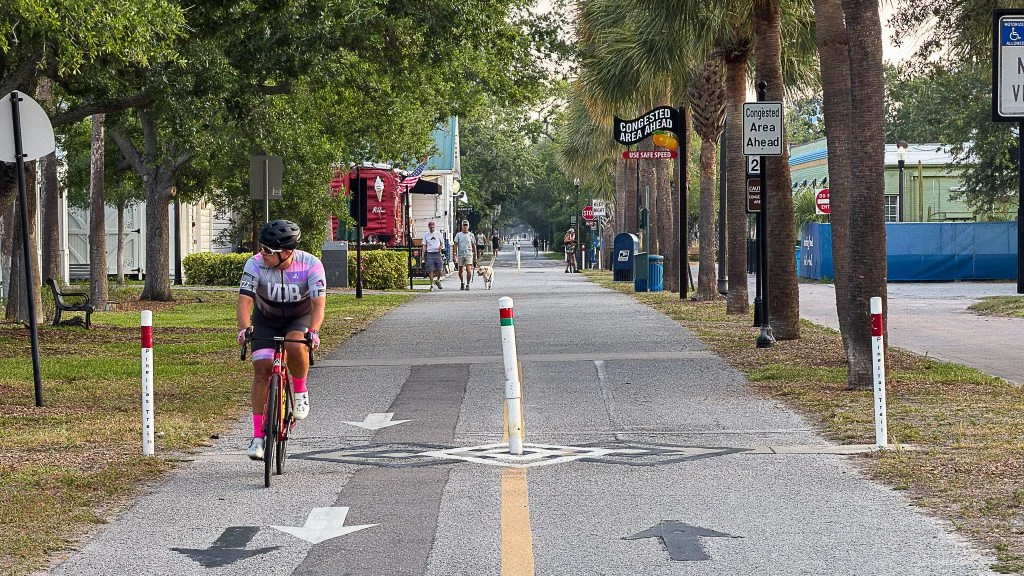
One of the most significant pieces of infrastructure in Dunedin’s modern civic life is also one of the simplest: a paved trail on the converted right-of-way of the Orange Belt Railway — the same railroad that arrived in the late 19th century and helped shift Dunedin’s economy from sea to land.
The Pinellas Trail runs 75 miles through Pinellas County, passing directly through the heart of downtown Dunedin. It connects the marina, the parks, the neighborhoods, and the city’s residents to one another in the way that the original rail corridor connected citrus growers to markets. On any given morning, the trail through Dunedin is populated with cyclists, runners, dog walkers, and families — the full cross-section of a community that has chosen to invest in infrastructure that belongs to everyone.
The trail’s passage through Dunedin creates the kind of connective tissue that distinguishes genuinely walkable, human-scaled cities from cities that merely aspire to those qualities. It is not incidental to Dunedin’s character. It is structural.
Read the full guide to every park in Dunedin and the Pinellas Trail’s role in connecting them.
Golf Carts, Breweries, and the Modern City: How Dunedin Stayed Dunedin
In 2011, the City of Dunedin passed ordinance 2011-04, authorizing the street-legal use of golf carts across approximately 60% of the city. It was a small policy change with an outsized effect on the texture of daily life: Dunedin became a city where residents could travel from their neighborhood to downtown, to the marina, to the farmers market, without getting into a car. It reinforced the city’s commitment to human-scaled transportation and to the particular quality of slowness that distinguishes Dunedin from the communities around it.
The craft brewery revolution found Dunedin early and found it receptive. The city’s identity as a destination for independent, artisan, human-scaled business aligned naturally with what craft beer represents culturally, and the cluster of breweries that has developed around downtown Dunedin reflects both economic vitality and a commitment to the kind of independent enterprise that Douglas and Somerville represented when they opened their general store on the waterfront.
Baseball is woven through the city’s seasonal identity. The Toronto Blue Jays have trained at TD Ballpark for decades, and the relationship between the team and the city is one of those sports-and-community connections that transcend the transactional. Spring training brings visitors, economic activity, and the particular joy of watching major league players in a setting intimate enough that you can see their faces.
None of these modern elements contradict the city’s history. They extend it. Dunedin has always been a city that did things its own way — that insisted on names that meant something, on waterfront views that remained public, on pipe band music in a subtropical climate, on a little red sailboat that changed the world. The golf carts and the craft beer and the Tuesday morning pipe band are expressions of the same spirit.
Why Preserving Dunedin’s Character Matters
History is not a museum exhibit. It is a living condition — present in the proportions of a street, in the canopy of an old oak, in the sound of bagpipes on a winter morning, in the view across St. Joseph Sound from Edgewater Drive toward islands that a community fought to protect.
Dunedin’s history matters not as nostalgia but as argument. It demonstrates, concretely, that a city can grow without losing itself — that the choices communities make about what to preserve and what to build, what to protect and what to sell, accumulate over time into something we recognize as character.
Character is hard to quantify and easy to destroy. Once a waterfront view is blocked, it is blocked. Once a historic home is demolished, the archive it represented is gone. Once a pipe band tradition loses its institutional support, the pipeline of young musicians dries up and takes decades to rebuild. The civic organizations, the preservation commitments, the community movements that protected Hammock Park and Honeymoon Island and Edgewater Drive — these are not minor footnotes. They are the decisions that produced the city that people now pay a premium to live in and travel to experience.
Preserving Dunedin’s character means continuing to make those choices — choosing the view over the building, the trail over the road widening, the independent business over the chain, the community gathering over the private amenity. It means funding the Scottish arts programs in the schools that feed the City of Dunedin Pipe Band. It means fighting for preserves when developers arrive with plans. It means maintaining the historic homes that line Scotland Street and Victoria Drive and Edgewater Drive, not as monuments but as living structures that embody the continuity of a community’s life.
Dunedin is remarkable. It did not become remarkable by accident. It became remarkable by choice, made again and again, by people who understood what they had and refused to let it go.
Explore More: Related Reading
If this deep dive has opened a door you want to walk through, here is what’s waiting on the other side:
On Dunedin’s Historic Homes and Architecture
- Historic Homes in Dunedin, Florida: A Complete Guide
- Understanding Tampa Bay’s Most Iconic Historic Home Styles
- How to Renovate a Historic Home Without Losing Its Character
On Living in Dunedin
- Living in Dunedin, Florida: The Complete 2026 Guide
- Living in Dunedin Isles: Where Old Florida Character Meets the Intracoastal
- Why Dunedin Is One of the Best Small Towns in the United States
On Dunedin’s Parks and Waterfront
- Every Park in Dunedin, Florida: The Complete Guide
- Honeymoon Island and the Dunedin Causeway: A Resident’s Practical Guide
- Honeymoon Island: Built History and Architecture
- What Honeymoon Island Reveals About What Florida Almost Lost
On Real Estate in Dunedin and Tampa Bay
- The Seller’s Playbook: How to List Your Dunedin Home for Top Dollar in 2026
- Tampa Bay’s Best Historic and Character Home Neighborhoods: The Complete 2026 Buyer’s Guide
- Exploring Tampa Bay’s Most Charming Historic Neighborhoods
About the Author: Mark Middleton | Middleton Tampa Bay | CompassCompass
I am Mark Middleton — Realtor® Broker Associate at Compass, leading Middleton Tampa Bay, based in Dunedin, Florida. I specialize in historic, character, and waterfront homes across the Tampa Bay area.
I served as President of the Dunedin History Museum in 2023. I have been active in the Rotary Club of Dunedin North since 2018 and serve as Rotary International District 6950 Governor from July 1, 2026, through June 30, 2027. I have lived in Dunedin long enough to know where the bagpipes sound best on a winter morning and which stretch of the Pinellas Trail catches the light at golden hour.
My work in real estate and my work as a writer, photographer, and community member share the same foundation: a genuine belief that understanding a place deeply is the only honest way to help people find their home within it.
If you are thinking about buying or selling a home in Dunedin or anywhere in the Tampa Bay area — including historic homes, waterfront properties, character homes, or anything along the Gulf Coast — I would welcome the conversation.
Call or text: 727-871-7653 (727-871-7653)
Website: middletontampabay.com
Historic homes resource: historichomestampabay.com
Or request a complimentary Dunedin home valuation — no obligation, just honest information about what your home is worth in the current market.