The Snow House at 1001 Bayshore Boulevard
On this page
Two rooflines, a red door and a century-old hurricane photograph tell different parts of the story at 1001 Bayshore Boulevard.
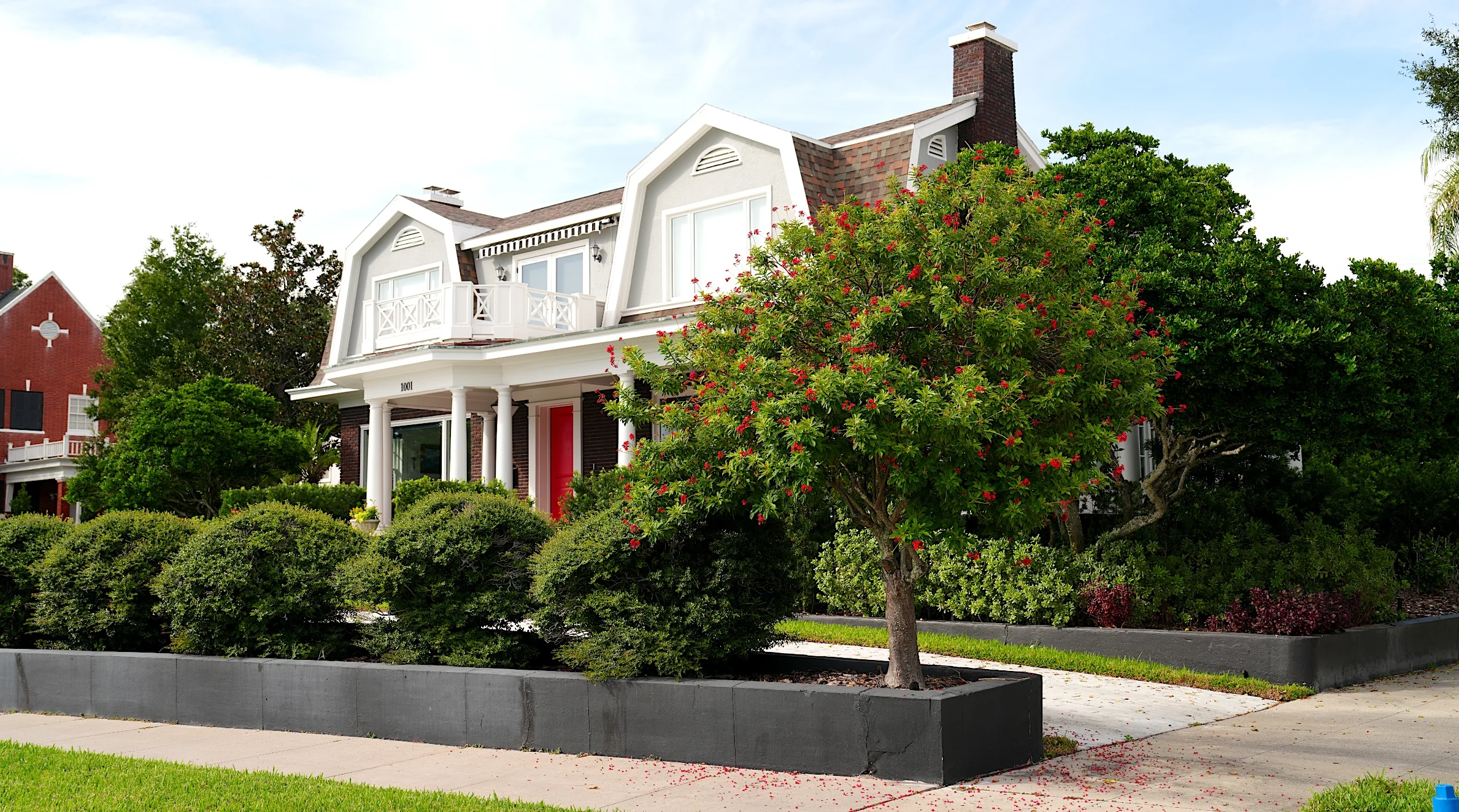
The red door is where my eye went first when I photographed the Snow House. From across Bayshore Boulevard, the door is a small patch of color under the white porch. Above it, two broad dormers pick up the same shape, each with a shallow upper slope and a steeper lower one. I’ve lived in Tampa Bay since 1984, and I’ve had plenty of chances to go past this stretch of Bayshore. Taking the time to photograph the house made me notice how different it looks once you take a few steps toward Edison Avenue. The front reads as a single composition. From the corner, the garden comes forward and parts of the house disappear behind it.
Henry E. Snow and the Bayshore address
The Hyde Park Historic District nomination identifies the property as the Henry E. Snow House and dates it to about 1919. Snow served on Tampa’s Board of Public Works. His name also appears on Snow Avenue and Snow Park. The same nomination describes the park, at Kennedy Boulevard, Grand Central Avenue and Magnolia Avenue, as a former traffic island dedicated to Snow in 1920. The city later added a fountain and pavilion. For me, that little bit of geography makes it easier to remember the man behind the house. His name belongs to an address on the bay and to a small piece of land where city streets meet.
What to look for in the Dutch Colonial façade
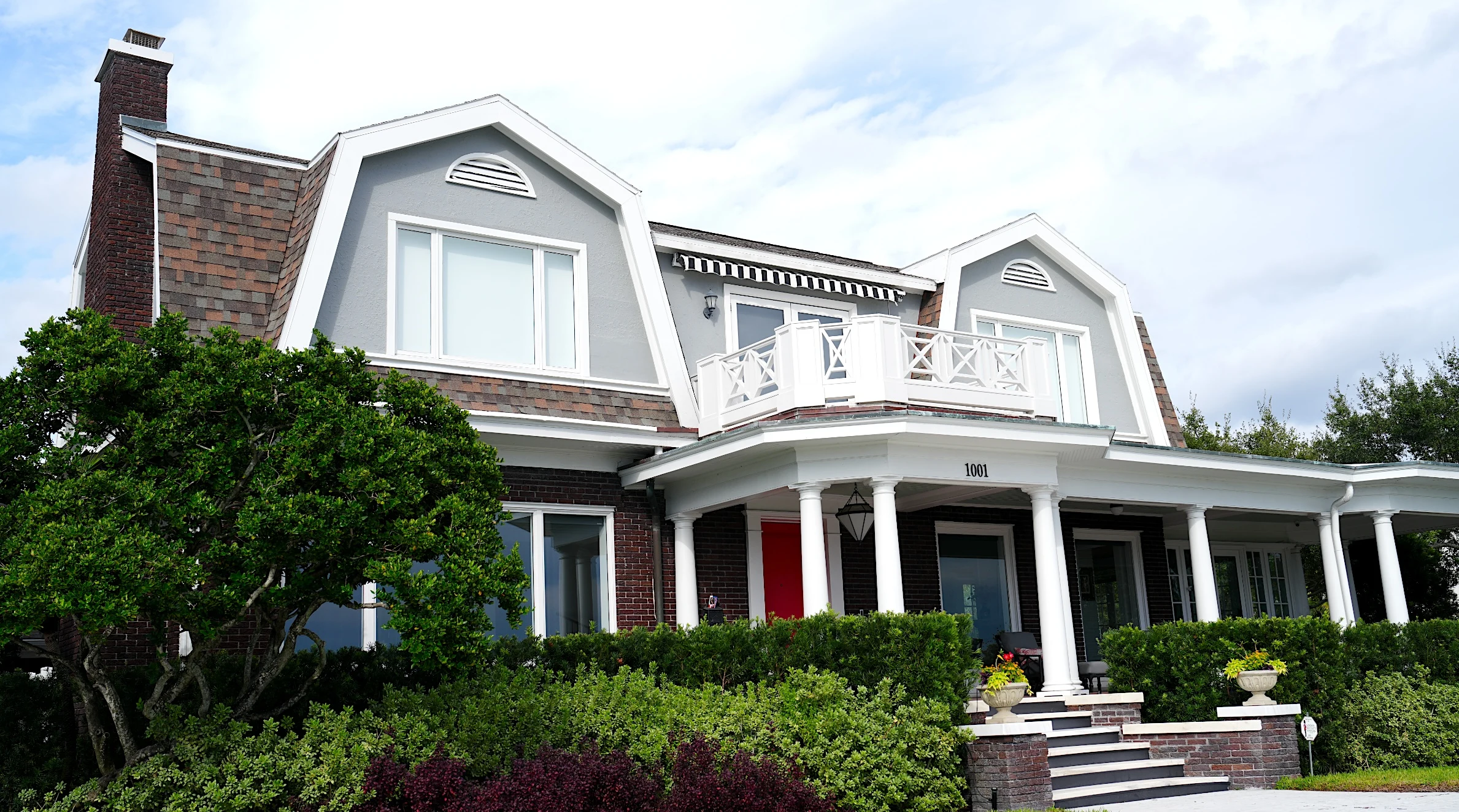
The gambrel shape is the easiest thing to pick out. It’s the change of pitch that gives those upper windows their distinctive outline. From straight ahead, the two dormers and the low porch roof spread the façade across the lot. Move to one side and you can see the porch roof extend beyond the entrance. The white columns stand out against the darker wall, especially under the shade. I included a closer photograph because the porch offers a different sense of scale from the wide view. The front door seemed quite small from the sidewalk. At the angle of the steps, it becomes the center of the photograph again.
Seeing the Snow House alongside the Stovall House is a good way to appreciate the range of architecture on Bayshore. The tall entrance columns at Stovall lead the eye upward. At the Snow House, the long porch keeps your eye moving across the front, even with those two conspicuous dormers overhead. The context changes again inland. The Leiman House uses long rooflines of its own in a completely different way. These comparisons explain why I keep photographing a house from more than one spot. A single architectural label can only tell you so much about how a building looks from the sidewalk.
From John McKay to Joe Maddon
Two of Tampa Bay’s best-known sports figures lived at 1001 Bayshore Boulevard. John McKay, the Buccaneers’ first head coach, and his wife, Corky, bought the house from the team in 1985, the year after he stopped coaching. In 2012, Joe Maddon, then the Tampa Bay Rays’ manager, and his wife, Jaye, bought it. Creative Loafing’s account of the house’s ownership traces both purchases.
What I like about that connection is that Maddon thought about it, too. In a Tampa Magazine interview at the house, he recalled that learning Coach McKay had owned it helped sell him on the place. His favorite room was the upstairs office overlooking the bay, where he liked to imagine McKay sitting with a cigar and taking in the same view. When I turned my camera toward the water, that was the part of the story I kept thinking about.
The view across Bayshore in 1921
The present-day photograph looking out toward Hillsborough Bay is quiet enough that it’s easy to forget what this shoreline has seen. The index to Burgert Brothers photographs of Hyde Park catalogs a photograph of the Snow property after the 1921 hurricane. The image is worth seeking out alongside the pictures of damage elsewhere along the boulevard. It gives you a chance to put an address you can still see today into the story of the storm. A photograph of a familiar house can do that more directly than a citywide account. You can recognize a place and spend the next minute trying to work out what has changed around it.
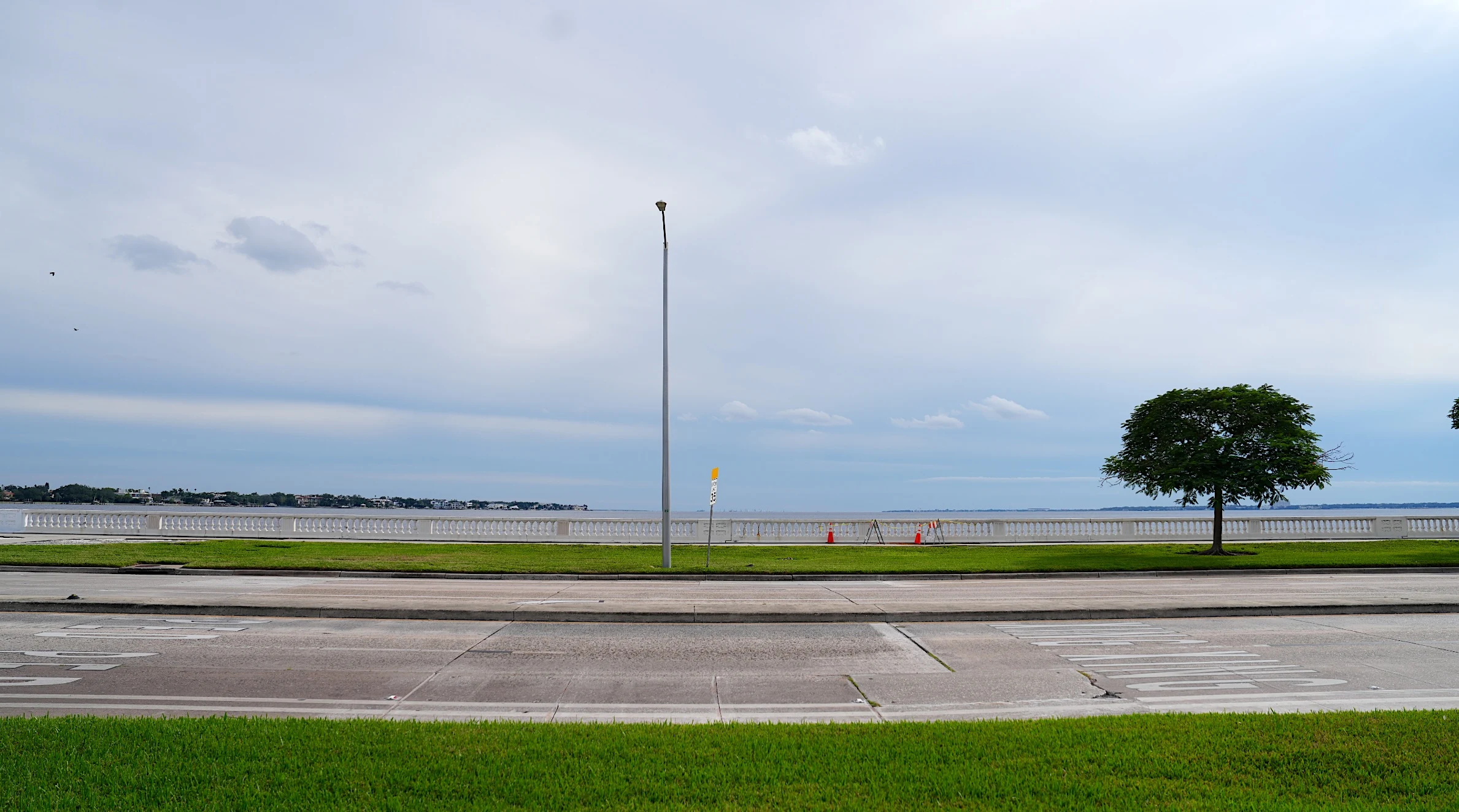
That was the reason for including a photograph with no house in it. The bay is just across the road, and walking to that side changes what you notice about the address. There’s water across most of the field of view and a low horizon beyond it. When I came back to the photographs, I wanted that frame beside the porch pictures. Without it, I could show how the Snow House is put together. With it, I could give a better sense of why this particular corner belongs to the story of Bayshore.
Looking at Bayshore one house at a time
When I pass 1001 Bayshore now, I look for the red door first and then for the two dormers. The date in the district nomination and that older photograph give me something else to think about as I keep walking. They put the house in a Tampa that was building out its neighborhoods and already learning how exposed its shoreline could be. The photographs in this series are my way of slowing down enough to see both the building and the street it belongs to. For more of the neighborhood around this house, start with my history of Hyde Park or continue to the Cuesta-Hixon House on South Willow Avenue.
Read more of my Historic Homes Tampa Bay journal, see my photography at MarkAMiddleton.com, or find my local real estate work at Middleton Tampa Bay.