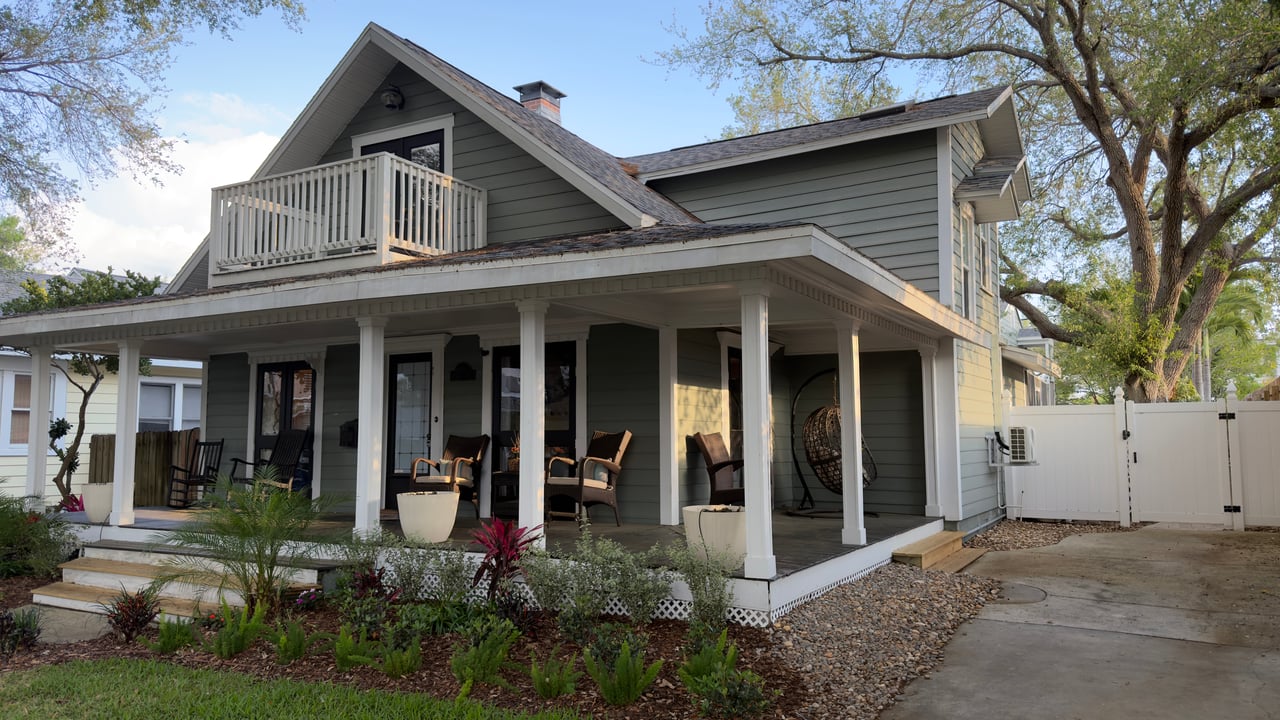
Insuring a Historic Home in Tampa Bay: What Every Buyer and Seller Must Know in 2026
Character Homes Mark Middleton April 8, 2026
Character Homes Mark Middleton April 8, 2026
I have worked with buyers and sellers of older and historic homes throughout the Tampa Bay area for years — from the tree-lined streets of Dunedin and the Craftsman corridors of Seminole Heights, to the grand Victorians of Safety Harbor, the Italianate beauties of Ybor City, and the bungalow blocks of Old Northeast St. Petersburg. And if there is one question that comes up more than any other, it is this: "How hard is it going to be to insure this home?"
In 2026, that question has never been more important — or more nuanced. Florida's insurance market is shifting in ways that affect historic homeowners specifically, and in ways that almost no one is talking about clearly. This post is my attempt to change that.
Whether you are buying a 1910 Florida Cracker cottage in Crescent Lake, selling a mid-century modern gem in Hyde Park, or simply trying to understand what the current market means for your older home across Pinellas, Hillsborough, Pasco, Manatee, or Sarasota County, read on. This is your 2026 guide to insuring a historic or character property in the Tampa Bay area.
Standard homeowners insurance is designed for standard homes — modern construction, readily available materials, predictable replacement costs. A historic home is none of those things. That 1920s bungalow you fell in love with has original heart pine floors that cannot be sourced from a big-box store. The plaster walls, the hand-laid tile, the transom windows, the porch columns — each of these elements requires specialized labor and sourcing that modern policies are simply not built to cover at true replacement value.
A standard HO-3 or HO-5 policy will typically pay actual cash value — meaning your insurer factors in decades of depreciation before writing a check. For a home with irreplaceable original features, that payout can be a fraction of what you actually need to restore it properly. This is why, for historic and character properties, I always help buyers understand three specific policy types:
Florida's insurance market has gone through a dramatic period of turmoil and, more recently, a period of genuine — if cautious — stabilization. Here is what matters most for buyers and sellers of historic homes right now.
Statewide, there are real signs of progress. Several major carriers have filed for rate reductions in 2026, and Citizens Property Insurance — the state-backed insurer of last resort — announced an average decrease of 8.7% for spring renewals. New carriers have re-entered the Florida market, and legislative reforms targeting litigation abuse appear to be working. For the first time in years, buyers have genuine options when shopping for coverage.
However, this relief is uneven. For newer construction with modern building codes and recently replaced roofs, the improvement is meaningful. For older homes — particularly those built before 1980, and especially those built before 1940 — the picture is more complicated. Homes in this category can still face annual premiums of $6,000 to $10,000 or more, particularly in coastal Pinellas County markets like Dunedin, Safety Harbor, and St. Petersburg.
If there is one single factor that determines whether a historic home is insurable in Florida in 2026, it is the roof. Age, material, and condition drive more underwriting decisions than almost any other variable. The good news: a new Florida law taking effect in mid-2026 prohibits insurers from refusing to issue or renew a policy based solely on roof age — they must now consider actual condition, not just the calendar.
For buyers, this is significant. A historic home with a well-maintained older roof may now be more insurable than it was just a year ago. For sellers, it means a pre-listing roof inspection and thorough documentation of condition can shift buyer perception — and the insurance conversation — in your favor.
Many of Tampa Bay's most desirable historic neighborhoods sit in areas with meaningful flood exposure. Old Northeast, Crescent Lake, coastal Dunedin, portions of Safety Harbor — flood risk is a real and specific consideration. Standard homeowners policies do not cover flood damage, period. Buyers in flood zones need a separate NFIP or private flood insurance policy, and that cost needs to be factored into the total ownership budget from day one — not discovered as a surprise at closing.
If you are preparing to sell an older or historic home in Tampa Bay, the insurance conversation is no longer just a buyer's problem. It is a marketing and positioning challenge that you — and your listing agent — need to get ahead of proactively.
Buyers today are insurance-aware in a way they simply were not five years ago. They are asking about insurability before they ask about square footage. Here is how I help sellers of historic homes position their properties for success in this environment:
Not all historic homes in Tampa Bay face the same insurance environment. Here is a general orientation by area, based on years of experience working across the region.
One of my primary markets, and one of Tampa Bay's most beloved historic communities. Dunedin's older homes — many built between the 1920s and 1950s — offer extraordinary character, walkability, and Gulf Coast lifestyle. Insurance in Dunedin reflects coastal Pinellas exposure, and buyers should plan accordingly. Homes with recent roof replacements and wind mitigation documentation are significantly more attractive in today's market.
Tampa's most iconic bungalow district, built primarily during the 1910s–1930s, Seminole Heights offers some of the most authentic Craftsman architecture in the region. Insurers look carefully at roof condition and electrical systems in this neighborhood. The remarkable renaissance Seminole Heights has experienced over the past decade has brought significant renovation investment, which generally improves insurability over time.
Among the most sought-after historic addresses on the entire Gulf Coast. Flood zone awareness is essential here — many gorgeous Old Northeast homes sit in AE or X flood zones, and buyers must understand the distinction and the annual cost implications before making an offer.
Hyde Park's older homes — grand Victorians, Colonials, and Mediterranean Revivals — attract buyers who understand and embrace the full experience of historic ownership. Insurance here is generally more manageable than in coastal Pinellas, but older electrical and plumbing systems remain the primary underwriting flags.
Both Safety Harbor and Ybor City offer extraordinary character-property opportunities that remain relatively undervalued compared to their St. Pete and Dunedin counterparts. Insurance profiles in these areas vary significantly property by property — another reason to work with an agent who knows these markets intimately, not just generally.
I give every buyer of a historic or older home the same advice: treat insurance as part of your due diligence from day one, not an afterthought before closing. Here are the questions that matter most:
I have built my practice around older and historic homes throughout Tampa Bay for a reason: they require a different level of knowledge, preparation, storytelling, and strategic guidance than a standard transaction. A general real estate agent may not know to ask about the electrical panel before writing an offer. A specialist does.
Whether I am working with a buyer who has fallen in love with a 1920s Mediterranean Revival in St. Petersburg, or a seller trying to position a century-old bungalow in Dunedin for maximum value in today's market, my approach combines deep local knowledge, high-end visual marketing, and a genuine passion for the character and craft of older homes.
As a professional photographer and visual storyteller, I also bring something most agents simply cannot offer: the ability to capture the soul of a historic home — the quality of light through original wavy glass, the warmth of heart pine under afternoon sun, the craftsmanship in a porch column that no modern builder can replicate. That storytelling matters deeply, both for marketing and for helping buyers truly understand — and fall in love with — what they are acquiring.
If you are exploring historic homes in Dunedin, St. Petersburg, Seminole Heights, Safety Harbor, Hyde Park, Ybor City, Crescent Lake, Old Northeast, or anywhere across Pinellas, Hillsborough, Pasco, Manatee, or Sarasota County — I would be honored to be your guide.
Reach out directly. Let's talk about what you are looking for, what the real costs of ownership look like in today's market, and how to navigate this remarkable, irreplaceable segment of Tampa Bay real estate with clarity and confidence.
Stay up to date on the latest real estate trends.
Ready to elevate your real estate experience? Partner with us for personalized service, unparalleled expertise, and a proven track record. Whether buying, selling, or seeking valuation, let's turn your property goals into reality. Contact us today for a journey beyond expectations.