Condo vs. House in Palm Harbor: What 2026 Buyers Should Actually Consider
Character Homes Mark Middleton April 23, 2026
Character Homes Mark Middleton April 23, 2026
The condo-versus-house question in Palm Harbor is one I get asked almost weekly. On the surface, it looks like a simple comparison — square footage, monthly cost, maintenance burden — but the honest answer is that the decision carries meaningfully more weight in 2026 than it did three or four years ago. Florida's condo market has been transformed by post-Surfside legislation. Insurance costs have shifted dramatically for both ownership types. Post-Helene flood zone awareness has changed how buyers evaluate specific properties. And Palm Harbor's own micro-markets have diverged more sharply than they used to, meaning the right answer depends as much on which part of Palm Harbor you're considering as on which ownership type you prefer.
What follows is how I actually think about this question with clients — the real tradeoffs, the current market realities that most generic buyer's guides miss, and my honest recommendations on which buyers should lean toward which option. If you're early in your Palm Harbor search and trying to clarify what you actually want, this should give you a framework that goes beyond the surface-level comparisons.
Before diving into the ownership comparison, it's worth grounding in what Palm Harbor actually is as a market, because the community is more varied than many buyers initially realize.
Palm Harbor is an unincorporated Pinellas County community of roughly 60,000 residents stretching from the Gulf coast inland along the northern edge of the county. U.S. Census QuickFacts data shows a 77.9% owner-occupied housing rate, a median owner-occupied home value of $405,300, and 28.6% of residents age 65 and over — a mature, settled market with a meaningful share of retirees, second-home buyers, and long-tenured Florida residents. Redfin's Palm Harbor market profile places the community's Walk Score at 30, which is honest: Palm Harbor is a car-oriented market, and buyers accustomed to walkable urban environments should understand this before they commit.
The community's housing stock reflects this profile. According to Point2Homes demographic data, detached single-family homes make up 54.1% of local housing units, while attached housing (condos, townhomes, villas) makes up 11.2%. Detached homes dominate the market overall, but condo inventory is concentrated in specific communities — Innisbrook, Highland Lakes, Tarpon Woods, Dolly Bay, Tuscany at Innisbrook, and others — that each carry their own distinct character.
What this means practically: the condo-versus-house decision is not about abstract ownership types. It's about which specific Palm Harbor community you want to live in, and then which ownership type within that community best fits your life.
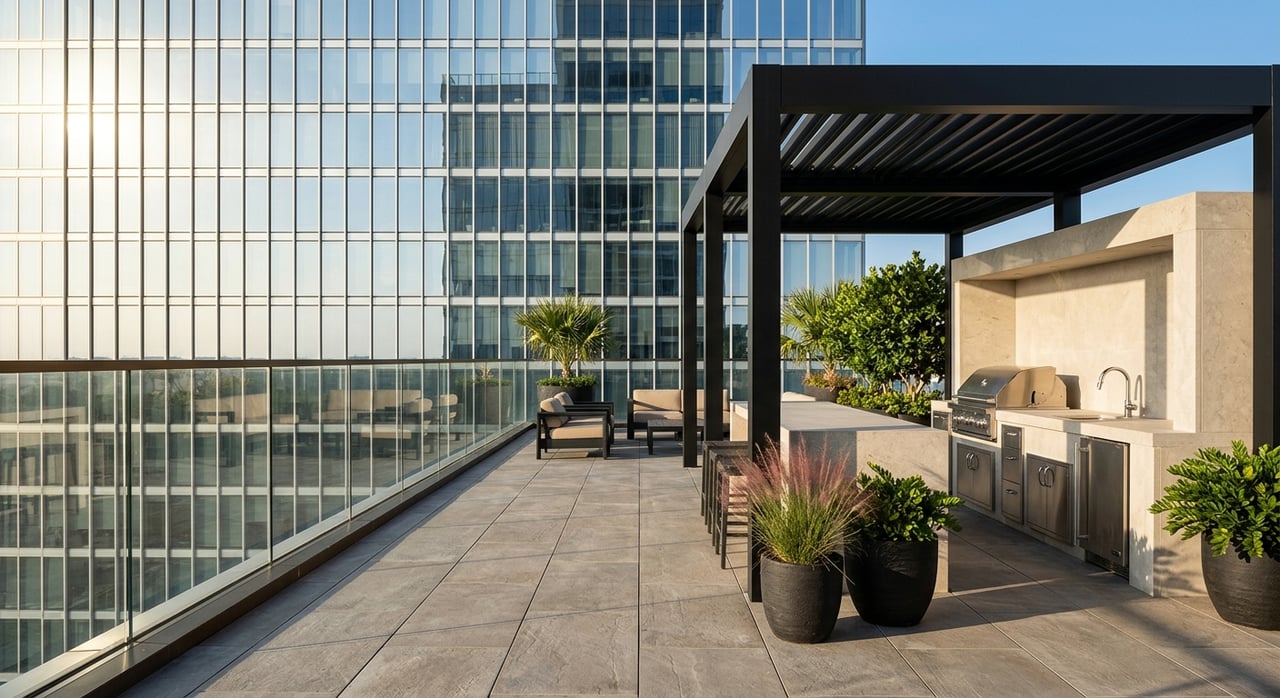
A condo can be the right answer for Palm Harbor buyers who value a few specific things: lower direct maintenance burden, built-in amenity access, lock-and-leave flexibility, and the kind of bundled ownership experience that simplifies day-to-day life — particularly for second-home buyers, seasonal residents, retirees downsizing from larger homes, and buyers whose time and attention are better spent on things other than lawn care and exterior painting.
Palm Harbor's condo market offers genuinely appealing amenity packages that are difficult to replicate in detached-home ownership at comparable price points. In Innisbrook, condo ownership brings direct access to a 600-acre resort with four championship golf courses, pools, tennis, spa facilities, and event space — effectively a resort lifestyle wrapped around your residential ownership. In Highland Lakes, the amenity package includes golf, pools, tennis and pickleball, clubhouse programming, boat access to Lake Tarpon, and RV or boat storage. Tarpon Woods and Dolly Bay condo communities often include assigned covered parking, guest parking, pools, spas, cable, internet, water, sewer, garbage service, exterior maintenance, building insurance, and in some cases boat dock access.
For the right buyer, this bundled lifestyle is not just convenient — it's genuinely less expensive than replicating equivalent amenities through individual services and memberships. A detached home buyer paying separately for lawn care, exterior maintenance, a golf club membership, pool service, and an HOA with lesser amenities can easily exceed what a condo owner pays monthly for the same functional experience.
The condo also offers something harder to quantify: simplicity of ownership. You do not coordinate roof replacement bids. You do not plan exterior paint cycles. You do not hire landscapers or manage pool chemistry. For seasonal residents who spend six months elsewhere, for retirees who want to spend their time on things other than home maintenance, for professionals whose hours don't leave room for property management, this simplicity has real value.
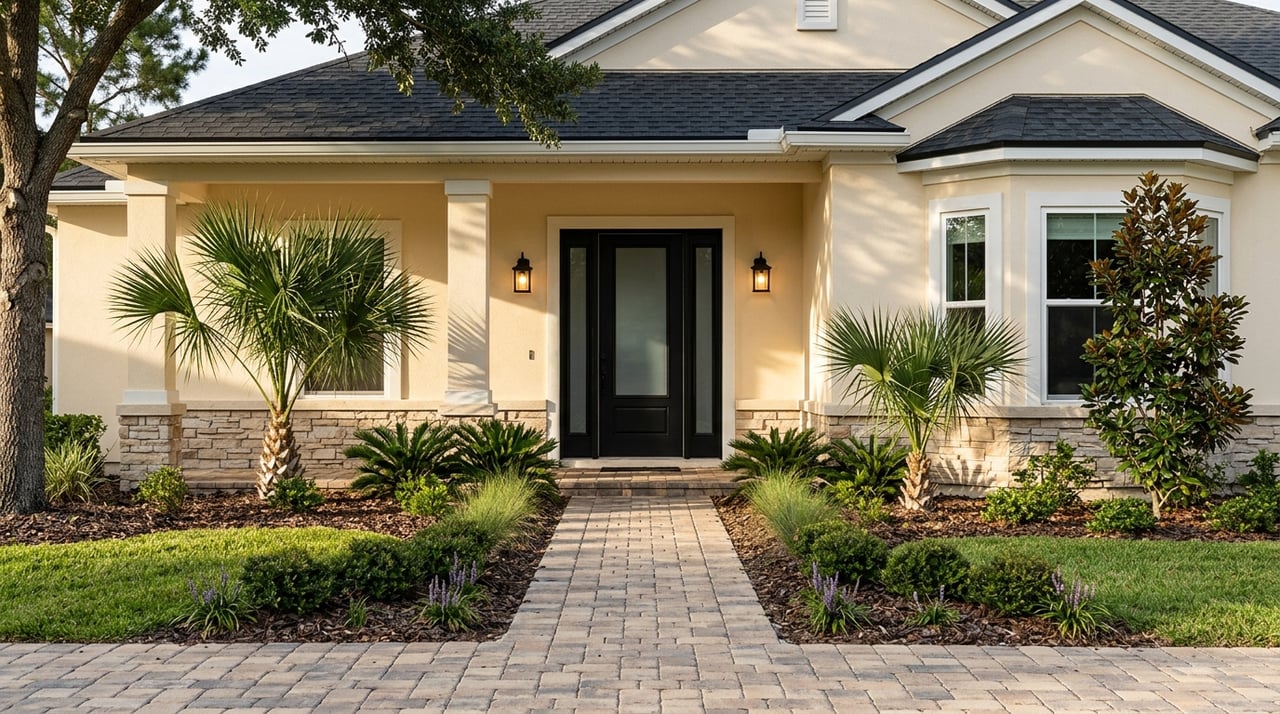
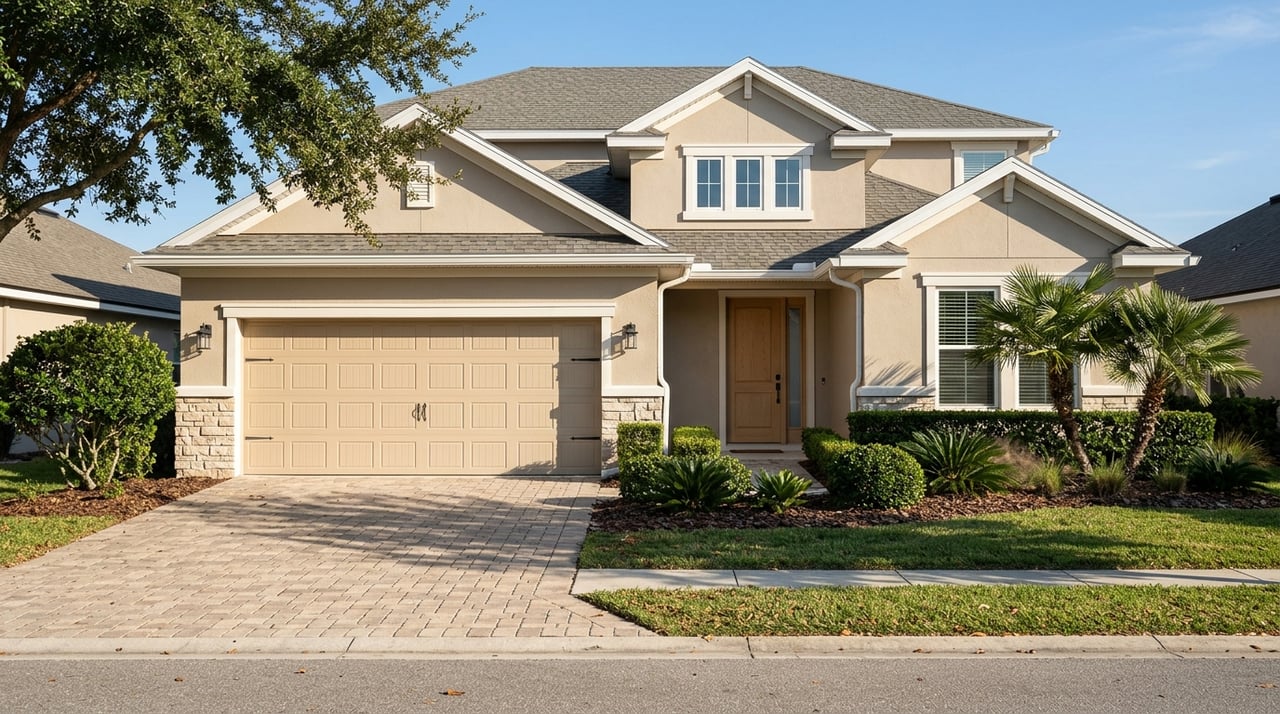
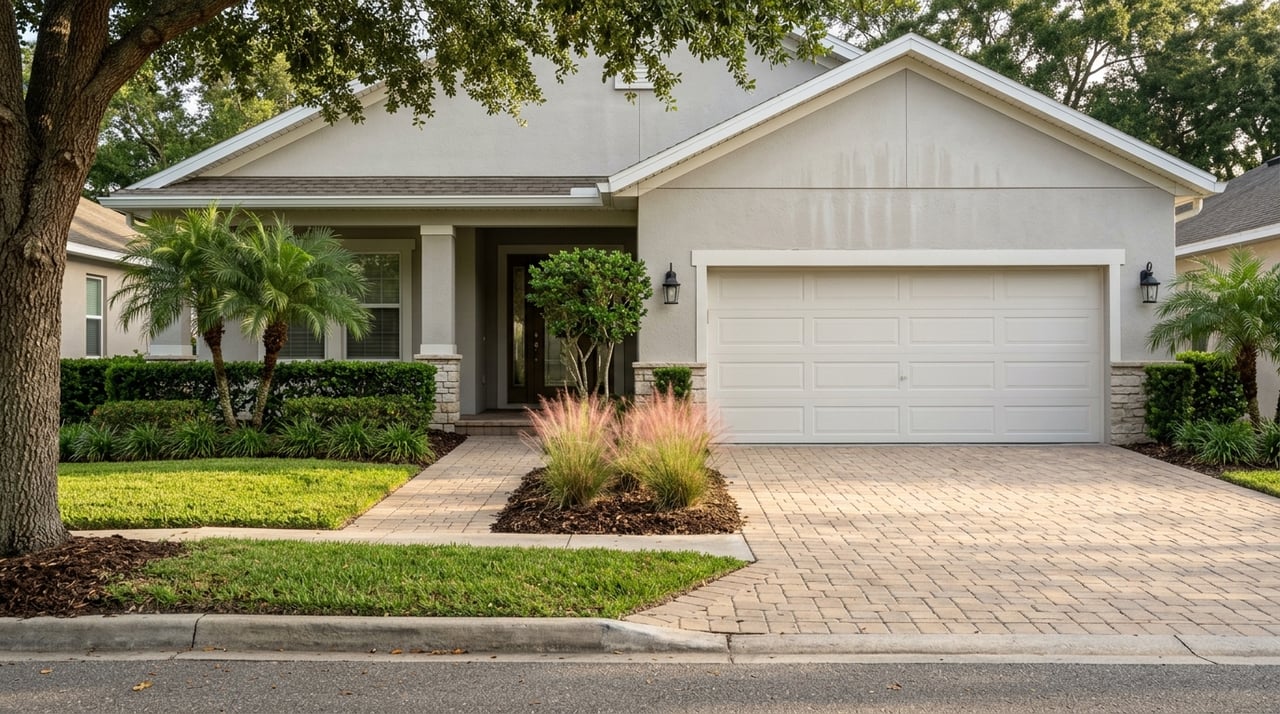
A detached home is the right answer for Palm Harbor buyers who value different things: more space, more privacy, more control, more flexibility, and the freedom to customize the property without association approval processes. For families with children, buyers with pets, homeowners who want meaningful outdoor space, and anyone for whom the rhythm of an HOA's rules is itself a source of friction, the detached home solves problems the condo cannot.
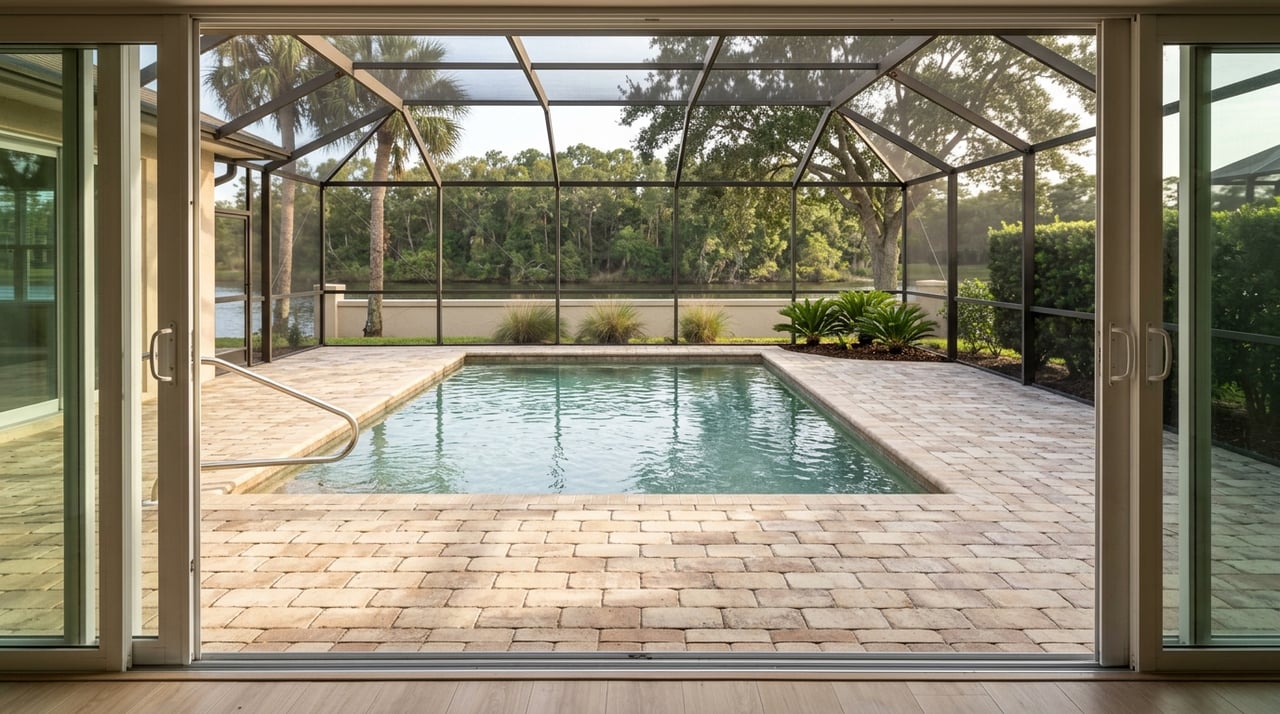
Palm Harbor's detached home inventory is genuinely strong. Current market data shows listings commonly featuring larger floor plans, screened pools, firepits, tile roofs, and two-to-three-car garages — the kind of inventory that supports family living, entertaining, and the space-intensive lifestyle that many Florida buyers specifically relocate for.
The neighborhoods matter significantly here. Ozona and Crystal Beach — Palm Harbor's coastal-traditional communities — are dominated by detached homes with distinct local character, and Redfin's neighborhood data shows Ozona with a median around $695,000 and Crystal Beach around $643,500. These are communities with a meaningful share of older, character-rich inventory, waterfront access in portions, and a sense of genuine place that some Palm Harbor buyers specifically seek out. Old Palm Harbor offers similar traditional-neighborhood character with historic inventory and walkability to the local downtown's restaurants and shops.
East Lake and the Tarpon Woods area offer a more mixed landscape where detached homes, villas, and condos coexist — useful for buyers who want to comparison-shop across ownership types within the same general geography.
The tradeoff with detached-home ownership is responsibility. You handle the roof. You handle drainage. You handle landscaping, exterior paint, hurricane preparation, pool maintenance if the home has one, and the hundred small decisions that come with fully controlling a property. For some buyers, this responsibility is itself a feature — they want to control their own home on their own terms. For others, it's the exact burden they're trying to avoid.
Here's where the current generic condo-versus-house guides fall short, and where honest advisory content has to go deeper.
Florida's condo market has been transformed by the post-Surfside legislative response. Following the 2021 Champlain Towers South collapse in Surfside, Florida passed legislation (SB 4-D in 2022 and subsequent updates) that fundamentally changed how older condominium buildings operate. The most significant provisions:
Milestone structural inspections are required for condominium buildings three stories or taller once the building reaches 30 years of age (25 years for buildings within three miles of the coast), and every 10 years thereafter.
Structural integrity reserve studies are required for qualifying buildings, and associations can no longer waive or reduce reserve funding for major structural components. Reserve funding must be maintained at levels sufficient to cover projected major repairs and replacements.
Full transparency on reserves, assessments, and structural condition is now required in association disclosures to buyers.
The practical implications for Palm Harbor condo buyers in 2026 are substantial.
Many older Palm Harbor condominium buildings are now working through the required milestone inspections and reserve studies for the first time. In some cases, these inspections have revealed deferred maintenance, underfunded reserves, or structural issues that will require significant special assessments from owners — in some cases tens of thousands of dollars per unit. A condo that looks reasonably priced on paper can carry hidden liabilities that surface only during careful review of the association's financial and inspection records.
Some buildings that were previously maintained under assumptions of minimal reserve funding now face catastrophic assessment cycles as they bring their reserves to legally required levels. Buyers who purchase without thorough review of association finances have, in well-documented cases across Florida, been hit with five-figure assessments within months of closing.
Conversely, well-maintained buildings with strong reserve funding, complete milestone inspections, and transparent financial management are now more attractive than ever. The post-Surfside environment has effectively bifurcated the Florida condo market: well-run buildings command premiums, while underfunded or structurally questionable buildings trade at meaningful discounts that reflect the real risk embedded in the purchase.
What this means practically for Palm Harbor condo buyers: the due diligence required in 2026 is dramatically more involved than it was in 2020. You are not just buying a unit; you are buying into a financial and structural entity whose health directly affects your cost of ownership for decades.
Specific documents and information every Palm Harbor condo buyer should request before going under contract, or during the due diligence period:
If the seller or listing agent resists providing these materials, that itself is a signal. Serious buyers should walk away from buildings that can't or won't provide transparent documentation.
Beyond the condo-specific considerations, the broader Florida insurance environment affects both ownership types in ways buyers should understand before committing.
For condo buyers, you carry an HO-6 policy covering your unit's interior, your personal property, and — critically — loss assessment coverage for association-imposed assessments following covered losses. Florida's consumer guidance requires HO-6 policies to include at least $2,000 of loss-assessment coverage, but given current assessment realities, most sophisticated condo owners carry meaningfully more than that — often $10,000 to $50,000 or higher depending on the building's risk profile. The association's master policy covers the building structure and common areas; understanding exactly where the master policy's responsibility ends and your HO-6's responsibility begins is one of the more important due diligence items for any condo purchase.
For detached home buyers, you carry a homeowners policy covering the entire structure, and your premiums reflect the specific home's risk profile — age, construction type, wind mitigation features, roof condition, flood zone status, and claims history. Florida's homeowners insurance market has been genuinely challenging in recent years, with many standard carriers restricting coverage on older homes, raising premiums on coastal exposure, and in some cases declining to write new policies altogether in certain zip codes. Wind mitigation inspections are especially valuable — impact-rated windows, hip roof construction, strong roof-to-wall connections, and secondary water barriers all affect premiums substantially. Buyers considering detached Palm Harbor homes should get real insurance quotes early in the due diligence period, not at the last minute before closing.
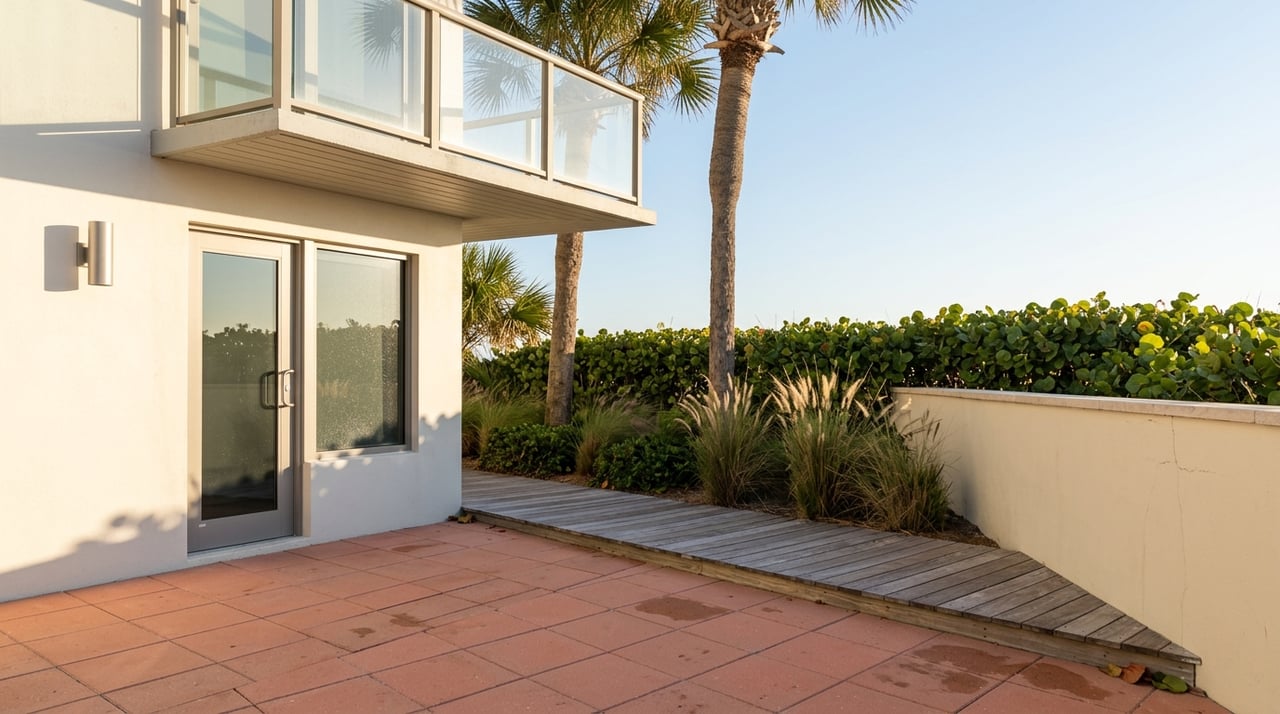
Common to both ownership types: flood insurance realities have shifted dramatically since Hurricane Helene in September 2024. Palm Harbor's coastal proximity means flood zone designation matters for every property type. Under FEMA's Risk Rating 2.0 methodology, flood insurance costs are increasingly reflective of actual property-specific risk rather than broad zone averages. Properties in high-risk flood zones now carry substantially higher annual flood insurance costs than they did five years ago, and this reality factors into both condo and detached home ownership.
Hurricane Helene's September 2024 landfall and subsequent flooding across Tampa Bay changed how sophisticated buyers evaluate Pinellas County properties. Palm Harbor's coastal and near-coastal areas experienced varying degrees of impact, and the post-Helene market has bifurcated sharply between properties that flooded (or sit in high-risk zones) and properties in more elevated or lower-risk positions.
For any Palm Harbor property you're seriously considering — condo or detached — you should understand several things before submitting an offer:
The specific FEMA flood zone designation. Not just "near the water" or "inland" — the actual zone letter (AE, VE, X, etc.). Pinellas County's flood map service center provides official information, and your agent should be able to help you access it quickly.
The property's elevation certificate if one exists. For detached homes and ground-floor condos specifically, elevation relative to base flood elevation affects insurance cost significantly.
Any storm surge and evacuation zone status. These are separate from FEMA flood zones and affect the property's risk profile during severe weather.
The property's flood history. Whether the specific property flooded in Helene or any prior storm, and what remediation or mitigation has been completed.
For condos specifically, how the association handled any Helene-related damages, what insurance claims were filed at the building level, and whether any ongoing or planned work relates to flood remediation.
Pinellas County reminds residents that everyone lives in a flood zone — the distinction is risk level, not risk presence. For Palm Harbor buyers, this is not abstract advice. It's foundational due diligence for any 2026 purchase.
Here's where it's worth being specific about Palm Harbor's micro-markets, because different neighborhoods genuinely fit different ownership types.
Innisbrook is the clearest condo-first market in Palm Harbor. Built around the Innisbrook Resort's 600 acres of golf, tennis, pools, and resort amenities, the community's Tuscany at Innisbrook and similar condo communities are specifically designed for the amenity-focused, part-time, and second-home buyer. If resort living with bundled amenities is your priority, Innisbrook should be high on your list.
Highland Lakes is another strong condo-oriented community, with lifestyle amenities including golf, pools, tennis and pickleball, clubhouse programming, boat access to Lake Tarpon, and RV or boat storage, at a median around $349,500. For active buyers seeking amenity-rich community living at more accessible price points, Highland Lakes is often the right answer.
Ozona and Crystal Beach are the traditional coastal neighborhoods where detached homes dominate. If you want a yard, more separation from neighbors, or the specific character of an established coastal community with historic inventory, these are the neighborhoods to focus on. Prices reflect the premium — Ozona around $695,000 and Crystal Beach around $643,500 — but the lifestyle is genuinely distinct.
Old Palm Harbor offers traditional-neighborhood character, walkability to the historic downtown, and a mix of older detached homes with a sense of place that the newer subdivisions can't replicate. Strong fit for detached-home buyers who value community character.
East Lake and Tarpon Woods offer the most mixed housing landscape — condos, villas, townhomes, and detached homes all coexisting in a more suburban setting with easy access to local parks, Lake Tarpon, and the regional trail network. For buyers genuinely open to either ownership type, this area is a practical place to compare options side by side.
The practical takeaway: if you're drawn to Innisbrook's resort amenities or Highland Lakes' active-lifestyle community, a condo is usually the better fit within those specific communities. If you're drawn to Ozona, Crystal Beach, or Old Palm Harbor's traditional character, a detached home is typically the better fit within those communities. In East Lake and Tarpon Woods, you have genuine choice. Match ownership type to neighborhood first; the rest follows.
After working with Palm Harbor buyers across both ownership types, here's how I actually think about the decision.
Lean toward a condo if you are: a second-home buyer or seasonal resident, a retiree or near-retiree prioritizing simplified ownership, a buyer whose lifestyle includes significant travel or extended time away, a buyer specifically seeking bundled amenity access (golf, tennis, pools, clubhouse), a downsizer coming from a larger detached home, a buyer willing to do substantial due diligence on association finances and structural condition, or a buyer whose time and attention are more valuable spent on things other than property management.
Lean toward a house if you are: a family with children or pets, a buyer who values privacy and outdoor space, a buyer who wants freedom to customize without association approval, a buyer with specific garage or parking needs, a buyer wary of post-Surfside condo assessment realities, or a buyer whose lifestyle fits naturally with the maintenance rhythms of detached-home ownership.
Stay genuinely flexible if you are: exploring East Lake or Tarpon Woods where both exist, early enough in your search to test both options, or prioritizing specific neighborhood character over ownership type.
The wrong answer for any buyer is choosing an ownership type that doesn't fit the lifestyle they actually live. I've watched buyers choose condos because they liked the amenities and then become unhappy with the rental restrictions, the pet rules, or the assessment realities. I've watched buyers choose detached homes because they liked the space and then become overwhelmed by the maintenance burden they underestimated. The right answer starts with honest self-assessment about how you actually live, followed by matching ownership type and neighborhood to that reality.
Whichever direction you lean, thorough due diligence is non-negotiable in Palm Harbor's 2026 market.
For any condo purchase, request and review:
Association financial statements, reserve balances, reserve study, milestone inspection report if applicable, board meeting minutes, pending or planned special assessments, full governing documents, rental and pet restrictions, parking and guest policies, and master insurance policy details.
For any detached home purchase, evaluate:
Roof age and condition, electrical and plumbing system condition, HVAC adequacy, insurance quotes obtained early in due diligence, wind mitigation features and potential upgrades, drainage and flood history, hurricane protection systems, and any deferred maintenance that will surface in inspection.
For either purchase:
FEMA flood zone designation, elevation certificate where applicable, storm surge and evacuation zone status, specific property flood history including Helene impact, and Pinellas County's flood map information.
Palm Harbor offers both lifestyles well, but the specific decision between condo and detached ownership matters more in 2026 than it did five years ago. Post-Surfside legislation has transformed the condo due diligence process. Post-Helene flood awareness has shifted how buyers evaluate every property. Insurance market volatility affects both ownership types in ways that require real analysis rather than general assumptions.
The buyers who make the strongest Palm Harbor moves are the ones who approach the decision with clarity about their own lifestyle, honest evaluation of which specific neighborhood fits their goals, and thorough due diligence on the specific property and (for condos) the specific association they're joining. Generic condo-versus-house framing doesn't serve sophisticated buyers in this market anymore. Neighborhood-specific, ownership-specific, property-specific evaluation does.
Whether you're leaning condo, leaning house, or still genuinely weighing both options across multiple Palm Harbor neighborhoods, I'd be glad to have the conversation. Every buyer situation is specific, and the right path depends on your lifestyle, your budget, your neighborhood priorities, and what you're actually trying to accomplish with the purchase.
Call 727-871-SOLD (727-871-7653) or reach out through the Contact page to start the conversation.
Stay up to date on the latest real estate trends.
Ready to elevate your real estate experience? Partner with us for personalized service, unparalleled expertise, and a proven track record. Whether buying, selling, or seeking valuation, let's turn your property goals into reality. Contact us today for a journey beyond expectations.