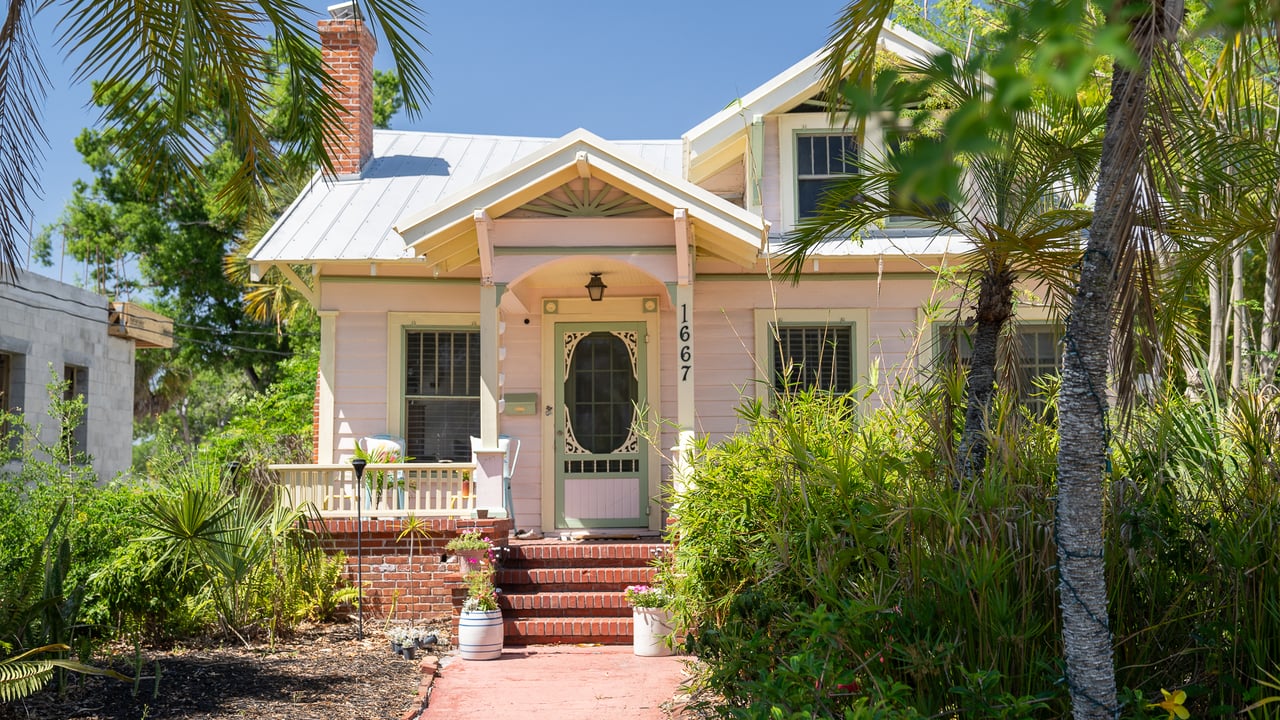
What Buying a Home in Laurel Park Sarasota Actually Involves
Sarasota Mark Middleton April 23, 2026
Sarasota Mark Middleton April 23, 2026
I get asked about Laurel Park fairly regularly by clients considering a move to the Sarasota area — usually buyers who have spent a weekend walking the neighborhood, photographing the brick streets and the bungalows, and arriving at the conclusion that this is where they want to live. I understand the impulse. Laurel Park is one of the most atmospherically complete historic neighborhoods in Florida, and falling for it is not difficult.
The harder part is what comes after. Because buying a home in Laurel Park is not the same as buying a home in most Sarasota neighborhoods, and the buyers who skip that distinction often discover the differences the hard way. Historic district rules affect what you can do to the property. The 1920s housing stock brings specific inspection considerations. Flood zone realities apply in ways that matter more in 2026 than they did even five years ago. Pricing varies substantially block by block, home by home, in ways that generic comparable-sales analysis tends to miss. And the long-term value of the home you eventually buy depends significantly on decisions you make before you ever go under contract.
What follows is a practical framework for buyers actually considering a Laurel Park purchase. This is the conversation I have with clients when they bring me into the process early — which, for neighborhoods like this, is exactly when buyers should be bringing specialized representation into the process.
Every buyer exploring historic neighborhoods needs to do honest self-assessment before they fall for a specific property. Laurel Park suits certain buyers extraordinarily well. It suits others poorly. The difference is not about income or taste — it is about what kind of homeowner you actually are.
Laurel Park works well for buyers who value walkability, neighborhood density, proximity to downtown Sarasota's cultural and commercial life, architectural character from the 1920s, and the specific lifestyle of a genuinely established residential community where neighbors know each other. It works well for buyers coming from Northeastern cities, Midwestern college towns, or West Coast urban neighborhoods, who arrive in Florida looking for what most Florida cities no longer offer: compact, walkable, historic residential fabric.
It does not work well for buyers whose priorities include expansive lot sizes, significant outdoor space, large garages, or the infrastructure of suburban life. Most Laurel Park lots are roughly 50 by 125 feet. Most homes are between 1,000 and 2,500 square feet. Parking is often on-street, with driveway and garage configurations that reflect 1920s patterns rather than 2020s expectations. Buyers expecting the spatial standards of Lakewood Ranch, Palmer Ranch, or other Sarasota suburban developments will be disappointed.
Laurel Park also requires what I think of as preservation tolerance. Homes within the designated historic district carry specific responsibilities — approvals required for exterior modifications, attention to original features, and a general orientation toward maintaining rather than modernizing what already exists. Buyers who intend to aggressively contemporary-renovate are going to find themselves in conflict with both the preservation framework and, frankly, with the neighborhood itself. Buyers who find genuine appeal in preservation-oriented ownership will find a community that supports and rewards that approach.
Before you spend serious time touring Laurel Park homes, ask yourself directly: Am I the kind of owner who will enjoy maintaining a 1920s bungalow as a 1920s bungalow, with modern systems carefully integrated but the historic character preserved? If the honest answer is yes, Laurel Park is exceptional. If the honest answer is uncertain, other Sarasota neighborhoods offer similar proximity to downtown with fewer preservation expectations attached.
Laurel Park pricing is more varied than it appears from a casual MLS search, and understanding the variation is essential to both buying well and negotiating effectively.
The neighborhood's fifty acres contain genuinely different market tiers. The largest and most architecturally ambitious homes — the Mediterranean Revival residences clustered along the Oak Street corridor, certain historically significant Colonial Revival homes, and fully restored contributing properties throughout the district — sit at the top of the market and regularly transact above seven figures when condition, restoration quality, and specific location align. These homes are rare in any given year; when they come to market, they often sell to buyers already positioned and waiting.
The middle tier of Laurel Park inventory includes well-maintained Craftsman bungalows, thoughtfully updated Frame Vernacular cottages, and smaller Mediterranean Revival examples in good condition. This is the largest segment of the market and the one most buyers are actually shopping. Pricing varies substantially by size, condition, and specific block, but this tier represents the realistic entry point for most buyers who want a quality Laurel Park home in move-in condition.
The entry-level tier includes smaller cottages, homes needing substantial restoration work, duplexes, and original apartment buildings in the district. These properties often carry deferred maintenance, system updates required, and restoration opportunities that can be rewarding for buyers who genuinely want the project. They are not inexpensive in absolute terms — Laurel Park's location within walking distance of downtown Sarasota sets a floor under even the most modest inventory — but they represent the most accessible path into the neighborhood.
Two specific pricing realities worth understanding:
First, original-condition vs. restored-condition pricing varies dramatically, and the variation is not always rational. Some restored homes trade at premiums that reflect genuine preservation work done well. Others trade at premiums that reflect recent cosmetic renovation that has actually diminished the home's historic character and will eventually be viewed as a negative by sophisticated future buyers. Knowing the difference is one of the things specialized representation actually provides.
Second, block-level variation is real. A bungalow two blocks from Laurel Park (the pocket park) may price differently than an identical bungalow two blocks from Washington Boulevard's commercial edge. Oak Street pricing differs from interior street pricing. Proximity to the historic Burns Court district affects the western blocks differently than the eastern blocks are affected by their nearness to Washington Boulevard. These variations compound with architectural and condition variables in ways that require genuine neighborhood fluency to price correctly.
Laurel Park's designation on the National Register of Historic Places has practical implications for ownership that every buyer should understand before offering on a specific home.
The 2008 National Register listing identifies 270 contributing structures within the district's 50 acres. A home classified as "contributing" is a home whose original architectural character has been substantially preserved and which contributes to the district's historic integrity. A "non-contributing" home is a home whose modifications have diminished its historic character, or which was built after the district's period of significance, or which otherwise fails to contribute to the district's historic fabric.
This distinction matters for several reasons.
Contributing status typically signals higher architectural integrity, which affects market value. Design-conscious buyers specifically seek contributing homes, and the market generally rewards properties that retain original features. When you buy a contributing home, you are buying something that cannot be recreated — a 1920s residence whose original windows, original floors, original millwork, original trim, or other period elements are still present.
Contributing status also typically carries more preservation scrutiny for any exterior modifications. The City of Sarasota's historic preservation framework, combined with the Laurel Park Overlay District adopted in the early 2000s, provides for review of significant exterior changes — window replacements, roof modifications, additions, facade changes, and similar work that affects how the home reads from the street. This is not hostile regulation; it is the mechanism by which the neighborhood's character is preserved for the benefit of all owners. But buyers planning major exterior renovations need to understand what approvals are required before assuming they can execute a specific vision.
Two of the district's structures are individually designated on the National Register — separate from the district-level designation — and twenty additional structures are locally designated as historic by the City of Sarasota. Individual designation carries additional protections and, for owners, sometimes additional access to preservation tax credits or other incentives. If a home you are considering holds individual designation, that is a meaningful asset and worth understanding fully during due diligence.
The practical guidance for buyers: before making an offer on a Laurel Park home, know the home's status (contributing vs. non-contributing, individually designated or not), understand what review requirements apply to any modifications you might want to make, and assess whether the home's current condition matches the kind of ownership you intend to practice. Your agent should be able to walk you through this, or refer you to the City of Sarasota's historic preservation office for specifics.
Standard home inspections are designed for standard homes. A thorough inspection of a Laurel Park residence requires specialized attention to the specific systems and materials that 1920s construction actually contains.
Original electrical systems in Laurel Park homes may include knob-and-tube wiring, undersized panels, or aluminum branch circuits from 1960s-1970s updates. Any of these raises safety concerns and insurance implications, and all of them may require remediation.
Plumbing of comparable age often includes original galvanized or cast iron pipes approaching or past end of useful life. Systematic replacement with modern piping is hidden work that doesn't affect architectural character and is often worth doing preemptively during major renovations.
Original wood windows — in the homes where they remain — are among the most valuable preservation features Laurel Park offers. They are also frequently targets for replacement by previous owners who didn't understand what they had. During inspection, evaluate whether windows are original and, if they are, whether their condition supports restoration (the preservation-correct approach) rather than replacement.
Foundation systems for 1920s Florida homes include pier-and-beam construction for many of the bungalows and smaller cottages, with crawl spaces beneath that require ventilation, moisture management, and attention to termite pressure. A qualified historic-home inspector will pay close attention to these systems.
Roof systems on Laurel Park homes range widely — from original or early tile roofs on some of the Mediterranean Revival homes, to later asphalt shingle replacements, to metal roofs on some restored cottages. Each has its own expected lifespan, replacement considerations, and insurance implications. Understanding the current roof and its remaining useful life is essential before offering.
Termite and wood-destroying organism history is particularly important in historic wood-frame homes in Florida. A clean WDO inspection and clear termite bond are standard expectations, but past damage from termite activity may still be present in framing or structural elements.
For any Laurel Park purchase, hire an inspector with documented experience in historic Florida homes. This is not optional due diligence. A standard inspector evaluating a 1925 Craftsman bungalow with the assumptions appropriate for a 1995 tract home will miss issues that matter and raise false concerns about normal aged conditions that are fine.
Insurance for historic homes in Florida has become genuinely challenging in recent years, and Laurel Park buyers need to address insurance early in due diligence rather than at the last minute before closing.
Many standard Florida insurance carriers have restricted or declined to write policies on homes built before 1940, before 1960, or in some cases before 1970. Older construction methods, original systems, and specific materials can trigger underwriting concerns that limit your carrier options. Wind mitigation features — impact-rated windows, secondary water barriers, roof-to-wall connections documented by inspection — substantially affect premiums and sometimes determine whether coverage is available at all.
For Laurel Park specifically, the neighborhood's proximity to Hudson Bayou and the Sarasota Bay drainage system means flood zone designation matters. Parts of Laurel Park sit in FEMA flood zones requiring flood insurance for federally-backed mortgages, and these designations have become increasingly scrutinized by both buyers and insurers following Hurricane Ian in 2022 and subsequent Florida storms. Elevation certificates, flood insurance history, and any property-specific flood or storm damage history are genuine due diligence items for any purchase in the district.
The practical approach: within the first week of being under contract, obtain real insurance quotes from at least two or three carriers with documented experience in Florida historic homes. Factor flood insurance costs separately if applicable. If the quotes come in substantially higher than budgeted, you have time during due diligence to evaluate whether the purchase still makes sense, whether mitigation upgrades could reduce costs meaningfully, or whether the purchase price warrants renegotiation given the true cost of ownership.
Many Laurel Park buyers intend to do at least some work on the home they purchase — kitchen updates, bathroom renovations, system modernizations, or in some cases substantial restoration. Planning this work before you buy, rather than after, saves significant money and prevents common mistakes.
If your purchase budget assumes renovation, build the renovation budget into the overall financial analysis. A realistic budget for substantial renovation of a historic Laurel Park home typically runs 20 to 30 percent above initial contractor estimates, with timelines that often extend 30 to 50 percent beyond projected schedules. These realities come from discoveries during work (hidden conditions are more common in century-old construction), from preservation review processes that extend timelines, from the limited supply of contractors who actually understand historic work, and from the premium costs of period-appropriate materials and methods.
If your renovation involves exterior changes, understand the preservation review requirements before you go under contract — not after. Window replacements, roof modifications, exterior paint color changes in some districts, additions, and facade alterations all typically require approval. Getting those approvals takes time, and proposed changes that don't meet preservation standards will not be approved. Buyers who assume they can freely modify a contributing historic home's exterior after closing are often unpleasantly surprised by what review actually involves.
If your renovation involves significant interior work, consider whether the home's original character includes features that deserve preservation even where technically unregulated. Original longleaf pine floors, original millwork, original tile, original plumbing fixtures in some cases, and original architectural details all contribute to the home's long-term value in ways that aggressive modernization will actively diminish. Thoughtful renovation preserves and integrates; aggressive renovation erases and replaces. The difference shows in eventual resale pricing years later.
Build a relationship with a preservation-experienced contractor or architect before you close, or at minimum before you begin any major work. The small pool of Sarasota-area craftsmen who genuinely understand historic homes are often booked months ahead. Establishing the relationship early is one of the most practical moves a Laurel Park buyer can make.
Offering on a Laurel Park home involves considerations beyond standard offer strategy.
Laurel Park inventory is limited. The district contains a fixed 270 contributing structures plus a handful of non-contributing properties and new construction within the boundary. Inventory does not grow; it only changes hands. In any given year, a relatively small number of homes come to market, and genuinely exceptional properties — fully restored contributing homes in excellent condition at attractive pricing — often sell quickly once they appear.
This scarcity shapes negotiation dynamics. Strong offers on well-positioned homes often need to be decisive rather than exploratory. At the same time, the specific issues that historic homes carry — inspection findings, insurance challenges, preservation review concerns, flood zone realities — provide legitimate grounds for negotiation when they surface during due diligence. Knowing which issues are worth raising as negotiation points and which are better absorbed is a distinction that experience teaches.
Price analysis for Laurel Park homes should be done with neighborhood-specific comparable sales, adjusted for contributing status, condition, architectural integrity, and block-level location. Generic automated valuation tools (Zillow Zestimates and similar) consistently misprice Laurel Park inventory because they cannot account for the variables that actually affect value here. Buyers working only from automated pricing tools often either pay too much or miss opportunities because they cannot distinguish between a home priced correctly for its true condition and a home priced based on square footage alone.
Contract terms matter as much as price. Inspection periods should be sufficient for specialized inspection. Financing contingencies should account for insurance availability. For homes with preservation review implications, some buyers have found it prudent to make offers contingent on initial consultation with the City's historic preservation staff for any planned work — though this is an advanced negotiation strategy that depends on the specific circumstances.
Throughout the offer and negotiation process, work with representation that actually understands the neighborhood. This is the single highest-leverage decision a Laurel Park buyer makes, and it compounds benefits throughout the rest of the transaction.
A final consideration that buyers often overlook: the true cost of owning a Laurel Park home extends well beyond the purchase price and monthly mortgage payment.
Historic homes require more maintenance than newer construction — not catastrophically more, but consistently more. A realistic annual maintenance reserve for a well-functioning Laurel Park home is approximately 2 percent of home value, meaningfully higher than the 1 percent often cited for newer homes. This reflects the greater frequency of specialized maintenance cycles — exterior paint every 6 to 10 years on wood-sided homes, periodic window maintenance on original sash windows, routine attention to older plumbing and electrical, and the general reality that 1920s systems require more care than 2020s systems.
Major capital items follow predictable cycles. Roof replacement on a Laurel Park home typically costs more than comparable new-construction replacement, both because of historic profile requirements in some cases and because quality work on older structures often requires specialized crews. Exterior paint cycles matter. HVAC replacement on homes with limited interior volume requires thoughtful planning. Window restoration or replacement represents a major decision with significant cost implications in either direction.
Insurance costs for historic homes in Florida have increased substantially in recent years, and projections suggest continued increases. Your budget should assume premium costs that continue to rise rather than stabilize. Flood insurance where applicable should be modeled with similar assumptions about future cost direction.
Property taxes in Laurel Park, through the City of Sarasota and Sarasota County, are generally reasonable relative to Florida averages, and historic homes sometimes carry slightly lower assessments than comparable newer construction. Homestead exemption applies to primary residences here as elsewhere in Florida. But the cost of ownership is meaningfully higher than the cost of acquisition, and realistic buyers budget accordingly.
The buyers who flourish as Laurel Park owners are the ones who approach the purchase with complete clarity about what ownership actually requires — and who choose to take it on because the specific rewards of this specific neighborhood genuinely justify the investment of time, attention, and money that older homes demand.
I have written at greater length about Laurel Park's history, architecture, and cultural significance on my specialist historic homes site. For the full editorial treatment of the neighborhood — its 1920s development, its architectural variety, its 2008 National Register designation, and what walking its streets actually feels like — that piece is available at historichomestampabay.com.
For prospective buyers, though, the more immediately useful question is not how the neighborhood came to be. It is whether it makes sense for you, what a specific purchase within it actually involves, and how to position yourself to buy well when the right home appears.
Those are the questions I help clients work through. Specialized representation in historic neighborhoods is not a luxury; it is the practical difference between buyers who end up with homes they love for decades and buyers who end up managing problems they did not anticipate. The gap is real, and it is worth thinking carefully about before you commit to representation for a purchase of this significance.
Whether you are early in your Sarasota research, narrowing down which historic neighborhood actually fits your life, or ready to start seriously evaluating specific Laurel Park properties — I would welcome the conversation. Every historic home purchase is specific, and the right approach depends on the home, your goals, your timeline, and what you are actually trying to accomplish in this move.
Call 727-871-SOLD (727-871-7653) or reach out through the Contact page to start the conversation.
A further reflection. Some of the thoughts I could not quite fit into the above — specifically on what Laurel Park teaches about the walkable neighborhoods we are largely failing to build today, and on why new urbanism has spent four decades attempting to recreate what ordinary craftsmen in the 1920s simply built as a matter of course — I developed separately in a LinkedIn article this week. If the broader question of what Laurel Park means for American cities is of interest, you can read it here.
Stay up to date on the latest real estate trends.
Ready to elevate your real estate experience? Partner with us for personalized service, unparalleled expertise, and a proven track record. Whether buying, selling, or seeking valuation, let's turn your property goals into reality. Contact us today for a journey beyond expectations.