
Most people who end up in Crescent Lake did not start out looking for it. They came to St. Petersburg because they had heard about Old Northeast or because someone told them historic homes were affordable here compared to where they were moving from. Then one afternoon they drove past the lake. Maybe they pulled over. Maybe they walked the path under the oaks. By the time they got back in the car, they had quietly decided. They just had not told anyone yet.
If you are reading this, you might be in that moment now. Or you might be a few weeks past it and trying to figure out whether your instinct was right. Either way, this piece is written for you.
I have walked these blocks more times than I can count, with buyers and on my own. I have listed homes here, shown homes here, sat at the park between appointments. What follows is the practical version of what I usually end up telling people who are seriously thinking about moving in. The history of the park itself is in a piece I wrote for the historichomestampabay.com Journal. The fuller architectural treatment of the neighborhood is here. This piece is the one to read if you are trying to figure out whether to actually live here.
What You Are Actually Walking Into
Crescent Lake is small. You can walk the entire neighborhood in twenty minutes. The lake sits in the middle, the park wraps around it, and the residential streets ring outward for a few blocks in every direction. That is the whole place.
The smallness is the first thing you should know, because it changes everything about how the neighborhood feels. People recognize each other here. The same person walks past your front porch every morning at seven, and after a few weeks you wave. The kids on the playground are mostly the same kids week to week. The dogs at the lake know each other. The man practicing tai chi by the water on Saturdays is there most Saturdays.
That kind of recognition has gotten rare in American cities. If you grew up somewhere like this, moving in will feel like coming home to something you did not know you were missing. If you grew up in a more anonymous suburban setting, it can take a few weeks to adjust. Most people end up loving it. A few find it unexpectedly close.
You should also know that the neighborhood is dense by St. Petersburg standards. Lots are smaller than they are in Old Northeast. Houses sit closer together. Your neighbor will hear you in the backyard. You will hear them. The trade-off is that everything is walkable, the streets are shaded, and the park does the work of giving you the space your lot does not.
What the Houses Are Like
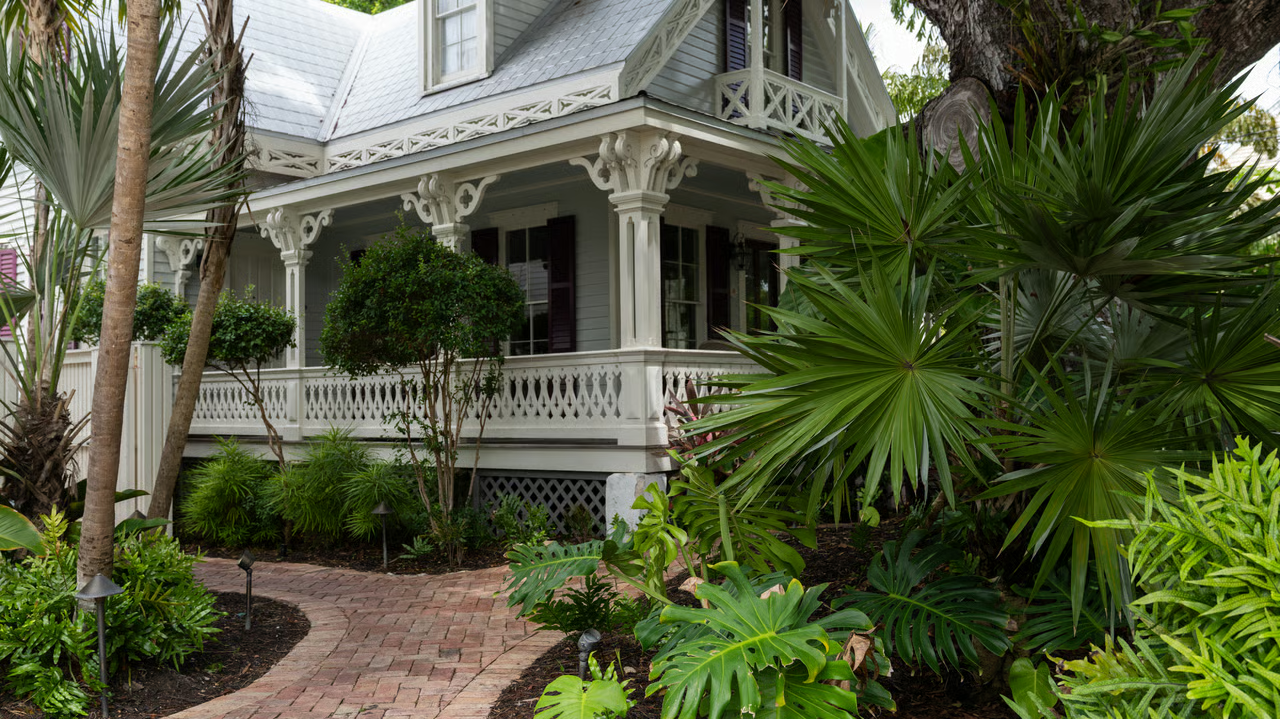
Most of the homes here are bungalows. Small to mid-sized, mostly built in the 1910s and 1920s, the kind of house that was built when American carpenters still knew how to build a porch that did its job. You will see Mediterranean Revival homes scattered around, especially closer to the lake. Some Tudor cottages. A few Colonial Revivals. The occasional newer build that someone slipped in on a lot where an older home was lost.
Condition is all over the map. I cannot stress this enough. Two houses on the same block, both listed at similar prices, can be completely different propositions underneath. One has been carefully maintained for forty years. The other has had three bad renovations stacked on top of each other since the 1980s. The price tells you almost nothing. You need someone walking through with you who can read what is actually there.
The honest version of historic-home ownership is that it is rewarding and it is work. The floors are real wood. The trim is real wood. The windows, if they are still original, are beautiful and need restoration every so often. Things will need attention that newer houses do not need. If you want a house you can ignore, this is not the neighborhood. If you want a house you can love, it is one of the best.
The Park, in Real Life
Here is what daily life around the lake actually looks like.
The walkers are out by six in the morning, sometimes earlier in summer when people are trying to beat the heat. By seven the dog walkers are everywhere. By nine the joggers and the stroller crowd are out, and there are usually a few people sitting on benches with coffee. The park is rarely empty. I have been there at strange hours and there is almost always someone. It is one of the things I find most reassuring about the place.
The youth baseball games run on Saturday mornings during their seasons. If you have kids and you live close to the park, this becomes part of your life almost without trying. If you do not have kids, you will hear the games on Saturdays. Some buyers are charmed by this. A few are surprised by how much it adds up to. Be honest with yourself about which one you are.
The pickleball courts are a thing of their own. They are heavily used. They are lit at night. They make the sound that pickleball makes, which carries farther than tennis does and is more rhythmic and harder to tune out. If you love pickleball, you have just found your community. If you live close to the courts and you are noise-sensitive, you should walk the streets nearest the courts during peak hours before you offer on a house. This is the kind of thing that does not show up in a listing description and matters a lot for some buyers.
The youth center inside the park runs after-school programs and intramural sports. Kids ride bikes there. Parents pick them up. The whole arrangement works the way neighborhood youth centers used to work in places where neighborhoods still functioned that way. If you have school-age children, this changes things in the right direction.
The lake itself is more for looking at than for getting into. Catch and release fishing is allowed. Most people relate to the water by walking around it. The herons and egrets are reliable. The waterfowl population shifts with the seasons. The light on the water at certain hours is one of the things that you start to notice once you live close enough to see it most days.
Where to Buy Within the Neighborhood
The blocks immediately around the park give you the most direct park access. You can walk out your door and be on the path in under a minute. The trade-off is that you get more foot traffic past your house, more parking pressure on event days, and a little more ambient noise. If the park is the reason you are moving here, this might be exactly what you want. If you want quieter, look one or two blocks back.
The blocks one to three streets back from the park keep almost all the lifestyle benefits with less of the activity right at your door. Walk to the lake in five minutes instead of one. Hear the Saturday games more faintly. The houses on these streets often offer better long-term value because the price difference does not always reflect how much the daily experience actually changes.
The eastern edge of the neighborhood, closer to 4th Street North, gives you walkable access to the commercial corridor along 4th. The restaurants and shops there have been steadily improving over the past several years. If you want to be able to walk to dinner without driving, the eastern blocks are worth a serious look.
The northern edges, up toward 22nd Avenue North, transition out of the historic core. You will see more recent construction and a slightly different feel. Some buyers like the larger lots and updated kitchens you find there. Others realize, after a few weeks, that they have moved out of the part of Crescent Lake they originally fell in love with. Pay attention to where you actually are within the neighborhood, not just whether the address says Crescent Lake.
What Surprises People
A few things that I see catch new residents by surprise, in roughly the order they tend to come up.
The youth sports scene is more active than people expect. If you do not have kids in the leagues, you may find that Saturday mornings feel busier than the rest of your week. Not a problem for most people. Worth knowing.
The walking is real. People here walk to dinner, to the park, to the coffee shop, to the post office, to each other’s houses. If you are coming from a place where you drove everywhere, the shift takes a couple of weeks to feel normal. Most people end up loving it. Some are surprised by how often they leave the car in the driveway.
Parking on the streets nearest the park gets tight on event days. Most homes have their own driveway, but if you have guests during a tournament weekend, they will be parking a few blocks away.
The historic homes need attention that newer houses do not. Original windows. Older roofs. Plumbing and electrical that may want updating depending on what was already done. None of this is bad news, but it should be in your budget from the start, not a surprise three months in.
The neighborhood has a lot of long-term residents. Many of the families I see at the park have been in their houses for twenty or thirty years. New people integrate easily. But the social rhythm of the place is built around people who plan to stay. If you are looking at this as a quick flip or a short-term rental investment, you should know that the neighborhood does not particularly welcome that. If you are looking for somewhere you can actually live for a long time, this is one of the best neighborhoods in St. Petersburg for it.
The Insurance and Flood Zone Question
This matters more in St. Petersburg right now than it has at any point in the past several decades, and you cannot skip thinking about it.
Crescent Lake sits on relatively elevated ground. The neighborhood did not flood during Hurricane Helene in September 2024, which devastated lower-lying parts of the city. Many properties in the neighborhood are in FEMA Flood Zone X, where flood insurance is not federally required. Insurance is more available here than in coastal St. Petersburg. Premiums tend to be lower. Long-term storm resilience is better.
This is one of the main reasons buyers who look at other historic St. Petersburg neighborhoods first end up here. The elevation profile works in your favor. But you cannot assume it for a specific property. Flood zone status varies parcel by parcel. Pull the FEMA flood map for any address you are seriously considering. Get an elevation certificate if there is any uncertainty. Get real insurance quotes within the first week of being under contract, not the last week. This part of the process is not optional in 2026.
What You Will Actually Pay
Pricing covers a wide range. Smaller bungalows that need real work start in the upper $400,000s. Restored bungalows in good shape mostly run from the upper $600,000s through the $900,000s. Larger Mediterranean Revival homes and the most carefully preserved properties move past a million, with the most distinguished homes pushing $1.5 million and above.
The market here is active but not frantic. The good houses sell quickly. The mediocre ones sit. If you find one you love and it has been on the market for two days, you cannot wait a week to think about it. If you find one you love and it has been listed for two months, there is usually a reason and you should figure out what it is.
The biggest pricing mistakes I see are in both directions. Some buyers chase houses that are priced above what their condition justifies because they are emotionally attached to the listing photos. Other buyers walk away from houses they should have offered on because the asking price made them assume there was a problem when actually it was the seller being reasonable. Either mistake is avoidable with someone walking the houses with you who can tell the difference.
What I Tell People Before They Start Looking
Walk the park before you walk any houses. Visit it in the morning. Visit it on a Saturday afternoon. Visit it on a weekday evening. You are not just buying a house. You are buying into the rhythm of life around this lake. You should know what that rhythm actually is before you commit.
Walk the streets in different directions from the park. Get a feel for which blocks feel right to you. The neighborhood is small enough that you can walk every street in a single afternoon. Do it.
Get your financing sorted before you start looking seriously. The houses you actually want will not wait for you to figure out your loan after you find them.
Work with someone who knows the neighborhood at the block level. The differences between houses here are real and not always obvious. Generic representation in a neighborhood like this one costs people money, sometimes a lot of money.
Plan for the work historic homes need. Not because anything is wrong, but because old houses ask for things newer houses do not, and you want to be the kind of owner who answers when they ask.
If You Are Thinking About It
If you are seriously considering Crescent Lake, or if you are still figuring out whether it is the right fit, I would be glad to talk. I have walked these streets enough that I can usually tell within a conversation whether someone is going to thrive here or whether another St. Petersburg neighborhood is closer to what they actually want. There is no pressure in that conversation. Sometimes the answer is that Crescent Lake is the right place. Sometimes it is that Old Northeast or Historic Kenwood or somewhere else is. Either answer is fine.
For the longer history of the park, see my Journal piece. For the architectural and historical treatment of the neighborhood as a whole, see the broader Crescent Lake guide.
Call 727-871-SOLD or reach out through the Contact page when you are ready to start the conversation.