What the Babe Ruth House Reveals About Buying Historic Real Estate in Tampa Bay
Downtown Mark Middleton April 30, 2026
Downtown Mark Middleton April 30, 2026
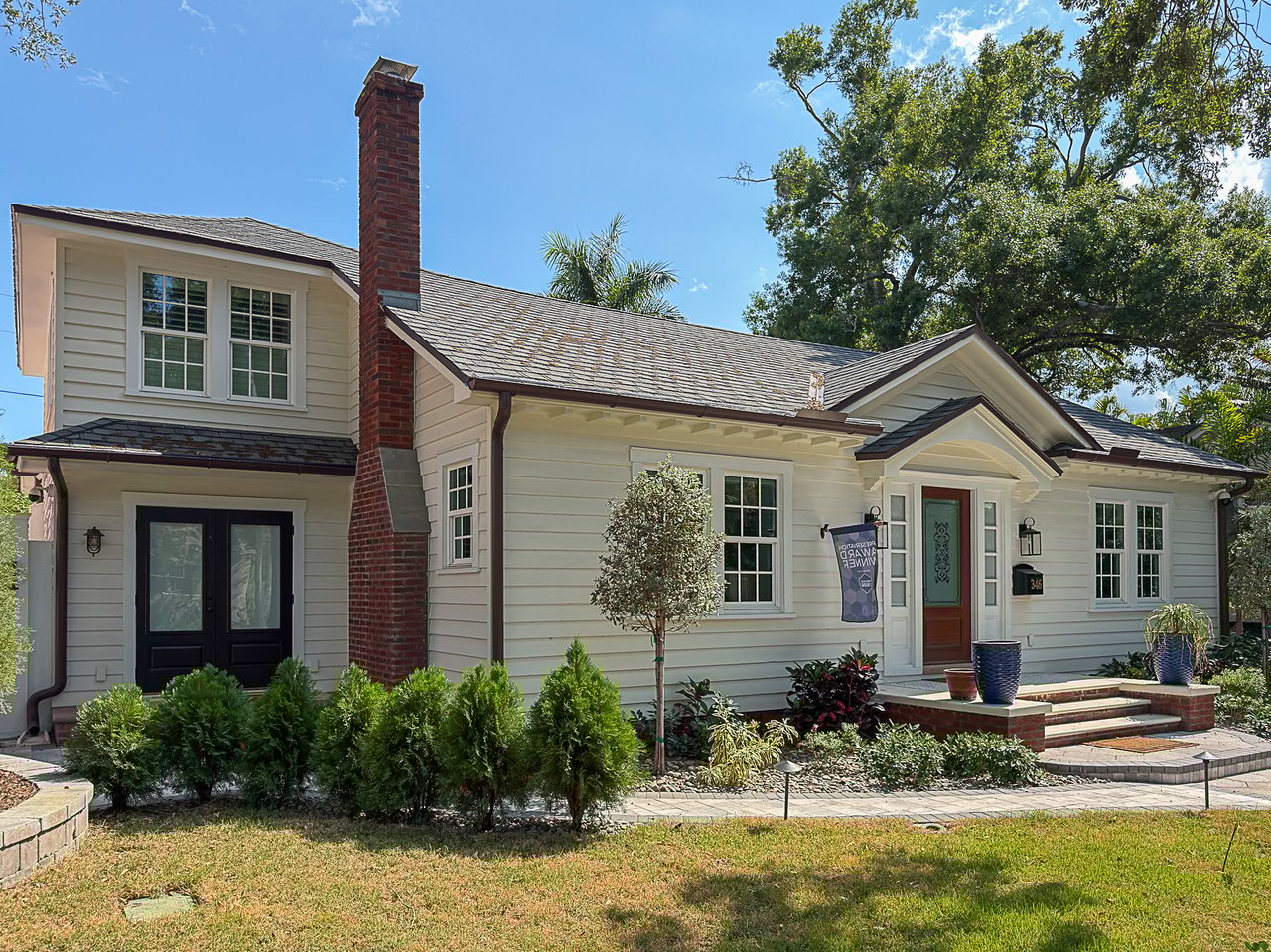
In 2025, a 1,700-square-foot Craftsman bungalow at 346 16th Avenue NE in St. Petersburg's Historic Old Northeast was listed at $1.86 million. The home was originally built in 1924. It is three bedrooms and three bathrooms. By any standard architectural metric — square footage, lot size, conventional finish quality — the listing price would be inexplicable. There are larger homes for less money in the same neighborhood. There are newer homes for less money throughout Tampa Bay. There are waterfront homes for less money on the surrounding islands.
The home sold near asking. The reason it sold near asking is that this particular bungalow is the documented spring 1935 rental of Babe Ruth, and the buyers in the historic Tampa Bay market who actively seek properties with that kind of provenance recognized exactly what they were buying.
This is the lesson worth understanding for anyone evaluating historic real estate in this region. Provenance — the documented historical significance of a specific property tied to specific people, events, or moments — is among the most underappreciated value drivers in the broader Tampa Bay real estate market. Most buyers do not know how to evaluate it. Most agents cannot articulate why it matters. Most automated valuation models actively miss it. And as a result, properties with genuine documented provenance frequently transact at prices that reflect either the floor (when sophisticated buyers are absent) or the ceiling (when sophisticated buyers compete) of what they are actually worth.
The Babe Ruth bungalow is one of the more visible recent examples of how this dynamic plays out. There are dozens of similar opportunities across Tampa Bay's historic neighborhoods at lower price points and with less famous provenance, and the buyers who recognize them tend to outperform the buyers who do not.
What follows is a practical guide for buyers, owners, and sellers thinking about historic Tampa Bay real estate in 2026. For the comprehensive architectural and historical treatment of the Babe Ruth house specifically, my Journal piece on historichomestampabay.com covers the depth this post does not. For the broader argument about what specific surviving buildings actually preserve, my LinkedIn article on the bungalow makes the case at length. This post is the practical companion to both — focused on what provenance actually means in the market and how serious buyers should think about it.
Not all historic homes have provenance, and not all provenance is created equal. Buyers and sellers benefit from understanding the spectrum.
Generic age-based historic significance describes most homes built before 1940 in established Tampa Bay neighborhoods. The home is old. It has architectural character consistent with its era. It was built by ordinary builders for ordinary residents. The home contributes to the neighborhood's overall historic fabric. This is the default category for most historic Tampa Bay inventory. It carries some pricing premium over comparable newer construction, particularly in well-preserved neighborhoods, but the premium is generic and reflects the neighborhood's aggregate character rather than the specific property's individual significance.
Architecturally distinguished homes within this broader category warrant additional pricing attention. These are homes whose specific architectural quality, original detailing, or design integrity is meaningfully above the neighborhood average. A Craftsman bungalow with intact original longleaf pine floors, original built-ins, an unaltered front porch, and original windows is architecturally distinguished. The same bungalow with vinyl replacement windows and a 1990s kitchen renovation is generic age-based historic. The pricing differential between these two homes can be substantial in the right market.
Documented provenance properties carry the third level of significance. These are homes whose specific history is verifiable through primary sources — newspaper archives, contemporary documentation, family records, official municipal recognition, or the kind of direct evidence that distinguishes claimed history from documented history. The Babe Ruth bungalow at 346 16th Avenue NE falls in this category, with the 1935 St. Petersburg Times reporting confirming Ruth's residency, Harry Woods's 1969 St. Petersburg Times interview confirming the rental arrangement, and the consistent secondary sourcing across credible historical accounts. Properties with documented provenance command meaningful premiums beyond their architectural merit alone.
Famous-resident provenance represents the top of the hierarchy, homes where the documented historical resident or owner is themselves famous enough that the association alone drives substantial market value. The Babe Ruth bungalow qualifies here. So do homes with confirmed connections to other significant figures: presidents, artists, authors, sports figures, civic leaders of broad cultural recognition. These properties effectively transcend their architectural and neighborhood pricing fundamentals because the cultural significance of the association adds value that comparable homes cannot match.
For buyers, understanding where a specific property sits in this hierarchy is foundational. Most properties in any historic neighborhood are in the first category. A meaningful subset are in the second. A small fraction are in the third. A very small number are in the fourth. The pricing implications differ at each level, and buyers who confuse the levels — paying famous-resident prices for generic age-based properties, or missing famous-resident significance and underpaying — produce predictable outcomes.
The premium that documented provenance adds to a historic home is not arbitrary. It reflects three specific things, each worth understanding.
Scarcity value. Documented provenance properties cannot be manufactured. New construction will never have the kind of historical association that the Babe Ruth bungalow has. Existing homes can have their provenance lost (through demolition, through the disappearance of supporting documentation, through gradual erasure of the connection in collective memory) but cannot have new provenance acquired. This makes the surviving inventory of documented provenance properties a fundamentally finite resource that only diminishes over time.
Marketing distinctiveness. Properties with strong documented provenance tell stories that distinguish them in the marketplace. Real estate marketing depends substantially on differentiating one property from another, and provenance provides a differentiator that price, square footage, and architectural style alone cannot match. A listing for "the Babe Ruth bungalow" attracts attention that a listing for "a charming 1924 Craftsman bungalow with original details" does not, even if the second listing is technically the same property without the provenance reference.
Cultural anchor value. Documented provenance properties function as cultural anchors that connect specific present locations to specific past events. The Babe Ruth bungalow does not just contain historical significance; it embodies it. Standing in front of the home or living within its walls is an experience that incorporates the home's documented past into the resident's daily life. For buyers who value this kind of cultural participation — buyers drawn to the experience of inheriting and stewarding genuinely consequential properties — provenance is not abstract. It is a continuous lived dimension of ownership.
These three factors together explain why provenance commands premiums that pure architectural or square-footage analysis cannot capture. The Babe Ruth bungalow listing at $1.86 million in 2025 was not pricing 1,700 square feet of Craftsman bungalow. It was pricing a documented historical asset that happens to also function as a comfortable contemporary home.
The successful 2025 sale near asking provides several specific signals about the broader Tampa Bay market for documented provenance properties.
Sophisticated buyer demand exists at scale. Some buyers were unwilling to participate in the bidding for the Babe Ruth bungalow because the financial proposition did not work for them. Others were unwilling because they did not recognize what they were evaluating. But the buyers who did recognize the property's significance and could financially participate were sufficient to produce a near-asking sale. This indicates that the demand pool for documented provenance properties in this price range is genuinely deep — meaningful enough to absorb the inventory that comes to market without requiring substantial price discovery.
Restoration quality matters substantially for buyer confidence. The Maureen Stafford restoration was central to the home's marketability at the asking price. Buyers paying premium prices for documented provenance properties want the property's preservation work to match the significance of the association. A famous-resident bungalow that had been allowed to deteriorate without appropriate restoration would have transacted at substantially lower prices, possibly to a buyer planning their own restoration work and willing to accept that risk. The Stafford restoration's three-and-a-half-year scope, hurricane-code compliance, and preservation of original architectural elements together produced the kind of finished product that allowed the listing to function at the high end of the market.
The comparable-sales analysis problem is acute. Standard real estate comparable analysis fails for documented provenance properties because the comparables themselves do not exist. There is no second Babe Ruth bungalow to compare. There are similar 1920s Craftsman bungalows in the Old Northeast at lower prices, but none of them are the Babe Ruth bungalow, and the price differential between them and 346 16th Avenue NE is exactly what provenance value looks like quantified. Generic comparable analysis would have under-priced the property. Provenance-informed analysis priced it correctly.
Marketing and representation matter at the top of the market. Selling the Babe Ruth bungalow well required representation that could articulate the home's significance to the specific buyer pool likely to value it. Generic real estate marketing that treated the home as a 1,700-square-foot bungalow with some vague "historic charm" reference would have substantially underperformed. The successful sale required marketing that could tell the home's specific story compellingly, supported by authentic preservation documentation, supported by the broader Tampa Bay historic real estate context, and reaching the buyer pool likely to recognize the opportunity.
These signals matter beyond the Babe Ruth bungalow specifically. They describe the market dynamics for documented provenance properties across Tampa Bay generally, and the patterns repeat at lower price points and with less famous provenance throughout the region's historic inventory.
Here is what most casual observers do not realize about Tampa Bay's historic real estate market: documented provenance properties exist throughout the region at price points well below the Babe Ruth bungalow's $1.86 million asking. Most of them are not actively marketed for their provenance, because most listing agents do not know the provenance exists and most owners have not done the research to document it.
Across my work in Tampa Bay's historic neighborhoods, I have encountered properties whose provenance includes:
Documented connections to other major league baseball figures from the Yankees' 1925 to 1961 St. Petersburg spring training tenure. Babe Ruth was not the only Hall of Famer who lived in St. Petersburg residential neighborhoods. Lou Gehrig, Joe DiMaggio, Mickey Mantle, Yogi Berra, Whitey Ford, Casey Stengel, and many others spent multiple springs in the city during the team's thirty-six-year residency. The specific addresses of their rentals, hotels, and longer-term arrangements are documented in varying degrees, and some of these properties remain active residential real estate today.
Documented connections to early Tampa Bay developers and civic leaders. Owen Burns of Sarasota. Perry Snell of St. Petersburg. C. Perry Snell of Snell Isle. D.P. Davis of Davis Islands. Hamilton Disston whose 1881 Florida land purchase laid the groundwork for much of the region's subsequent development. The homes associated with these figures, where documented, carry substantial provenance value beyond their architectural merit.
Documented connections to artists, authors, performers, and cultural figures. Tampa Bay's reputation as a winter destination for Northern cultural figures throughout the early twentieth century produced specific addresses where notable visitors stayed for extended periods. Some of these are documented; many remain unidentified despite their genuine historical significance.
Documented connections to historic civic events. Homes where significant municipal meetings occurred. Homes where consequential community decisions were made. Homes whose owners played particular roles in shaping their neighborhoods or cities. The Knapp House in Tarpon Springs, where the 1887 incorporation meeting was reportedly held, is one such example. The Gingerbread House in Safety Harbor is another, with its connection to William Fletcher Belcher (the first mayor of Largo) and B. Rhett Green.
The Tampa Bay region is genuinely rich in this inventory because the area has been an active, populated, historically engaged community for substantially longer than most of Florida's other major markets. The challenge for buyers is that most of this provenance is not surfaced through standard MLS searches or generic real estate marketing. It requires either specific knowledge from sellers and listing agents who have done the research, or specialized buyer representation that recognizes provenance signals when they appear and knows how to investigate them.
For buyers approaching Tampa Bay's historic real estate market, several practical implications follow from the patterns described above.
Provenance research should be part of due diligence on any historic property purchase. Even if a property is not marketed for provenance, the research is worth doing. Local historical societies, neighborhood associations, newspaper archives, municipal records, and oral histories from long-tenured residents can surface significance that MLS listings do not capture. A property purchased without provenance research may have provenance that simply was not surfaced — and identifying it later supports both ownership experience and eventual resale value.
Specialized representation matters more than buyers usually realize. A general residential agent looking at the Babe Ruth bungalow listing in 2025 likely could not have meaningfully advised buyers on whether the asking price was reasonable, what the comparable analysis should look like, what restoration quality questions were essential, or what specific buyer pool the property would attract. Specialized representation in historic Tampa Bay real estate brings the kind of fluency in provenance, restoration assessment, and historic preservation considerations that generic representation cannot offer. The cost of specialized representation is typically the same as generalist representation; the value differential is often substantial.
Restoration history matters more than restoration novelty. A property recently restored by a known specialist preservationist is generally a stronger purchase than a property recently renovated by a generalist contractor, even if the architectural finishes look similar. The Stafford restoration of the Babe Ruth bungalow added value because the work was substantively excellent, not merely cosmetically attractive. Similarly, properties whose preservation work was done thoughtfully by previous owners often outperform comparable properties whose recent updates were aggressive modernization rather than period-appropriate preservation.
Timing matters in this market. Documented provenance properties at the upper end of the market (Babe Ruth bungalow tier) come to market infrequently and often sell within weeks of listing. Properties with strong provenance at lower price points are more abundant but require active representation that knows how to identify them. Buyers serious about acquiring genuinely significant historic properties should be positioned to act decisively when the right opportunity surfaces, which means having financing, representation, and decision-making framework in place before active searching begins.
Insurance and structural considerations require specific expertise. Older homes, particularly those that have undergone substantial restoration like the Babe Ruth bungalow, carry insurance and structural considerations that differ from newer construction. Wind mitigation features, hurricane code compliance from recent restoration work, flood zone status, and the specific structural systems modernized during preservation work all matter for both insurance availability and long-term ownership economics. Specialized inspection services for older homes are essential, not optional.
For sellers of historic Tampa Bay properties, the Babe Ruth bungalow sale provides equally instructive signals.
Provenance research before listing pays off measurably. Properties that come to market with documented provenance ready to be incorporated into marketing typically achieve stronger pricing and faster sales than comparable properties marketed only on architectural merit. The research investment is modest. The pricing differential, when properly executed, is often substantial.
Restoration quality should match property significance. Properties with strong provenance that have been allowed to deteriorate face a difficult marketing position. Either the seller invests in appropriate restoration before listing (which is often the right move financially), or the seller accepts a meaningfully lower sale price reflecting the buyer's anticipated restoration costs. The middle ground — selling a deteriorated provenance property at full premium pricing, generally does not work in 2026 markets.
Marketing must match the property's narrative requirements. Generic real estate marketing for a documented provenance property leaves substantial value uncaptured. The marketing approach for the Babe Ruth bungalow — substantial press coverage, attention to the historical narrative, photography that captured both the architectural quality and the contextual significance — was not accidental. It reflected the kind of marketing investment that documented provenance properties warrant. Sellers who skip this investment to save marketing budget consistently leave money on the table.
Specialized representation matters for sellers, not just buyers. A listing agent who can articulate the property's significance compellingly, who has relationships with the specific buyer pool likely to value it, who knows how to work with historic preservation organizations and local press, and who can navigate the comparable analysis problem produces measurably better seller outcomes than a generalist listing agent. For documented provenance properties, the specialist-versus-generalist representation choice often determines whether the property sells at the floor or the ceiling of its possible value range.
What the Babe Ruth bungalow ultimately represents is a market trend that has been quietly accelerating across Tampa Bay's historic real estate sector for the past several years. Sophisticated buyers are increasingly recognizing the value of documented provenance properties. Restoration specialists like Maureen Stafford are increasingly able to take on the kind of comprehensive preservation work that produces these properties. Local press and historical organizations are increasingly active in surfacing the provenance research that makes these properties identifiable. Real estate professionals specializing in historic homes are increasingly able to articulate the value of provenance to broader buyer audiences.
This trend benefits everyone working in this corner of the market. It benefits buyers who can now find genuinely significant properties supported by appropriate documentation and restoration. It benefits sellers whose properties can now command pricing that reflects their actual significance. It benefits historic preservationists whose work is increasingly recognized as adding measurable economic value rather than functioning as an unrecoverable cost. And it benefits the broader Tampa Bay region, whose historic neighborhoods retain residents who recognize what they are stewarding rather than residents who would replace what cannot be recreated.
For buyers and sellers thinking about historic Tampa Bay real estate in 2026, the implication is straightforward. Properties with documented provenance, appropriate restoration, and informed representation are the inventory that will continue to appreciate at rates above the broader market. Properties without these qualities will continue to perform closer to generic Tampa Bay real estate norms. The differential between the two categories is widening, not narrowing.
The Babe Ruth bungalow is one of the more visible recent examples of how this works. There are many other properties across the region whose provenance is similarly compelling at lower price points, and identifying them is exactly the kind of work that specialized representation makes possible.
Whether you are evaluating a specific historic property, exploring the Tampa Bay historic real estate market more broadly, considering the sale of a property whose provenance you suspect is meaningful, or simply trying to understand how this segment of the market actually works — I would welcome the conversation. Every historic property purchase or sale is specific, and the right approach depends on the property, your goals, your timeline, and what you are actually trying to accomplish.
For the comprehensive history of the Babe Ruth bungalow specifically, see my Journal piece on historichomestampabay.com. For the broader argument about what surviving historic buildings actually preserve, my LinkedIn article on the bungalow makes the case at length.
Call 727-871-SOLD (727-871-7653) or reach out through the Contact page to start the conversation.
Stay up to date on the latest real estate trends.

Ready to elevate your real estate experience? Partner with us for personalized service, unparalleled expertise, and a proven track record. Whether buying, selling, or seeking valuation, let's turn your property goals into reality. Contact us today for a journey beyond expectations.